

Willing to Serve, Ready to Protect
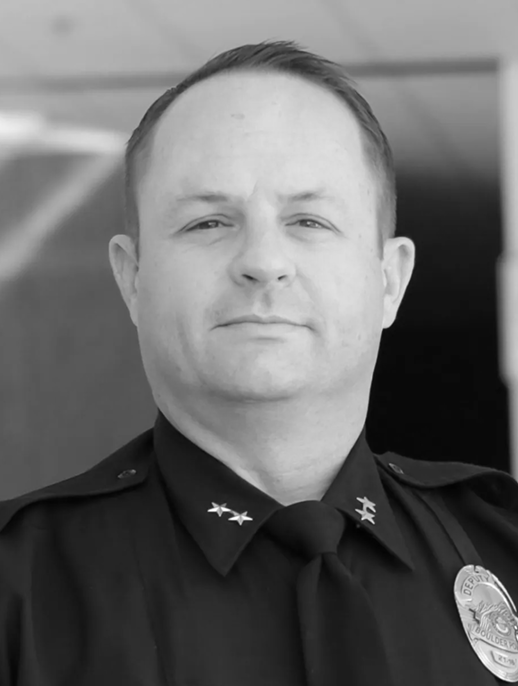
Message from the Chief
Dear Boulder Community, As I reflect on 2024, I am filled with pride in what we’ve accomplished together and I am energized by the path ahead. This year marked a pivotal moment for the Boulder Police Department as we achieved full staffing for the first time in recent years, strengthening our ability to serve and protect our community with excellence.
Our department’s success this year is measured not just in statistics, but in the relationships we’ve built and the trust we’ve earned. We responded to over 73,000 calls for service, but more importantly, we engaged with thousands of community members through coffee conversations, safety fairs, and our expanded Community Academy program. Each interaction reinforces our commitment to being not just law enforcement officers, but partners in building a safer Boulder.
Transparency has been central to our mission. We’ve revolutionized how we share dashboards with the public, launching 13 comprehensive dashboards including use of force data, officer contacts, and serious bodily injury crashes. Public safety dashboards now receive over 3,000 views monthly, demonstrating your desire to stay informed and our commitment to keeping you that way. This openness isn’t just about data — it’s about accountability and building the trust essential for effective policing.
The numbers tell part of our story: we maintained Priority 1 emergency response times at just over 6 minutes, served 2,084 victims of crime with compassion and resources, and processed 469 anonymous safety tips that helped prevent crimes before they occurred. But behind every statistic is a human story — a crisis averted, a victim supported, a neighborhood made safer through collaboration.
From our Homeless Outreach Team to our University Hill officers, we’re meeting people where they are and addressing root causes of community challenges. Our Crisis Intervention Response Team exemplifies our evolved approach to public safety, addressing mental health crises with specialized training and compassion. We’ve expanded our proactive policing efforts, conducting 28,539 proactive incidents that prevented problems before they escalated.
Technology and training have transformed our capabilities. We continue to use cutting-edge technology in appropriate ways consistent with our community values, department policies, and local and state laws. Our drone team, bomb squad, and specialized units represent the cutting edge of law enforcement, while our virtual reality training ensures officers are prepared for complex scenarios. We’ve balanced these advances with human connection — our 14 Community Academy graduates gained deep insights into our operations, becoming ambassadors for police-community partnership.
I’m particularly proud of our collaborative achievements. Our engagement partnership with the City of Boulder’s Youth Opportunities Advisory Board led to improved relationships between officers and youth in our community, influencing how we respond to young people’s concerns and in their times of need. Our state grant for DUI enforcement demonstrates external validation of our traffic safety efforts. Our stratified policing model has produced tangible results in neighborhoods from North Boulder to University Hill, addressing specific concerns from auto theft to assault prevention.
Our social media engagement exploded in 2024, with our Facebook reach increasing by 324%. This digital connection complements our face-to-face interactions, ensuring we’re accessible however community members prefer to engage. Whether through a Coffee with a Cop event or an Instagram post, we’re committed to being present, transparent and responsive.
Looking ahead to 2025 and beyond, we face challenges with determination and optimism. We’ll continue expanding our community engagement, refining our crisis response capabilities, and leveraging technology to enhance public safety. Our focus remains on building a department that reflects Boulder’s values—innovative, compassionate, and committed to excellence.
This report represents more than annual statistics; it’s a testament to partnership. Every achievement detailed here was possible because of community support, from residents who report suspicious activity to businesses that host safety assessments, from youth participating in bike rodeos to seniors attending safety presentations. To our officers and staff who embody our values of respect, integrity, resilience, and excellence daily—thank you.
To our community partners who trust us with their safety—we don’t take that responsibility lightly. Together, we’re not just maintaining public safety; we’re building a model for 21st-century policing that prioritizes partnership, transparency, and trust. Boulder’s safety is our shared responsibility and shared success.
With gratitude and commitment to service,
Chief Steve Redfearn
About the Boulder Police Department
Motto
Mission
Enhance public safety by focusing on community engagement, innovative problem solving and employee wellness and development.
Vision
A safe community built on trust through unwavering service, collaboration and exceptional policing.
We value:
- Respect
- Integrity
- Resilience
- Excellence
Your Boulder Police Department

1 of 11

2 of 11

3 of 11

4 of 11

5 of 11

6 of 11

7 of 11

8 of 11

9 of 11

10 of 11

11 of 11


Responsibilities
Operations Division
The Operations Division, responsible for the enforcement and investigative functions of the department, is broken down into four primary sections, which are separated into specific work units. The different sections in Operations are: Traffic and Administration; Day shift patrol (Watch 1); Afternoon/evening shift patrol (Watch II); and Night shift patrol (Watch III); and Investigations (Detectives, Criminalists, and Civilian Investigators). This division provides all the uniformed officers who patrol the city responding to calls for service and engaging with the community. This includes University Hill and Pearl Street Mall officers, Homeless Outreach Team officers, and most commissioned personnel. The Community Services Unit and many specialized teams also work out of this division.
Support and Staff Services Division
The Support and Staff Services Division provides support to the Operations Division, maintains the internal operations of the department, and provides services to the public. It is broken down into eight primary sections: Financial Services; Property and Evidence; Records and Information Services; Training Team; Accreditation Team; Photo/ Radar Enforcement; Animal Protection; and Communications (Dispatch). This division is responsible for things like writing policy, categorizing evidence, and releasing information for the public.
Community-Oriented Policing
The Boulder Police Department (BPD) is responsible for general public safety; prevention of crime; responding to and investigating crime; apprehension of those who commit crime; public order; traffic safety; criminal justice records; and safety education. The department is service oriented and serves the community by building partnerships to address crime and crime-related problems, which is commonly referred to as a community-oriented or community-based policing. While there are many examples of success using this approach, one example is the work our University Hill officers have done with University Hill neighbors, students and the business community to make positive changes on the Hill. The department is involved in many other prevention, intervention and educational programs.
BPD Collateral Duties
- Liaisons
- SWAT
- Recruitment Team
- Crime Scene Investigators
- Peer Support
- Drone Team
- Bomb Disposal
- Field Training Officers
- Emergency Response Team
- Skills Instructors
Department Organization and Resources
The police department is structured into three divisions.
Administration
Administration includes the Police Chief and support staff providing executive leadership and strategic direction (the executive assistant, two deputy chiefs, chief of staff, the Professional Standards Unit, chief data analyst, and a public information officer).
Operations
The Operations division is responsible for frontline law enforcement, investigations, and specialized tactical response. Most commissioned officers serve in this division, providing 24/7 police services and addressing both immediate and long-term public safety needs.
- Patrol Services/Traffic Enforcement: Consists of Patrol Watches, Neighborhood Impact Team, Traffic Enforcement and the Police Officer Training Program.
- Investigations: Consists of the Special Enforcement Unit, Narcotics, the Crime Lab, Crime Analysis, Major Crimes Unit, and Special Investigations.
- Special Operations: Consists of Special Weapons and Tactics (SWAT), Bomb Squad, and Drone Team (UAS).
Support and Staff Services
This division provides essential resources, services, and specialized programs that allow the Boulder Police Department to operate effectively and serve the community. This division supports both internal operations and external community needs through a wide range of units and professional staff.
- Police Departmental Support Services: Consists of Records and Information Systems, Finance/Budget/Grants, Property and Evidence, and Personnel.
- Police and Fire Communications: Communications is responsible for answering nonemergency (303-441-3333) and emergency (911) calls, as well as dispatching the appropriate personnel throughout the city. These personnel include employees from Police, Fire, Parks, OSMP, and Community Vitality.
- Community Services: Consists of Crime Prevention, Animal Protection, Code Enforcement, Photo Enforcement, Mall Team, Homeless Response Team, Homeless Outreach Team and Victim Services.
- Training Unit: The Training Unit organizes mandatory training and maintains records of training of all police officers and other department members.
- Wellness and Support: Consists of support teams and programs including the Employee Assistance Program (EAP), Peer Support Team, Wellness Programs, and gym maintenance and equipment functions.
The Boulder Police Department operated with a 2024 budget of $43,678,913 and maintained 282.0 full-time equivalent (FTE) positions, ensuring comprehensive coverage and specialized services across all divisions.
Budget, Staffing, and Strategic Focus
2024 Budget and Staffing
The Boulder Police Department operated with a 2024 budget of $43,678,913 and maintained 282.0 full-time equivalent (FTE) positions, ensuring comprehensive coverage and specialized services across all divisions.
Strategic Focus
In 2024 the Boulder Police Department focused on delivering high quality and equitable policing. BPD utilizes modern and evidence-based programs as well as technology and advanced courses of training. This comprehensive approach ensures our department remains at the forefront of modern policing practices while maintaining our commitment to community partnership and service excellence.
Our Priorities:
- Transparency and Open Government Initiatives
- Community Engagement and Outreach
- Community Academy Program
Transparency and Open Government Initiatives
Public Information Access
In 2024, we expanded our commitment to transparency through several key initiatives:
- Chief’s Connection Newsletter: Regular communication updates to keep the community informed. Sign up by visiting bldr.fyi/chiefs-connection.
- Critical Incidents Page: Timely information sharing on significant public safety events. Visit the page at bldr.fyi/critical-incidents.
- Open Data Dashboards: Our public safety dashboard was viewed an average of 3,000 times per month in 2024, demonstrating strong community interest in accessing public safety data. See the dashboards at bldr.fyi/crime-dashboard.
Digital Engagement and Website Traffic
Our commitment to transparency and community access is reflected in strong digital engagement across our online platforms. In 2024, the Boulder Police Department’s web services experienced significant community usage:
- Public Safety Dashboards: The most popular online resource, with monthly views ranging from 2,405 to 4,813, peaking in September 2024. This platform provides real-time crime data and statistics to keep the community informed. The September 2024 peak in dashboard usage (4,813 views) coincided with increased community engagement during our fall Community Academy program, highlighting the connection between our educational outreach and public interest in police data and transparency initiatives.
- Report a Crime Portal: Maintained steady usage throughout the year with 857 to 1,355 monthly visits, demonstrating consistent community engagement with online reporting services.
- Crime Reports/Records Requests: Sustained demand for transparency with consistent monthly traffic between 600-900 visits, showing the public’s active interest in accessing crime information and records.
Social Media Engagement
The Boulder Police Department maintains an active social media presence across multiple platforms to enhance community communication and engagement. Our 2024 social media performance demonstrates strong community connection.
Platform Overview:
- Jan. 1, 2024 to Dec. 31, 2024: BPD Instagram, Facebook and X audience grew by 7,000 followers across these 3 platforms.
- BPD Instagram, Facebook and X posts were shared more than 15,000 times.
- BPD Instagram, Facebook and X post links were clicked more than 16,000 times.
Year at a Glance for all BPD platforms (Facebook, Instagram, and X):
- 1,720 posts were shared across all platforms
- 9,740,922 impressions
- 15,112 shares
- 103,500 reactions
These platforms serve as vital communication channels for emergency alerts, community events, safety tips, and transparency initiatives, reinforcing our commitment to accessible and responsive public safety communication.
Community Engagement and Outreach
Our Community Services division facilitated numerous engagement opportunities throughout 2024.
Public Engagement Events
- Coffee with a Cop Events: 6 events fostering informal community dialogue
- Safety Fairs, Booths, and Tours: 14 events connecting with residents
- Holiday Engagements: 2 special community celebrations
Educational and Safety Programs
- De-escalation and Safety Presentations: 10 comprehensive training sessions
- Community Preparedness Programs: 4 situational awareness initiatives
- Neighborhood and Committee Meetings: 26 collaborative sessions with community groups
Crime Prevention and Safety Education
Anonymous Reporting Programs
- Safe2Tell Reports: 429 reports received
- Crime Stoppers Tips: 40 tips processed
- Combined total of 469 anonymous safety reports from community members
Property Security and Crime Prevention
- Property Security Assessments (CPTED): 19 comprehensive evaluations
- Crime-Free Education Events for Landlords: 10 educational sessions
- Stratified Community Projects: 16 targeted initiatives addressing specific neighborhood concerns including NOBO, Downtown, University Hill, auto theft prevention, burglary reduction, and assault prevention
Bicycle Safety and Theft Prevention
Comprehensive Bike Safety Program
- Bike Safety Presentations and Rodeos: 3 educational events
- Walk & Roll to School Day: 1 community-wide participation event
- Bike-to-Work Day: 2 promotional events • Safe Routes Collaboration: 2 partnership initiatives
Bike Theft Reduction Initiative
- Bike Bolder Task Force: 20 meetings and initiatives focused on theft prevention
- LockStop Security Model: 5 strategic planning meetings
- Bike Valet Model: 3 pilot program implementations
- Fleet Bike Administration: 4 internal management initiatives
Youth and School Safety Programs
- School Safety and Education
- School Safety Visits: 8 proactive safety assessments
- School Lockdown Drills: 1 coordinated emergency preparedness exercise
- Youth Collaboration Projects: 9 partnerships with organizations including CFCI, I Have a Dream, ILC, and YOAB
- Scouting Programs: 4 educational sessions with Girl Scouts, Boy Scouts, and Junior Rangers
- Be Like Ellie Program: 1 specialized youth engagement initiative
Professional Development and Training
Internal Capacity Building
- Community Engagement Planning Sessions: 2 strategic planning meetings
- Disability Listening and Training Sessions: 3 accessibility and inclusion workshops
- Professional Law Enforcement Training Conference (PLETC): 1 professional development participation
- Briefing Trainings: 1 internal skills development session
Community Ceremony Participation
- Boulder Strong Remembrance Ceremony: 1 community healing event
- Talley Father’s Day BBQ: 1 community celebration
- Declaration of Respect Events: 1 community forum
The City of Boulder released our comprehensive Crisis Intervention Response Team 2022-2023 Annual Report, highlighting our specialized approach to mental health crisis response and community support.
Spotlight: Stratified Policing Success at Circle K at 14th Street and Canyon Boulevard
Sometimes the most impactful police work happens not through arrests or citations, but through partnership, persistence, and creative problem-solving. The transformation of the Circle K gas station at 1480 Canyon Boulevard exemplifies how our Stratified Policing model turns problematic locations into community success stories.
When we launched Stratified Policing in 2022, data analysis of over 10,000 addresses citywide revealed that this Circle K consistently ranked among Boulder’s top 20 problem locations. With approximately 35 calls for service and 12 crimes monthly, the property had become a drain on police resources and a source of community concern. Rather than simply responding to call after call, we assigned a patrol commander to dig deeper and ask why this location struggled.
What followed was a masterclass in collaborative problem-solving. Our officers didn’t just increase patrols—they became partners with Circle K management and employees. We started by listening, consulting with everyone from overnight cashiers dealing with difficult situations to regional managers seeking solutions. We researched how other cities successfully addressed high-crime gas stations and adapted those lessons to Boulder’s unique context.
Our crime prevention specialists conducted detailed walk-throughs, identifying vulnerabilities that made the property attractive to criminal activity. Some recommendations were simple yet effective: securing bathrooms to prevent drug use, moving high-value items away from entrances to reduce grab-and-go thefts, and restricting alcohol sales during peak problem hours. Others required more creativity, like suggesting the removal of a steel container blocking sightlines and rearranging the food bar to improve natural surveillance.
We deployed multiple enforcement strategies. Our drug task force conducted undercover operations targeting dealers who had made the property their marketplace. Foot patrols provided visible deterrence during high-activity periods. We analyzed patterns to understand how criminal activity shifted when the store changed its overnight hours, adjusting our response accordingly.
Perhaps most importantly, we invested in the people working there. Officers trained Circle K employees on de-escalation techniques and when to call for assistance. We helped them understand the difference between situations requiring police response and those they could handle internally. This empowerment reduced unnecessary calls while ensuring serious issues received appropriate attention.
The results speak volumes about the power of this comprehensive approach. In the first year of our partnership, calls for service dropped 37% and crimes decreased 28%. By 2024, we achieved even more dramatic improvements: crimes fell 51% and calls for service declined 54% compared to 2021 levels. The location recorded its lowest crime and call numbers in six years. Monthly, this translates to 18 fewer calls for service and 6 fewer crimes— freeing our officers to serve other community needs while creating a safer environment for customers and employees.
This transformation didn’t happen overnight, and it wasn’t achieved through enforcement alone. It required patience, creativity, and genuine partnership between police, business owners, and employees. The Circle K success story demonstrates that when we move beyond reactive policing to address root causes collaboratively, we can create lasting change.
This is Stratified Policing in action—using data to identify problems in a specific location, analysis to understand underlying causes, partnership to develop solutions, and persistence to achieve results. It’s one location, but it represents our broader commitment to solving problems, not just responding to them.
Community Academy Program
The Boulder Police Department’s Community Academy continued to strengthen police-community relationships through direct engagement and education. In 2024, the program welcomed 14 community members who participated in weekly sessions at the department for 6 weeks during September and October (September 18 – October 23).
Program Structure
The 2024 Community Academy featured 14 comprehensive topics covering various aspects of police operations, including:
- UAS (Drones), SWAT, and K9 operations
- Co-Responders and Crisis Intervention
- Crime Scene Investigation and Communications
- Specialized units including Bomb Team, Traffic Unit, and Drug Task Force
- Community Services and Virtual Reality Training Sessions ran from 6pm-9pm every Wednesday, providing participants with hands-on experiences, facility tours, and direct interaction with officers and specialized units.
Participant Feedback and Success
Post-program surveys revealed high satisfaction levels among participants. Key feedback highlights included:
Positive Impact:
- Participants praised the “enthusiasm, friendliness, and openness of every single person we encountered”
- Many noted gaining “cohesive understanding and appreciation of the Boulder Police Department”
- The program was described as a “very impressive experience overall” and “super interesting and informative”
- Multiple participants committed to recommending the program to others
Program Improvements for 2025: Based on participant feedback, future academies will incorporate:
- Enhanced participant introductions at the program start
- Extended session times to allow for more detailed presentations
- Pre-program agenda distribution and question collection
- Additional topics including media relations and volunteer opportunities
- Improved graduation ceremony format
This annual fall program continues to provide residents with an inside look at police operations, training, and community safety initiatives, fostering mutual understanding and collaboration between the department and the community it serves. Planning discussions are ongoing for the 2025 academy, with efforts to widely advertise and attract diverse applicants interested in learning more about the Boulder Police Department.
2024 Operations and Response Performance
Calls for Service and Community Impact
The Boulder Police Department responded to 73,223 calls for service in 2024, demonstrating our commitment to being available when the community needs us most. This substantial volume reflects the trust our community places in our officers and our comprehensive approach to public safety.
2024 Service Volume:
- Custodial Arrests: 2,429
- Traffic Crashes Responded: 2,890
- Records Information Requested: 6,968
- Police Reports Generated: 20,791
Crime Response and Prevention
Crime Statistics:
- Persons Crimes: 1,752 incidents
- Property Crimes: 6,319 incidents
- Drug Offenses: 526 cases
Proactive Policing:
- Proactive Police Incidents: 28,539
- Animal Protection Incidents: 5,924
Victim Services and Community Support
Our commitment to supporting crime victims and community members in crisis remained a priority in 2024:
- Victims Served: 2,084 individuals
This significant number demonstrates our comprehensive approach to victim services and community support, reflecting our mission to enhance public safety through care for those affected by crime.
We also made significant additions and improvements to our Victim Services webpage, including information and videos for victims of crimes, their families and loved ones. You can learn more about our victim services by visiting bldr.fyi/victim-services.
Top Five Call Types for 2024:
- Animal Calls - Community assistance with wildlife and domestic animal issues
- Trespassing - Property protection and security concerns
- Suspicious Activity - Proactive community safety reporting
- Noise Complaints - Quality of life and neighborhood peace maintenance
- Disturbance - General peace-keeping and conflict resolution
Response Time Performance
Our department maintains strong response time performance across all priority levels, ensuring timely assistance when emergencies occur.
Priority 1 Calls (Emergency Response):
- Median Response Time: 6 minutes, 18 seconds
- Call Receipt to Dispatch: 1 minute, 30 seconds
- Dispatch to Arrival: 4 minutes, 15 seconds
- Target Response Time: 6 minutes (meeting department standards)
Priority 2 Calls (Urgent but Non-Emergency):
- Median Response Time: 11 minutes, 7 seconds
Priority 3 Calls (Routine Service):
- Median Response Time: 14 minutes, 37 seconds
These response times reflect our commitment to efficient emergency response while balancing the varied needs of our community. Our performance consistently meets department targets for Priority 1 emergency calls, ensuring critical situations receive immediate attention.
The 2024 data demonstrates our comprehensive service delivery, from emergency response to proactive community policing, victim assistance, and specialized services that address the diverse public safety needs of Boulder.
Looking Forward
As we move into 2025, the Boulder Police Department remains committed to our core values of respect, integrity, resilience, and excellence. We will continue expanding our community engagement efforts, enhancing transparency initiatives, and building the trust necessary for effective public safety partnerships.
Our early 2025 activities demonstrate continued momentum in community engagement, with ongoing programs in bike safety, youth outreach, crime prevention, and neighborhood collaboration already showing positive results.
For more information about Boulder Police Department programs and services, please visit: bldr.fyi/bpd
This report reflects our commitment to transparency and community partnership. We thank all community members, partners, and stakeholders who contribute to making Boulder a safer place for everyone.