

- Learn to recognize potentially harmful algae and cyanobacteria blooms and scan the water for them.
- Avoid contact with water that may have a bloom, looks discolored, has scum or has an unpleasant odor.
- Keep dogs out of suspected bloom areas.
- Anglers should exercise caution and follow state recommendations to clean any caught fish thoroughly and to discard guts appropriately.
- Follow all posted advisories.
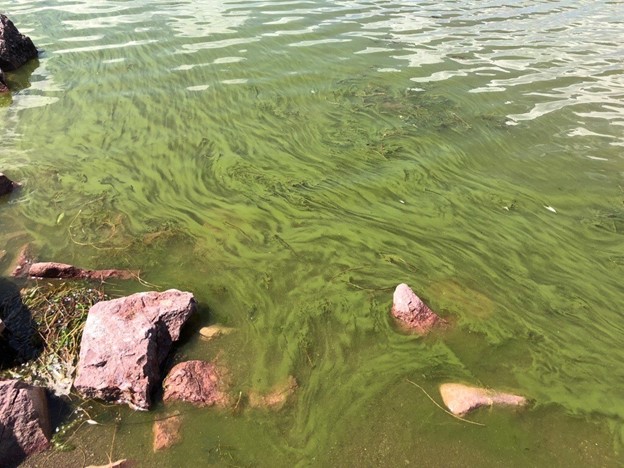
High heat and slow-moving water conditions can activate potentially harmful algal blooms in natural bodies of water like lakes and ponds. Here’s what community members (and their dogs) should know as you plan your next visit to natural bodies of water.
What you can do:
Potentially Harmful Algae Blooms FAQ
Water bodies like reservoirs, lakes and ponds produce algae, which are naturally occurring and a vital component of natural water body's health. In some cases, algae can contain cyanobacteria (a photosynthesizing bacteria), this is also commonly referred to as blue green algae or toxic algae.
In large quantities, cyanobacteria may produce toxins that can pose a risk to community members, dogs and wildlife who come into direct contact (i.e., drinking, inhaling, touching) with a bloom.
Potentially harmful algae and cyanobacteria blooms can look like:
- Thick pea soup
- Spilled bluish-green paint on the water’s surface
- A thick mat of foam along the shoreline
- Short grass clippings
Every bloom is not necessarily toxic. In general, the long, stringy, bright green strands that appear either slimy or cottony, or are mustard yellow in color, are not harmful.
Under certain conditions (e.g., warm weather, elevated phosphorus and nitrogen from runoff and fertilizers), algae and cyanobacteria growth can accelerate and form ‘harmful algal blooms.’
Cyanobacteria can produce toxins, which are harmful to people, pets, and wildlife. These toxins can cause a range of symptoms in humans like skin rashes, eye irritation, vomiting, diarrhea, seizures, or breathing problems. Dogs or other animals that ingest contaminated water can suffer from severe illness or death.
Dogs are especially vulnerable to cyanobacteria toxin poisoning. If you suspect a bloom, ensure your dog does not drink, wade or swim in the area. If you think your dog has been exposed, don’t let your dog lick their fur or paws until they have been cleaned.
If you think your dog has been exposed or notice symptoms, please contact your veterinarian or an emergency vet office.
The city does not routinely test for cyanobacteria at lakes and ponds because blooms conditions can be highly variable - with harmful toxins detectable at one time but not detectable hours later. For this reason, the city recommends using caution whenever any algae are present.
Reservoir staff monitors potentially harmful algae blooms daily and makes swim beach operational adjustments based on their findings. Unplanned operational closures will be communicated on BoulderRez.org and through texts (to sign up text the keyword “BPRReservoir” to 888-777).
Additional Toxic or Harmful Algae Bloom Resources
Photos
Check out additional photos of what a potentially harmful algae bloom can look like.

1 of 2

2 of 2

