

Use the blue card menu below to jump into a topic, or use the vertical menu on the left to explore the entire guide.
Exploring the City of Boulder's Economic Development Plan
The Economic Development Plan, approved by City Council in 2025, provides an updated approach to fostering a healthy, accessible, resilient and sustainable economy based on underlying economic strengths, emerging opportunities, and challenges. It also reflects the creation of the Office of Cultural and Economic Development (OCED), established in January 2026 to bring together arts and culture, business support, and economic development to strengthen Boulder's creative and business ecosystems as interconnected drivers of economic vitality and community well-being.
Guide Navigation
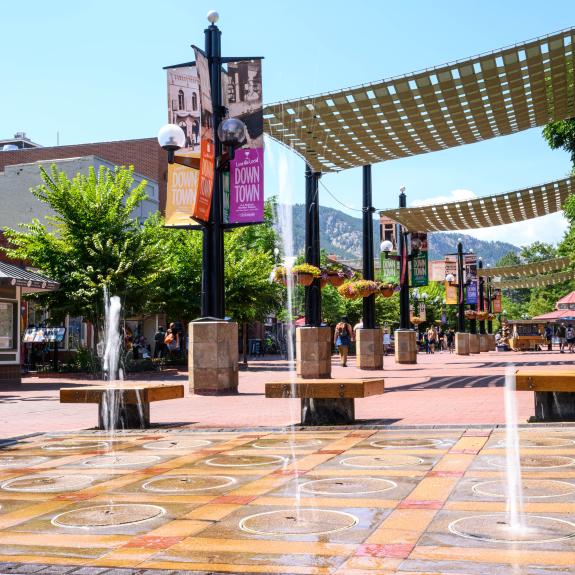
Background and Goals
Discover more about the background and goals of the Economic Development Plan.

Current Conditions
Learn how economic challenges and opportunities impact Boulder's landscape
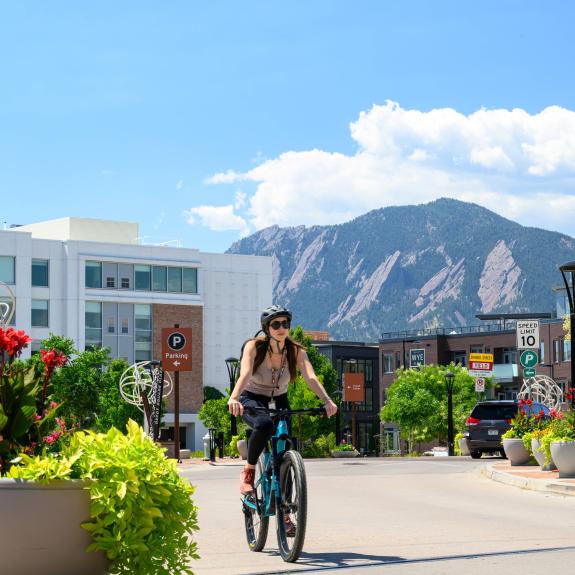
Strategies and Actions
Explore the plan's strategies and actions, which reflect both new and ongoing work
Appendix
Dig into the trends, reports and research that helped inform the plan
Background and Goals
Boulder has a long history of collaboration among community, business and academic leaders to promote a healthy and vibrant economy that supports an excellent quality of life, enhances community character and preserves environmental quality. The city’s Economic Development Plan outlines an updated approach to supporting a healthy, accessible, resilient, and sustainable economy. It is intended to provide city leaders and community partners with a current understanding of economic conditions and emerging trends, challenges, and opportunities and to articulate a collaborative approach built on community strengths to support economic vibrancy.
While an updated strategic plan helps align and focus specific economic development strategies and actions, it is only one complementary piece of broader work that contributes to an equitable, resilient and sustainable city. Strategies included in the plan are intended to reflect, rather than duplicate, work being done by other city departments focused on housing, transportation and other areas that impact the local economy.
The Economic Development Plan has been informed by economic data and input from community members, city council, businesses, economic vitality partners, and other stakeholders. Development of the plan has been guided with the intent to:
- Pursue a more strategic and robust approach to supporting an economically vital community that remains holistic, flexible and responsive to changing conditions
- Support the elements that contribute to a high quality of life in Boulder
- Reflect shared community values of a resilient, inclusive economy driven by innovation and collaboration to benefit all who live, work and visit Boulder
- Build on existing community, economic and competitive strengths and collaborative public-private partnerships
- Address current and emerging challenges while pursuing new opportunities
- Align with other strategies and plans including the Denver Regional Comprehensive Economic Development Strategy (CEDS), Boulder Valley Comprehensive Plan (BVCP) and the city’s Sustainability, Equity and Resilience Framework (SER), Citywide Strategic Plan (CSP), and Racial Equity Plan (REP)
- Complement broader work of other departments and partner organizations on housing, transportation, and other areas that support an economically vital community
Development and implementation of the plan is being led by the Office of Cultural and Economic Development in the City Manager’s Office, with input and assistance from other city departments and partner organizations including the Boulder Chamber, Boulder County, Boulder Small Business Development Center, CO-LABS, Downtown Boulder Partnership, Innosphere, The Latino Chamber of Commerce of Boulder County, University of Colorado Boulder (CU Boulder), Visit Boulder and other organizations.
Current Conditions
Economic Opportunities
The city’s economy is supported by the presence of a world-class research university, more than a dozen national research labs, a broad mix of businesses including a high concentration in advanced industries, one of the nation’s most talented and highly educated workforces, and an award-winning quality of life that continues to make the city an attractive place to live, work and visit. These strengths and community assets support a healthy economy and have positioned the city to benefit from new opportunities such as:
- National publicity and visitation related to CU Boulder head football coach Deion Sanders and the community’s successful bid to host the Sundance Film Festival
- Regional development of emerging climate resilience and quantum technologies through the NSF ASCEND Engine and Elevate Quantum initiatives and growth in artificial intelligence, aerospace, cybersecurity, life sciences and other industries
- Limelight Conference Center and Hotel, Moxy Boulder hotel, and other University Hill area redevelopment
Economic Challenges
At the same time, the community faces a number of challenges, many of which are not unique to Boulder, that have the potential to impact the local economy including:
- Increasing frequency of natural disasters and major disruptions
- Shifts in the national political climate and potential funding cuts to federally funded labs, universities, businesses with federal contracts or grants, local governments and others; decreased consumer and business confidence; and other economic disruptions
- Higher commercial office vacancy rates and decreased foot traffic and business activity in commercial districts and commercial areas throughout the city
- Impacts of rising costs including interest rates, property taxes and commercial lease, payroll, and other operating expenses, and lingering challenges such as supply chain issues, difficulty finding and retaining qualified workers, decreased access to capital and financial resources and increased regulation on businesses
- Rising cost of goods, services and the availability and cost of housing
- Changes in consumer behavior including increased online shopping and meal delivery, telecommuting and remote work that have impacted purchasing and work patterns
- Demographic shifts affecting population and employment growth
- Increased competition from other communities for workers and businesses
- Increased number of individuals experiencing homelessness
Strategies and Actions
Strategies and actions, which reflect both new and ongoing work in collaboration with local, regional and state partners, are grouped to reflect four main areas of focus, with some overlap between focus areas:
- Equity – Enhancing support for a more equitable and accessible economy to increase financial security, economic opportunity and social mobility for all people regardless of their race, ethnicity, gender, ability or socioeconomic status; improving the affordability and ease of doing business; and increasing the availability of more affordable and culturally relevant goods and services;
- Resilience – Expanding efforts to build economic resilience through disaster preparedness and recovery support, encouraging the adoption of sustainable business practices and maintaining a diverse mix of businesses and industries;
- Vibrancy – Addressing the post-pandemic decrease in the vibrancy of the city's commercial areas through continued investment in infrastructure, amenities and programs that encourage diverse populations to connect and creating an environment that attracts and serves residents, workers, students and visitors; and
- Innovation – Building on the city's economic strength in innovation and creativity supported by the presence of world-class research institutions, visionary entrepreneurs and community leaders, collaborative and resource rich business environment, and high concentration of businesses and employment in advanced industries.
Equity
Enhanced support for a more equitable and accessible economy is an essential element of the city's Economic Development Plan. Collaborative work in this area will focus on providing more support for small businesses, including women-, minority- and veteran-owned businesses, and startups, sole proprietors, home-based businesses and other microbusinesses; expanding inclusive contracting and procurement opportunities; training and other workforce initiatives; improving access to business resources and navigation of city processes; addressing affordability challenges; and increasing access to goods and services that meet the needs of all community members. Strategies and actions include:
Small Business Support
Create more business and job opportunities through enhanced support for small businesses, increasing awareness of and access to resources, and programs to help individuals become business owners.
- Connections to resources - Expand outreach and communication to increase awareness and access to business resources and opportunities.
- Technical assistance and advising - Support workshops, events, technical assistance and advising in English and Spanish provided by the Colorado Small Business Development Center serving Boulder County and other partner organizations, enhancing services as needed to meet the changing needs of different types of small businesses including retailers, restaurants and microbusinesses.
- Boulder Microloan Program - Explore expansion of the Boulder Microloan Program through the continued partnership with Colorado Enterprise Fund to provide loans to startups and businesses that may not be able to obtain financing from traditional sources.
- Specialized entrepreneurship support - Expand partnerships to support programs that build economic sustainability by helping individuals become business owners. Examples include incubators and other programs that support startups, Boulder County’s Personal Investment Enterprise (PIE), and programs that help business owners transition to employee-owned businesses.
- Reduced operating costs – Expand efforts to help small businesses reduce operating costs through energy efficiency audits, grants, rebates and other resources.
- Buy Local campaigns and other support – Enhance efforts to encourage residents, workers, students and visitors to make purchases at local small businesses, including women- and minority-owned businesses. Explore enhancing small business support with new programming and resources through existing and new partnerships.
Contracting and Procurement Opportunities
Expand programs to increase awareness of, access to, and participation in, contracting, supplier diversity programs and other opportunities for small businesses to increase revenue through sales of goods and services to the city and other organizations.
- City procurement: Build an inclusive program to address disparities in city contracting and purchasing and increase awareness and understanding of the city’s contracting opportunities and procurement processes to increase economic opportunity and mobility in historically excluded communities. Enhance efforts to encourage city staff to use local and diverse businesses for services, supplies and other purchases whenever possible.
- Certifications, contracting and supplier diversity: Enhance efforts, including through the Boulder SBDC and others to facilitate understanding and access to Small Business Enterprise (SBE), women-, minority-, veteran-owned business and other certifications. Increase awareness, understanding and access to contracting opportunities with corporations, government agencies and other entities.
Workforce Initiatives
Expand inclusive employment opportunities and career pathways through educational programs, recruiting strategies and other workforce development support. Develop coordinated messaging to increase awareness of training opportunities and other workforce initiatives.
- Inclusive employment opportunities - Enhance support for the inclusive workforce development efforts of the Boulder Chamber and others to increase employment opportunities, including those in advanced industries, through on-the-job and other training programs, apprenticeships, internships and recruiting strategies.
- Education and training - Work with partner organizations to expand work-based training to enhance worker skills and create economic opportunities; engage with school districts to support career pathway and skills development; develop career exploration events for parents and students; and provide other youth and adult educational programs.
Accessibility and Navigation
Enhance efforts to increase awareness and access to available city and other business resources and make it easier to navigate through city processes to increase the ease of doing business in Boulder.
- Communication and outreach - Enhance targeted outreach to increase awareness of and access to business resources offered by the city and other organizations for small businesses and aspiring entrepreneurs.
- Enhanced navigation - Expand efforts to make it easier to navigate city processes, find information about doing business in Boulder and access financing and other resources.
Affordability and Access
Expand efforts to address affordability challenges by identifying ways to reduce the cost of leasing commercial space, help businesses reduce operating costs and increase access to goods and services that meet the needs of all community members.
- Affordable commercial space - Expand and formalize the city’s affordable commercial efforts to provide additional opportunities for small businesses, including women- and minority-owned businesses, to lease commercial space at below-market rates. Update research on programs offered in other communities that have been effective in reducing the cost of commercial space for small businesses.
- Reduced operating costs - Continue and expand efforts to help small businesses reduce operating costs through energy efficiency audits, grants, rebates and other resources.
- Affordable and inclusive goods/services - Update and implement a citywide retail strategy to meet the needs of all community members, including those seeking more affordable goods and services, the ability to find goods and services closer to home, and culturally relevant goods and services not currently met by local vendors and service providers.
Resilience
Research has shown that communities with strong, diverse economies and well-prepared businesses preceding a natural disaster or other major disruption are better equipped to recover more quickly. Efforts to support resilience include enhanced planning and coordination with partner organizations to assist with disaster response and recovery, expanded programs to facilitate business preparedness, encouragement of sustainable business practices and increased support for business formation, retention and expansion in a wide range of industries. Research has shown that communities with strong, diverse economies and well-prepared businesses preceding a natural disaster or other major disruption are better equipped to recover more quickly. Specific strategies and actions include:
Coordinated Disaster Planning, Response and Recovery
Enhance planning, coordination and capacity for supporting business and economic recovery from natural disasters and major disruptions.
- Identify and document best practices - Identify and document best practices and lessons learned from past experience during disasters and disruptions and develop an enhanced disaster recovery playbook and tools for supporting businesses and economic recovery.
- Expand coordination - Enhance coordination and collaboration among local, regional and state partners to strengthen business disaster preparedness, response, and recovery efforts.
- Increase capacity - Assess current capacity to understand risk and identify opportunities for improving business disaster planning and response in collaboration with Office of Disaster Management and internal and external partners.
Business Preparedness, Response, and Recovery Programs
Expand and promote resources to encourage and facilitate business preparedness and recovery.
- Business resilience resources - Expand availability of information, training and other resources to help businesses prepare for and respond to disasters and disruptions.
- Promote disaster preparedness - Enhance efforts to encourage businesses to sign up for emergency alerts, prepare continuation of operations plans, and take other measures to help prepare for, respond to and recover from natural disasters and other disruptions.
Sustainable Business Practices
Expand coordinated efforts to encourage businesses to adopt environmentally sustainable practices to increase resilience.
- Business sustainability resources - Encourage more businesses to adopt sustainable practices, such as energy and water efficiency, waste reduction and the use of multimodal transportation options, through coordinated outreach and communications efforts to raise awareness of incentives, free expert advising and other resources offered through Boulder County Partners for a Clean Environment (PACE) and other sustainability programs.
Diverse Mix of Businesses
Support the creation, attraction, expansion, and retention of businesses in a wide range of businesses and industries through enhanced access to resources and navigation of city processes; proactive business outreach and communications; quality physical and digital infrastructure and amenities; expansion of incentives and other economic development tools; and economic research, planning and partnerships.
- Enhanced information, assistance and navigation - Expand efforts to make it easier to find information about doing business in Boulder; find employees, commercial space, financing and other business resources and navigate city processes.
- Communication and outreach - Expand coordinated business outreach and communication efforts to build relationships with businesses, site selectors, commercial property managers and brokers, and others to raise awareness of business resources and benefits of Boulder as a business location. Continue to enhance internal and external collaboration to more effectively respond to opportunities to retain and attract a wide range of businesses.
- Infrastructure and amenities - Continue to maintain and explore ways to enhance and leverage the city’s physical and digital infrastructure and amenities that make Boulder an ideal location for starting and growing businesses in a variety of industries.
- Economic development tools - Enhance economic development tools such as rebates of certain city fees and taxes, grants, and other business incentives; special zoning such as foreign trade zones and CHIPS zones; and other programs to encourage businesses to start and grow in Boulder. Provide local business incentives and connections to state and federal incentive programs and other resources.
- Economic research and strategic planning - Expand economic research and reporting by the Boulder Chamber and others to monitor and respond to changes in economic conditions and trends, gain a better understanding of specific aspects of the business community and local economy, and support strategic planning efforts.
- Economic initiatives and partnerships - Participate in local, regional and state economic initiatives, provide insight and perspective for policy discussions and foster relationships with public and private partners that support economic vitality.
Vibrancy
The Economic Development Plan includes strategies for responding to the post-pandemic decrease in the vibrancy of the city's commercial areas due to high commercial vacancy rates, rising costs of commercial space, changes in work patters and consumer behavior, and other factors. Collaborative efforts to support vibrancy include investment in infrastructure, amenities and programs that create an environment that attracts and serves community members including residents, workers, students and visitors and encourages diverse populations to connect. Strategies and actions include:
Commercial Area Vibrancy
Support increased activity in commercial areas through improved connections, mixed-use development and other enhancements; enhanced physical and digital infrastructure and amenities; and expand collaborative work with the Boulder Chamber, Downtown Boulder Partnership, The Hill Boulder, Visit Boulder and other organizations.
- Infrastructure and amenities - Enhance infrastructure and amenities in commercial areas to activate areas and provide positive experiences for community members and make Boulder an ideal location for starting and growing businesses in a variety of industries, including those that generate sales tax revenue, enhance the city's appeal as a destination or contribute to its local character.
- Safety and cleanliness - Provide uniformed ambassadors that offer information and assistance to residents and visitors and work with the police to patrol the district, address unfavorable activities or ordinance violations and assist individuals in need of social services.
- Marketing, promotion and special events - Enhance collaborative work with partner organizations to promote Boulder as an ideal place to work and visit to increase activity in Downtown Boulder, University Hill, Boulder Junction and other commercial areas and neighborhoods throughout the city.
- Programs and tools - Identify and implement strategies such as financing, special districts and other tools, including the exploration of a Downtown Development Authority (DDA), to support strategic investment, district vitality and increased activity in commercial areas through improved connections, mixed-use redevelopment and other enhancements. Ensure the flexibility of financing tools to address emerging needs and avoid duplication of administration and responsibilities.
- Retail research and support - Conduct research to understand changing consumer behavior and retail trends and identify unmet needs and opportunities to improve the city’s retail mix to inform an updated citywide retail strategy.
Commercial Vacancy Rates
Work with the commercial real estate community, economic vitality partners and others to address high office vacancy rates in Downtown Boulder and other parts of the city.
- Increase commercial office occupancy - Monitor commercial real estate trends and work collaboratively with commercial real estate property owners, brokers and others to gain an in-depth understanding of office, industrial and retail vacancy rates; address issues; and explore solutions such as promotions and incentives to attract tenants, increased flexibility in allowed uses, assistance to make it easier to navigate city processes and redevelopment of properties.
- Business attraction - Expand existing tools, such as business incentives, marketing materials and coordinated messaging to help attract businesses to Boulder, with the goal of filling vacant commercial spaces. Work proactively with commercial brokers and economic partners to effectively market Boulder as a destination for business relocation and expansion, with the strategic use of incentives as necessary.
"Main Street" Business Support
Enhance programming to support the success of small retailers, restaurants and other local small businesses and microbusinesses.
- Workshops and technical assistance - Enhance programming such as workshops, advising and connections to resources tailored for small retailers, restaurants and other local businesses.
- Grants, loans and shared spaces - Expand microloans for small businesses that may not be able to obtain financing from traditional sources. Explore development of new programs such as matching grants, low-interest loans or shared spaces to help small local businesses get established and grow.
- Buy Local campaign – Enhance efforts to encourage residents, workers, students and visitors to make purchases at local small businesses in commercial areas and throughout the city.
Visitor Economy Support
Expand strategies to support the visitor economy which includes business and leisure travelers and other daytime and overnight visitors and local businesses and service providers that contribute to community vibrancy and economic vitality.
- Marketing and promotion - Support the work of Visit Boulder, the city’s destination management organization, to attract a diverse range of visitors while prioritizing the well-being of the environment and local community. This includes hosting a website with trip planning information, visitor-related business listings, events calendar, and activity ticket sales and lodging reservations; cash incentives, newsletters and other support for tourism partners; grants program to support events for residents and visitors; research to support destination marketing efforts; and maximizing opportunities such as the Sundance Film Festival for increasing visitation during times of the year with historically lower visitor activity.
- Arts and culture - Expand programs to support arts and culture organizations and artists, including special events and public art, to support the creative economy, serve the community and attract visitors, as outlined in the Boulder Arts Blueprint, an updated comprehensive framework to support the growth and vibrancy of the city's creative landscape.
Innovation
Much of the city’s past and current economic success is related to innovation and creativity supported by the presence of world-class research institutions, visionary entrepreneurs and community leaders, a collaborative and resource rich business environment, and a high concentration of businesses and employment in advanced industries such as aerospace, artificial intelligence, bioscience, cleantech, cybersecurity, information technology, nanotechnology, photonics and quantum technologies. Work to strengthen the city's position as an innovation and startup hub includes support for the development and commercialization of new technologies, and support for businesses in advanced industries and artists, cultural organizations and businesses in creative industries. Strategies and actions include:
Research and Commercialization Support
Continue support for the innovative research and technologies emerging from CU Boulder, federal labs and private sector through support for federal research funding, commercialization of new technologies, and advanced industry startups and growing businesses.
- Research funding support - Enhance work with CO-LABS, CU Boulder, Boulder Chamber and others to raise awareness of importance of federal funding for scientific research at Colorado’s national labs and universities, facilitate connections to support the advancement of breakthrough technologies and create new jobs, provide funding to help underwrite an updated federal labs economic impact study, and support collaborative efforts to monitor and respond to reductions in federal funding for local research institutions.
- Commercialization support - Increase support for work done by CU Boulder, Innosphere Ventures and others to facilitate the commercialization of innovative new technologies through coordinated messaging to increase awareness of specialized resources available in Boulder; funding incubator, accelerator, and entrepreneurship programs; and providing opportunities to test new products and technologies.
- Technical assistance - Expand awareness and use of the SBDC TechSource program through increased promotion and capacity to serve more businesses in advanced industries.
Advanced Industries Support
Enhance programs to promote the city's position as an important innovation and advanced industry hub, develop a diverse workforce to meet industry needs and enhance support for businesses in advanced industries through specialized programs and economic development tools.
- Marketing and promotion - Expand work with the Boulder Chamber, industry groups and others to raise awareness of Boulder’s strong innovation ecosystem, which make the city an ideal location for businesses in advanced industries. Efforts will be aimed at promoting and facilitating business attraction, creation, expansion and relocation to help grow these industries while also addressing office vacancies and reinvigorating key commercial areas.
- Workforce initiatives - Enhance work with the Boulder Chamber, Elevate Quantum, Innosphere Ventures, Latino Chamber, CU Boulder, Workforce Boulder County and others to develop a diverse talent pipeline for advanced industries jobs through industry sector workforce development partnerships, and apprenticeship, internship and other programs. Increase efforts to increase awareness of advanced technology training, certification and employment opportunities.
- Specialized programs and tools - Expand support for businesses in advanced industries through specialized programs and tools such as state CHIPS Zone designation, foreign trade zone (FTZ), participation in the Colorado Hub for Health marketing campaign, development of industry-specific incentives and other economic development initiatives and tools.
Arts, Culture and Creative Industries Support
The arts are a key driver of economic vitality, and correlated with a culture of innovation and entrepreneurship. Work to strengthen Boulder's position as one of the most arts-vibrant communities in the U.S. includes enhanced support for artists, arts and cultural organizations and businesses in advertising, architecture, culinary arts, design, entertainment, media and publishing and other creative industries. This work is outlined in the Boulder Arts Blueprint, an updated comprehensive framework to support the growth and vibrancy of the city's creative landscape.
- Accessibility and inclusion – Ensure cultural amenities and creative experiences are widely available and accessible to all Boulder communities by encouraging work to expand arts and culture as a public resource in all neighborhoods and reduce barriers so everyone can participate.
- Entrepreneurship and workforce - Make resources, programs and training available to build pathways for creative enterprises and entrepreneurship, solidify the creative economy as a viable career path that pays a living wage, and help creatives build business skills, connect to local and regional markets and become fiscally sound enterprises.
- Reputation and identity - Celebrate arts, culture and creativity as central to Boulder's identity, reputation and attractiveness. Honor, renew and celebrate Boulder's identity as a place that attracts generations of makers, writers and dreamers drawn to its creative spirit and signature "electic" vibe.
- Public art and public space - Expand public art and creative expression across public spaces to help show what the community values and bring shared spaces to life.
- Nonprofits and institutions - Amplify the impact of the nonprofit cultural sector to strengthen sustainability, partnerships and collaboration, promote and sustain nonprofit institutions while encouraging greater financial investment and resource sharing.
- Experimentation and innovation - Incentivize cutting-edge, innovative and experimental practices across the changing creative landscape, including the use of technology, artificial intelligence, regenerative practices, contemplative arts and other ideas.
- Scenes and affinities - Encourage dynamic, informal communities of affinity or practice to facilitate scenes that grow naturally among people with shared interests who can build culture together.
Appendix
Visit the Boulder Economic Profile to see the data that helped inform this plan.