

A Transportation Maintenance Fee (TMF) is an annual or monthly fee paid by residential and commercial properties to cover the cost of transportation maintenance activities such as pavement management, traffic signs, signals and marking replacement, median maintenance, and bridge repair. This type of fee is typically paid through utility bills, but can be assessed in other ways.
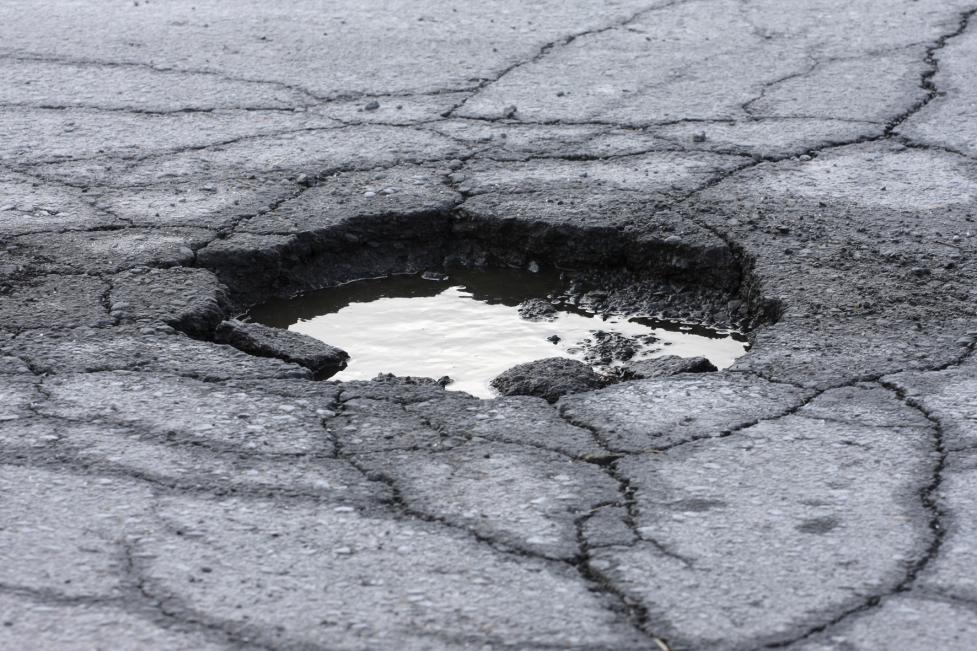
The cost to maintain and operate the city’s transportation system has grown beyond the city’s annual dedicated sales tax revenue and budget. Over the last 15 years, the city has analyzed a variety of potential funding mechanisms, resulting in two separate community working groups identifying a Transportation Maintenance Fee (TMF) as the most viable revenue mechanism.
As part of the city’s Long-Term Financial Strategy, the city advanced a Transportation Maintenance Fee as part of the 2026 Budget to cover the cost of a select array of the most critical underfunded and unfunded transportation maintenance needs during a time of slowing economic growth, rising costs, flattening of major revenue sources, and recent state legislation impacting city revenues. The TMF will add a predictable, reliable and scalable source of funding that is not subject to economic variability.
Boulder City Council approved the TMF for implementation in October 2025. City staff are now working to implement the fee and its collection system.
What is a Transportation Maintenance Fee (TMF)?
What will the TMF pay for?
The TMF is intended to fund capital maintenance, which focuses on repairing, rehabilitating, or replacing aging transportation infrastructure to maintain long-term system performance. These investments help keep assets such as bridges, roads, and sidewalks in good condition and maintain targeted Pavement Condition Index (PCI) standards.
The TMF does not cover operational maintenance, which, by contrast, includes routine and ongoing activities that keep facilities functioning day to day. Examples include seasonal services such as snow response, filling potholes, median weeding, landscaping upkeep, and general cleaning.
The TMF can raise up to $6,423,000 annually for capital maintenance, but the actual amount may vary. An example of spending, depending on infrastructure maintenance priorities, could look like:
| Needs | Cost |
|---|---|
| Pavement and Street Safety Asset Management | $4,229,000 |
| Bridge Asset Management | $813,000 |
| Sidewalk Repair | $434,000 |
| Multi-Use Path Capital Maintenance | $380,000 |
| Roadway Markings Maintenance | $296,000 |
| Bus Stop Maintenance | $271,000 |
| Total | $6,423,000 |
Why does the city need a TMF?
As the city’s transportation system has expanded and matured, the cost to maintain and operate it has grown beyond the city’s annual dedicated sales tax revenue and budget. Unfunded and underfunded capital maintenance results in deferred maintenance, which ends up costing more over time. Cost escalation and price inflation for materials and labor also contribute to diminishing purchasing power. As part of the city’s Long-term Financial Strategy, we advanced a Transportation Maintenance Fee (TMF) as part of the 2026 Budget to cover the cost of a select array of the most critical underfunded and unfunded transportation maintenance needs into the future. Boulder City Council approved the TMF for implementation in October 2025.
Why now?
A TMF provides a predictable, reliable and scalable source of funding that is not subject to economic variability. Over the last 15 years, the city has analyzed a variety of potential funding mechanisms. This intensive community process resulted in two separate community working groups identifying the TMF as the most viable revenue mechanism.
In February 2020, Boulder City Council directed staff to conduct a nexus study for the TMF. Council prioritized the creation of a Long-Term Financial Strategy at its April 2024 retreat. Staff initiated TMF scoping later that summer and procured a consultant for the nexus study in fall 2024. Staff updated the Transportation Advisory Board in May 2025 and the city’s Financial Strategy Committee (FSC) in June 2025.
Over fall 2024 to spring 2025, the city finalized the fee’s nexus study to determine rates that properties would pay based on a person-trip methodology to establish the legal nexus for such a fee structure to comply with State law, and concurrently initiated focused stakeholder outreach.
How are TMF rates determined?
The Transportation Maintenance Fee (TMF) is designed using a fair-share methodology. This approach allocates the cost of maintaining the transportation system based on the estimated level of use generated by different types of properties. Use is measured through person-trip generation, which estimates how many trips people make to and from a property as part of its normal activity.
Under this method, each property type contributes its proportionate share of transportation maintenance costs based on its typical demand on the system. For example:
- Office uses generate trips from employees and clients.
- Retail uses generate trips from customers and employees.
- Institutional uses generate trips from members, congregants, patients, visitors and staff.
A person trip is counted the same regardless of trip purpose: whether someone is traveling to work, shop, attend school, participate in religious services, or access other services.
This ensures the fee reflects actual transportation demand rather than tax status or organizational structure.
The TMF is a service-based fee, not a tax. It is:
- Charged to properties based on the estimated use of the transportation system.
- Typically collected through the existing utility billing system.
- Dedicated specifically to transportation maintenance.
- Predictable, scalable, and adjustable annually.
- Not subject to voter approval because it is structured as a fee for service rather than a general tax.
Certain governmental and quasi-governmental agencies are exempt from local taxes and fees under Colorado law. These include entities such as the University of Colorado Boulder, public K–12 schools operated by Boulder Valley School District (BVSD), federal laboratories, and other state or federal governmental and quasi-governmental agencies. These exemptions are outside the City’s authority and were not discretionary policy decisions within the TMF program.
Private schools, private universities, and other privately operated institutional uses are not exempt.
Although some entities cannot be charged the TMF, the transportation system demand generated by these uses is still accounted for in the nexus study. Their estimated shares are included in the total under- and unfunded transportation maintenance needs and in the overall rate calculations. These exempt institutions may be invited to contribute voluntarily through separate intergovernmental agreements outside of the TMF ordinance.
Importantly, TMF rates are not adjusted upward or downward for others based on whether exempt institutional entities choose to participate voluntarily.
Institutional land uses, such as places of worship, hospitals, non-profits, and other similar organizations, were not exempted as a category during the development of the TMF. These types of institutional uses are included in the person-trip methodology because they generate measurable transportation demand.
The TMF nexus study is grounded in the principle that transportation system costs should be broadly shared among system users because all properties generate trips and rely on the city’s multimodal transportation network. The fee structure is designed to create a predictable and stable revenue stream to address ongoing transportation maintenance needs.
If additional exemptions such as exemptions for specific institutional or religious uses were established, the result would be less total TMF revenue collected. This would reduce the funding available for transportation maintenance unless the overall fee structure were formally revised.
Increasing the rates on other properties to offset revenue losses from exemptions would undermine the legal nexus between a property’s transportation system use and its fair share of maintenance costs, which is a core principle underlying the TMF methodology.
Places of worship, hospitals, non-profits, and similar organizations are categorized as institutional land uses because their trip generation patterns most closely align with the institutional land use definitions in the Institute of Transportation Engineers (ITE) Trip Generation Manual, the industry standard used in transportation planning studies.
This classification reflects transportation demand characteristics and observes trip patterns, not tax status, ownership structure, or whether an organization is for-profit or non-profit. In other words, the institutional designation is a technical classification based on travel behavior, not a policy judgment about the nature of the organization.
Rates
The TMF rates for residential and non-residential properties are provided in the tables below.
| Residential Land Use Type | Unit | Annual Fee |
|---|---|---|
| Detached (formerly known as Single-family) | Dwelling | $54 |
| Multi- or attached (formerly known as Multi-family) | Dwelling | $42 |
| Non-Residential Land Use Type | Unit | Annual Fee |
|---|---|---|
| Commercial | 1,000 Sq Ft | $160 |
| Office | 1,000 Sq Ft | $71 |
| Institutional | 1,000 Sq Ft | $97 |
| Industrial | 1,000 Sq Ft | $32 |
| Research & Development | 1,000 Sq Ft | $72 |
| Warehouse Facility | 1,000 Sq Ft | $11 |
| Non-public university* | Student | $7 |
| Non-public elementary school* | Student | $10 |
| Non-public middle school* | Student | $9 |
| Non-public high school* | Student | $8 |
Transportation Maintenance Fee Calculator
Curious to see how much your property may be charged? Estimate your annual Transportation Maintenance Fee based on land use type and size with the Annual Transportation Maintenance Fee Calculator.
Calculator
What is the projected revenue?
The city is anticipated to initiate fee collection mid-year 2026 and generate up to $2.25 million. Starting in 2027 and thereafter, the TMF will generate up to $6.4 million annually.
Will the TMF replace local sales tax?
While the TMF will shore up funding for select critical maintenance needs, it will only cover a portion of the city’s overall transportation funding needs. Transportation funding in the city comes from a variety of sources, including local sales tax as well as external, competitive regional, state, and federal grants that supplement this limited local funding to realize Boulder’s transportation goals and climate commitment. The TMF will allow the city to have flexibility in meeting core maintenance needs while continuing to work on the bigger transportation funding strategy.
While the TMF is focused on a select subset of critical transportation maintenance needs, the CCRS sales tax extension will fund a wide range of important infrastructure and capital improvement projects across the city for a variety of areas, such as parks, fire and police stations, trailheads, bridges, and recreation centers.
Next Steps
City staff have incorporated the TMF in the city’s 2026 Budget and the city’s Long-Term Financial Strategy. City Council approved the TMF for implementation in October 2025 as part of the city’s annual budget process.
Staff will continue to provide informational community outreach and engage with members of the business community and other interested parties to inform the implementation of the TMF. The city will also continue its Fund Our Future community engagement as part of the Long-Term Financial Strategy effort, for which new sources of revenue like the TMF are a key strategy.