Why is it important to grow native plants?
Why are there so many native plants in these gardens? If it's waterwise, doesn't that mean it's adapted?
Not all waterwise plant species grown in local gardens are native to Colorado. But native species - plants that have grown in Colorado or in nearby locations in the Rocky Mountain region since the mid-1800s - provide countless benefits.
They have co-evolved with a range of pollinating insects and wildlife over millennia and are well adapted to our unique, challenging environment.
While many ornamental garden plants may provide color and beauty to a garden, our native plants provide essential habitat for our native birds, insects and animals.
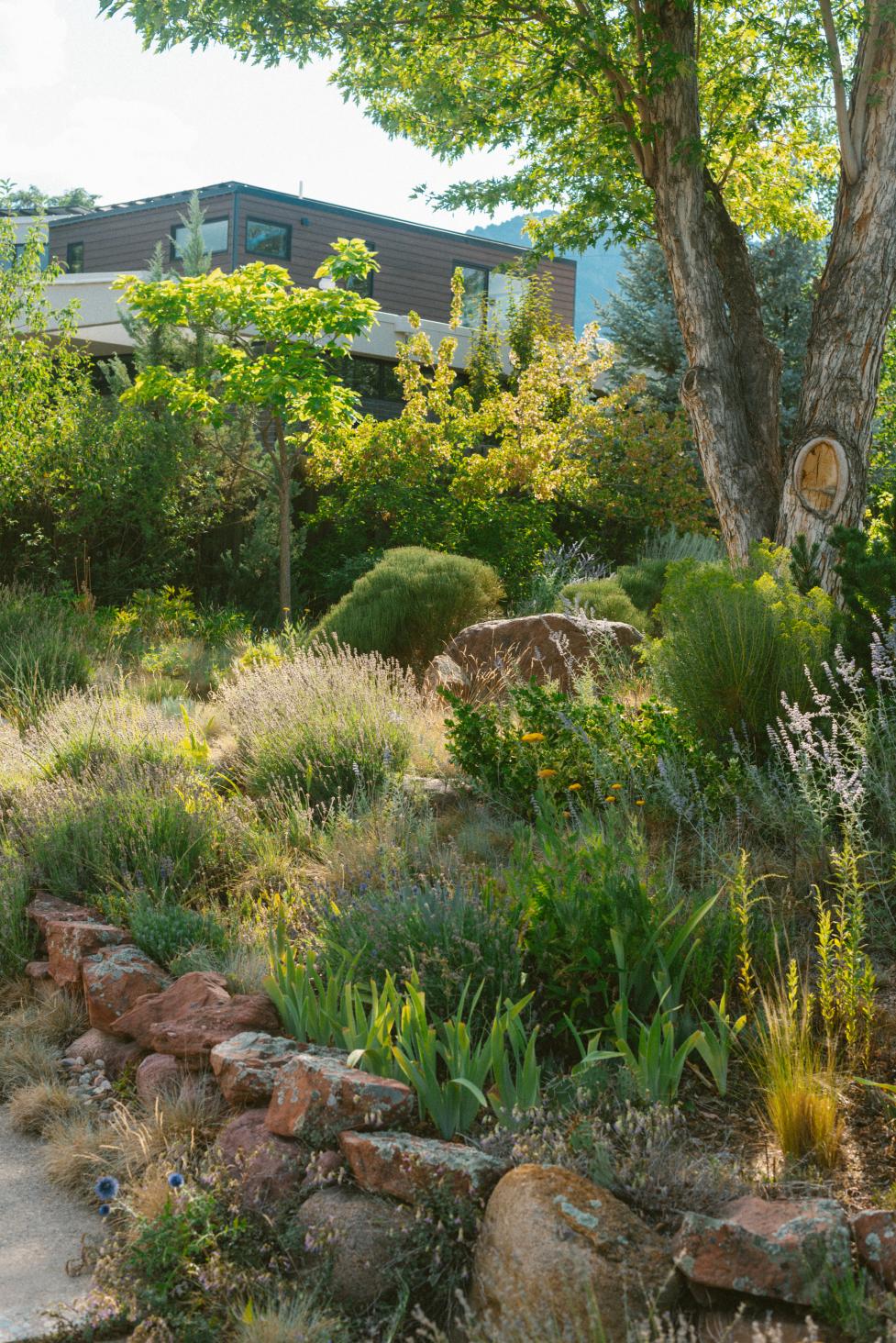
All of the gardens on this page are waterwise, predominantly native, AND support our environment in other ways. We hope you leave inspired to go plant your own garden!
Biodiversity Nursery
This garden design, available as a Resource Central Garden-in-a-Box, is designed to attract butterflies, native bees and other insects, while providing food and shelter for birds to strengthen biodiversity in your neighborhood. Because the City of Boulder lies in an ecotone, a region of transition between two ecosystems, it has extra potential for biodiversity. Creating islands of habitat across the city supports both the Foothill Shrubland ecosystem and the Front Range Plains ecosystem that Boulder straddles.
Even more exciting, as part of the Neighborhood Nature Lab the Biodiversity Nursery is serving as a natural laboratory, helping us understand how climate change impacts the timing of putting out leaves and budding flowers.
Quenched Queen – Designs for Juniper Replacement
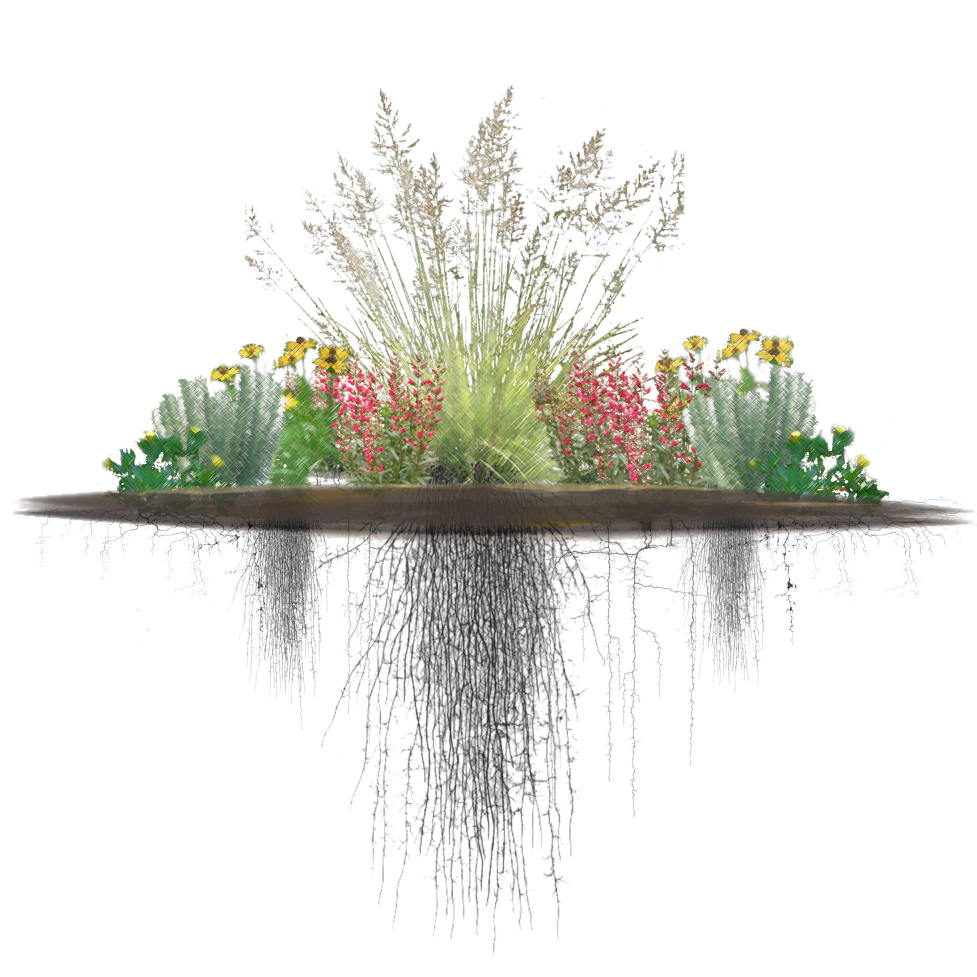
Junipers are highly combustible plants due to their resinous branches, dense growth, and retention of dead plant material. Removing junipers is a necessity for reducing wildfire risk in the Wildland-Urban Interface (WUI), but those spaces don’t always have to be bare! If the shrub is at least five feet away from your home, replacing junipers with low flammability plants augments visual interest, keeps soil shaded, and supports ecosystem health. All the plants for these designs are approved for regulated WUI and only need to be irrigated for the establishment period.
We have three Quenched Queen designs for a variety of sites:
Quenched Queen for Sun
This design is available as a Resource Central Garden-in-a-Box and features low flammability plants that do well in full sun.
Quenched Queen for Shade
Plants in this Quenched Queen design were selected for both shade tolerance and low flammability.
Quenched Queen Hedgerow
Removing juniper shrubs can impact privacy, so this hedgerow is designed to meet your screening needs while also decreasing the likelihood of wildfire impacting your home.
The Butterfly’s Rain Garden
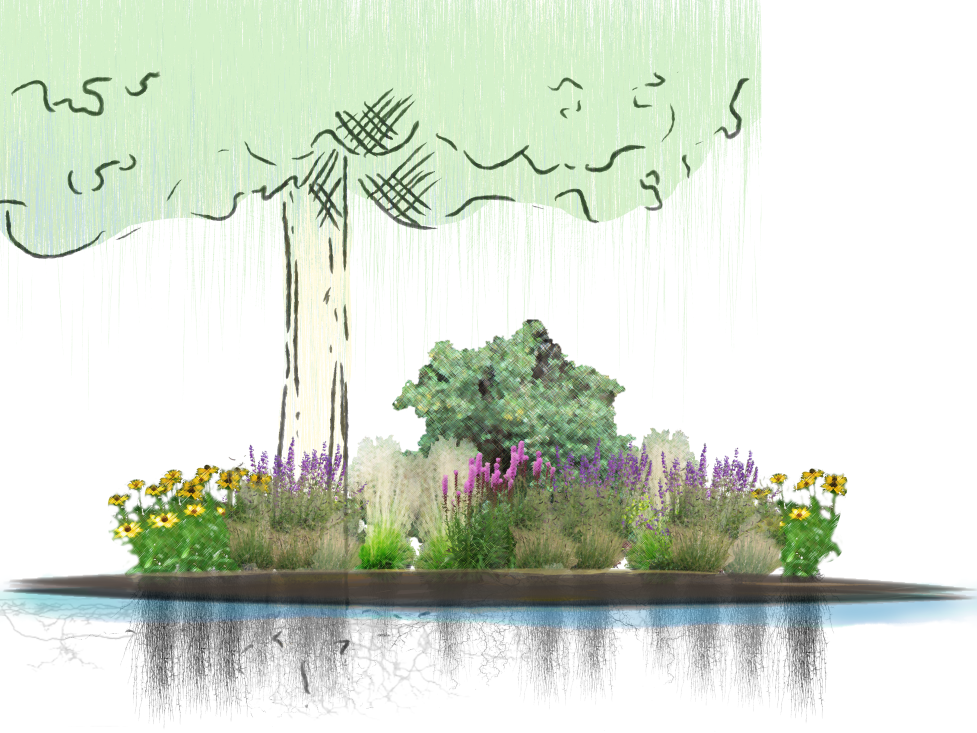
The Butterfly’s Rain Garden is designed for capturing, absorbing, and filtering stormwater runoff from hard surfaces such as roofs, roads, and sidewalks. Plants in this design were selected for their incredible ability to survive in both dry and wet environments, allowing them to live during drought but absorb water during heavy rainfall. As runoff flows through, the garden captures sediment and pollutants, keeping them out of our waterways. Rain gardens are important for slowing water flow and allowing it to soak into the ground, reducing localized flooding.
This garden is designed to be installed in a 6-inch depression covered with squeegee gravel to hold water while it soaks into the ground.
For how-to-step-by-step instructions for creating rain gardens check out this guide from CSU Extension: Rain Garden Resources - Colorado Water Center At CSU
Add a tree to your raingarden if you want to provide shade and cool our City as well as filter and slow down stormwater.
One Tree of Choice:
- Acer negundo 'Sensation' – Sensation Box elder
- Amelanchier arborea – Downy serviceberry
- Celtis occidentalis – Hackberry
- Prunus virginiana – Chokecherry
- Quercus macrocarpa – Burr Oak
Tree Nursery
Our Tree Nursery offers low-water-use native plants that complement the oak trees and support their growth when they are young. The Golden Currant grows faster than the oak tree sapling, providing shade for the tree to protect it from sun scald and encourage it to shoot up straight faster in search of light. The other understory plantings cover the ground, shading out weeds and increasing the retention of water in the soil. The perfect spot for this garden is where it will grow to replace an aging high-water-use tree like our elder maples but far enough from the mature tree to get some light from overhead. Supporting our urban tree canopy will help keep our city shaded and cool when temperatures rise.
As part of the Neighborhood Nature Lab, we are tracking how oak trees planted with understory shrubs that support their growth perform as shade producers in comparison to oak trees planted on their own.
To get the most benefits from your nursery shrub layer, be sure to orient your nursery with the Golden Currant to the southwest of the sapling tree; our southwest sun is the harshest.