

Adopted September 30, 2026.
The Boulder Arts Commission believes that arts and culture are essential to building a sustainable future. The arts play a unique role in helping communities process change, strengthen connection, and imagine sustainable futures. Boulder's creative community has the power to inspire, educate, and mobilize.
Definition of Environmental Sustainability
Sustainability refers to the responsible stewardship of natural resources to meet current needs without compromising the ability of future generations to meet theirs. It encompasses ecological, economic, and social goals. The City of Boulder strives to be "a sustainable, thriving, and equitable community that benefits from and supports clean energy; preserves and responsibly uses the earth's resources; and cares for ecosystems." The Arts Commission embraces this vision as foundational to its own.
What Sustainability Means to the Arts Commission
Environmental sustainability strengthens the long-term vitality and resilience of Boulder’s arts sector. The cultural community should strive to integrate sustainability into operations, programming, and advocacy in ways that reduce environmental harm while increasing creativity, relevance, and community connection.
Environmental sustainability also advances the City’s broader climate and resilience commitments. Through its policies, grantmaking, public art investments, resources, and partnerships, the Arts Commission can demonstrate how arts and culture contribute to community resilience and citywide systems change.
The Arts Commission and the Office of Arts and Culture support the cultural community’s sustainable work through:
- Grantmaking and programs. Integrate sustainability considerations into grantmaking, public art, programming, and encourage the cultural community to adopt meaningful, evolving practices over time.
- Boulder Vision Grant: The purpose of Boulder Vision Grants is to encourage experimental, emerging, underrepresented projects that align with broader city initiatives, including environmental sustainaiblity.
- Catalyst Tier General Operating Support: Environmental sustainability is one of five qualifications to become a Catalyst Organization and receive extra General Operating Support.
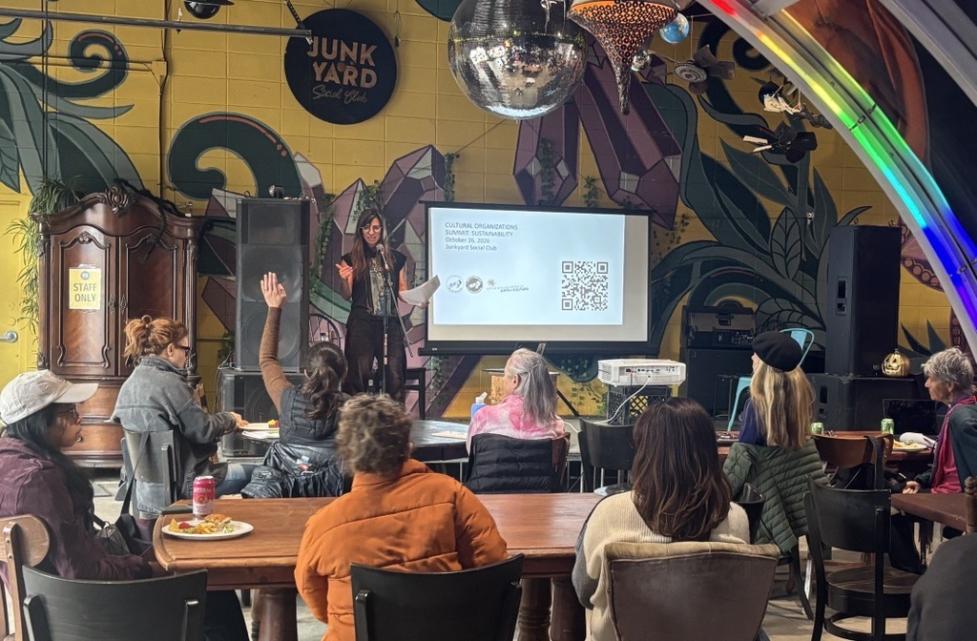
- Recognition and Peer Learning. Celebrate and elevate sustainability leadership across Boulder’s arts and cultural sector. Share success stories and technical knowledge through gatherings, summits, workshops, collaborative initiatives, and peer learning.
- Access to funding and infrastructure. Support access to funding and resources including grants, shared infrastructure, technical assistance, and city programs.
- Partnering Across Systems. Collaborate with the City's Climate Initiatives office, the circular economy and zero waste programs, nature-based solutions initiatives, and other departments to connect arts organizations with city resources and opportunities.
- Advancing Equity and Access. Ensure that sustainability resources, opportunities, and support are accessible to organizations of all sizes, with particular attention to smaller and under-resourced organizations that may have the most to gain.
Sustainability Values Statements
The following commitments will guide the Arts Commission:
- Lead with Creativity. Recognize that artists and cultural organizations are practitioners and innovators in environmental sustainability, and recognize artistic practice as a tool for environmental storytelling, community engagement, and systems change.
- Connect Across the Community. We believe arts and culture are part of a larger civic effort, and that the cultural sector is strongest when its sustainability work is connected to the wider community and to the City’s climate commitments.
- Advance Equity and Access. We believe sustainability should be within reach for organizations of all sizes, with particular care for small and under-resourced organizations that may need additional support to achieve their sustainability goals.
- Lead by Example. We hold ourselves to the same standards we share with others, and commit to reflecting these values in the Arts Commission's own work, including directing funding toward sustainable practices.