

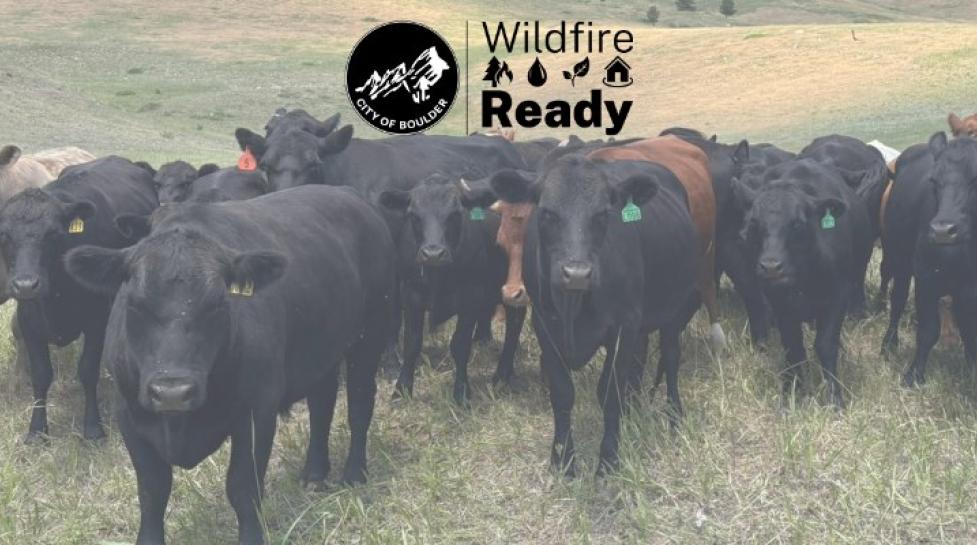
While mowing is a common approach for managing vegetation, project partners chose targeted cattle grazing because it can reduce wildfire risk while also supporting healthy grasslands.
A six-day cattle grazing pilot project completed this spring in Boulder’s Shanahan Ridge neighborhood showed how targeted grazing can help reduce wildfire risk while also bringing neighbors together.
The project was a collaboration between the City of Boulder and The Watershed Center across nearly 12 acres of privately owned open space managed by five different homeowners’ associations. The cattle were strategically moved through grazing areas near homes. As the cattle ate tall grasses, they reduced vegetation that could help a wildfire spread quickly.
Shanahan Ridge was chosen for this pilot project because it borders open space and has large grassy areas near homes. Tall, dry grass can make it easier for a fire to reach buildings. These factors led to Shanahan Ridge being identified as a priority area for wildfire mitigation in the 2024 Boulder County Community Wildfire Protection Plan.
While mowing is a common approach for managing this type of vegetation, project partners chose targeted cattle grazing because it can reduce wildfire risk while also supporting healthy grasslands. Grazing creates areas with different grass heights and reduces dry grasses that can fuel a fire. Another benefit of grazing is that, unlike mowing, grazing does not leave behind cut grass that can accumulate as dry fuel.
After the grazing phase, crews will trim grass directly next to homes and along evacuation routes. In these areas, shorter, more consistent grass heights can help firefighters defend homes during wildfire.
In addition to reducing wildfire fuels, the project created opportunities for community members to connect with one another and experience wildfire mitigation firsthand.
To better understand residents' experiences, The Watershed Center conducted a community survey during and after the project. The results showed that residents overwhelmingly viewed the project positively. Common themes included appreciation for the project's low impact on daily life, its effectiveness at reducing wildfire fuels, its ecological approach to vegetation management, and the sense of community it fostered.
Throughout the grazing period, neighbors gathered to watch the cattle, many with their children and dogs. Survey responses frequently referred to more people outdoors, meeting neighbors, and enjoying the shared experience of having cattle in the neighborhood. One community member said, “independent of the reduction in fire risk and improvements to the ecosystem, having the cows in the neighborhood was a special treat to have such a close connection to the animals for those of us in the suburbs. They were entertaining and provided a gathering point for the neighborhood. I saw many people watching them and connecting in ways that felt like it undid some of the isolation left from the pandemic.”
"Wildfire resilience is ultimately about people as much as vegetation," said Chiara Forrester, Forest and Fire Program Director at The Watershed Center. "Projects like this reduce fuels, but they also create opportunities for neighbors to learn, connect, and participate in solutions together. The grazing pilot showed that we can make progress on wildfire preparedness while strengthening the sense of community that helps neighborhoods become more resilient."
The survey also found strong support for future grazing. More than 90% of respondents said they would support future grazing in Shanahan Ridge as a wildfire risk reduction tool, and many residents expressed interest in seeing grazing return in future years. As communities across Colorado seek effective ways to reduce wildfire risk, the Shanahan Ridge pilot demonstrates that targeted grazing on private lands can be a valuable addition to the wildfire mitigation toolbox. In addition to reducing wildfire risk, the project provided residents with a visible, tangible connection to the work of building safer and more resilient communities.
“We hope this project inspires Boulder community members to connect with their neighbors and work together to reduce wildfire risk,” said Paul Dennison, City of Boulder Open Space and Mountain Park’s Wildland Fire Senior Program Manager.
Community members who want to start their wildfire resilience journey can sign up for a detailed home assessment through Boulder Fire-Rescue or reach out to The Watershed Center at cforrester@watershed.center. To learn more about wildfire resilience work in the City of Boulder visit bouldercolorado.gov/WildfireReady.
--CITY--
About The Watershed Center:
Established in 2005, The Watershed Center (www.watershed.center) is a nonprofit organization based in Longmont, CO that protects and restores watersheds for people and the environment using a collaborative and science-based approach.