

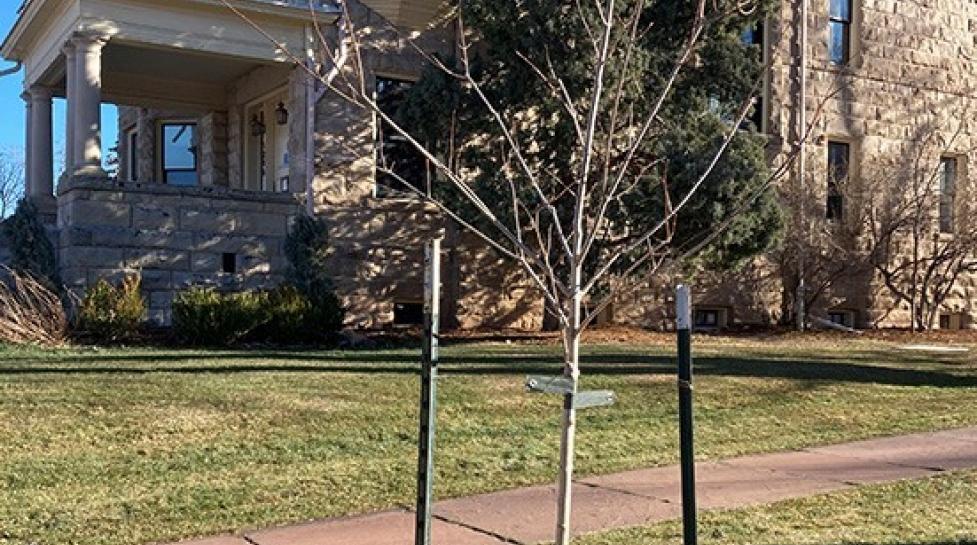
Due to dry and windy conditions this winter, the City of Boulder is reminding community members that winter watering is essential to keep trees healthy.
Due to dry and windy conditions this winter, the City of Boulder is reminding community members that winter watering is essential to keep trees healthy.
Our region is naturally a semi-arid, shortgrass prairie that would have few trees without irrigation. Properly placed and maintained trees are an asset to the environment, our community and are critical to mitigating climate change. Urban trees draw down carbon, create shade to cool heat islands, intercept stormwater to reduce flooding, improve air quality and public health and can create economic opportunities.
Trees most at risk from dry winter conditions include:
- recently planted trees,
- evergreens like pines, spruce and white fir
- shallow-rooted deciduous tree species such as maples, poplars and lindens.
Damage from a lack of winter watering may not show up until next spring and could include branch dieback, reduced leaf size, chlorosis (yellowing of leaves) or trees dying. Winter drought conditions may also stress trees which could make them more susceptible to attack from insects like the Ips beetle.
Here are some winter watering tips to help your trees:
- Water when the air and soil temperatures are above 40 degrees Fahrenheit with no snow on the ground.
- Water early in the day to allow the water to soak in before freezing night temperatures.
- Do not water frozen soil.
- Water once or twice a month with 15 gallons of water per inch of tree trunk diameter. Newly planted trees generally need 15 to 20 gallons of water.
- A slow, deep soak reaches the fine, feeder roots that are 4-8 inches below the soil surface. Water at the tree’s “dripline,” which is the outermost circumference of the tree branches. Hand watering, a soaker hose or drip applications are best. You can also use water-filled, five-gallon buckets with holes in their base or coolers with open drain nozzles.
- Leave your irrigation system off during the winter months to prevent frozen and broken equipment.
- Melting snow can carry deicers and any other pollutants into storm drains, so let’s protect our streams by minimizing the amount of deicer you use at home.
- When we do get snow, shovel any clean snow from sidewalks and driveways to the area around the dripline of your trees (not the tree trunks). The snow will insulate tree roots and the melting snow waters your tree!
- Place two to four inches of wood chip mulch from one inch away from the base of the tree out to the dripline to retain soil moisture. Free mulch is available to community members at the city mulch pile on Pearl Parkway between 49th and 55th Streets.
- Repeat. Until precipitation arrives, continue to water every few weeks during periods of warm temperatures when there is no snow on the ground.
For more information on tree watering and overall tree care, check out the tree care and watering information on the city’s website.
To learn about how winter tree watering may impact your utility bill, visit our Winter Watering in the City of Boulder webpage.