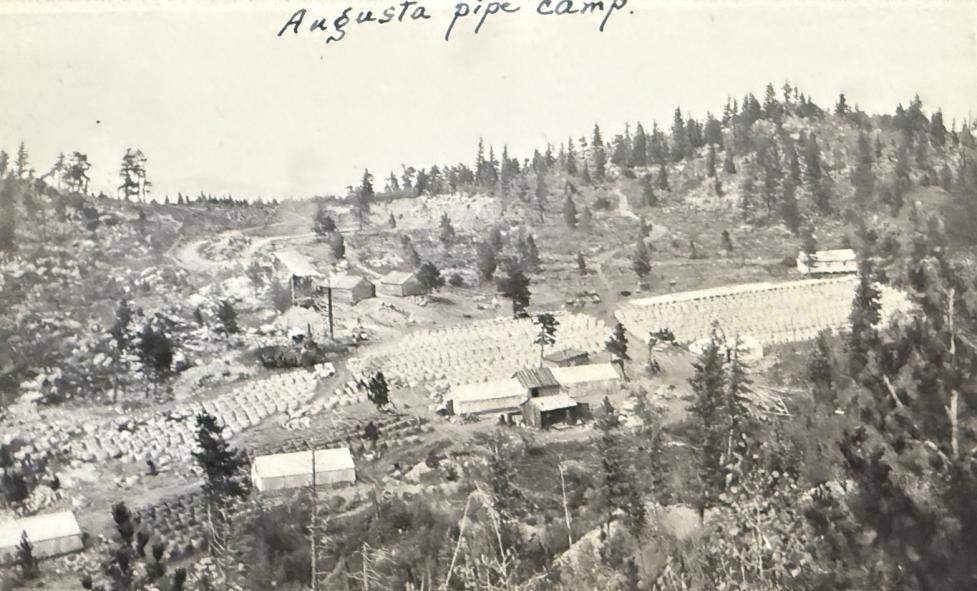
Building the pipeline was a monumental undertaking. Crews blasted a narrow bench into the steep mountainsides between Barker Dam and Kossler Reservoir and laid three-foot-diameter reinforced concrete pipe sections into the cut. Each section was two feet high, three inches thick, and weighed nearly 700 pounds. Production occurred at temporary camps such as Magnolia, Midway, and Castle Rock, where pipe was cast at extraordinary speed—reports noted that teams of two men could produce six sections per hour. Tens of thousands of sections were required to complete the 12-mile line.
Pipe sections were hoisted into place using derricks and aerial tramways powered by steam engines. Where tramways could not reach, crews dragged pipe with ropes and cables, smoothing the ground ahead of installation and carefully placing the sections into the ditch before cementing them together into a continuous conduit. Occasional manholes, blow-off points, and segments of steel pipe were incorporated where needed. In unstable terrain, workers constructed hand-stacked rock retaining walls from stone produced by blasting—an efficient solution given the rugged setting and limited access for heavy machinery.
To meet deadlines, pipe sections were manufactured in vast numbers at temporary camps like Magnolia, Midway and Castle Rock. By 1909, over 1,200 men labored on the project. These workers came from across the United States and abroad, including Austrian, German, Irish and Japanese immigrants. Camps were set up along the 12-mile route, complete with kitchens, hospitals and even water and sewerage systems.
Despite the organization and occasional comforts, the work itself was grueling and dangerous. Dynamite blasting was constant, and frozen explosives sometimes failed to detonate, only to explode later when disturbed during backfilling. Accidents from falling rock and delayed blasts resulted in injuries and fatalities. Newspaper accounts record the death of a Japanese laborer, I. Kawai, who was struck by rock during a blast in 1909, as well as other serious injuries sustained on the line. Even routine tasks carried risk in the steep, rocky terrain.
Through extraordinary coordination, mass production of materials, and the labor of more than a thousand men, the gravity pipeline was completed under demanding conditions — an engineering feat shaped as much by human endurance as by technical innovation.