The Open Space and Mountain Parks Department (OSMP) has launched a systemwide Multimodal Access Improvements Assessment to better understand how community members and visitors access open space lands and trails, and to identify opportunities to improve safe, sustainable and equitable access.
This assessment focuses on improvements within OSMP-managed lands to support access for hikers, runners, climbers, equestrians, bicyclists and wheelchair users. All potential improvements will be evaluated to ensure the protection of natural resources while maintaining high-quality visitor experiences.
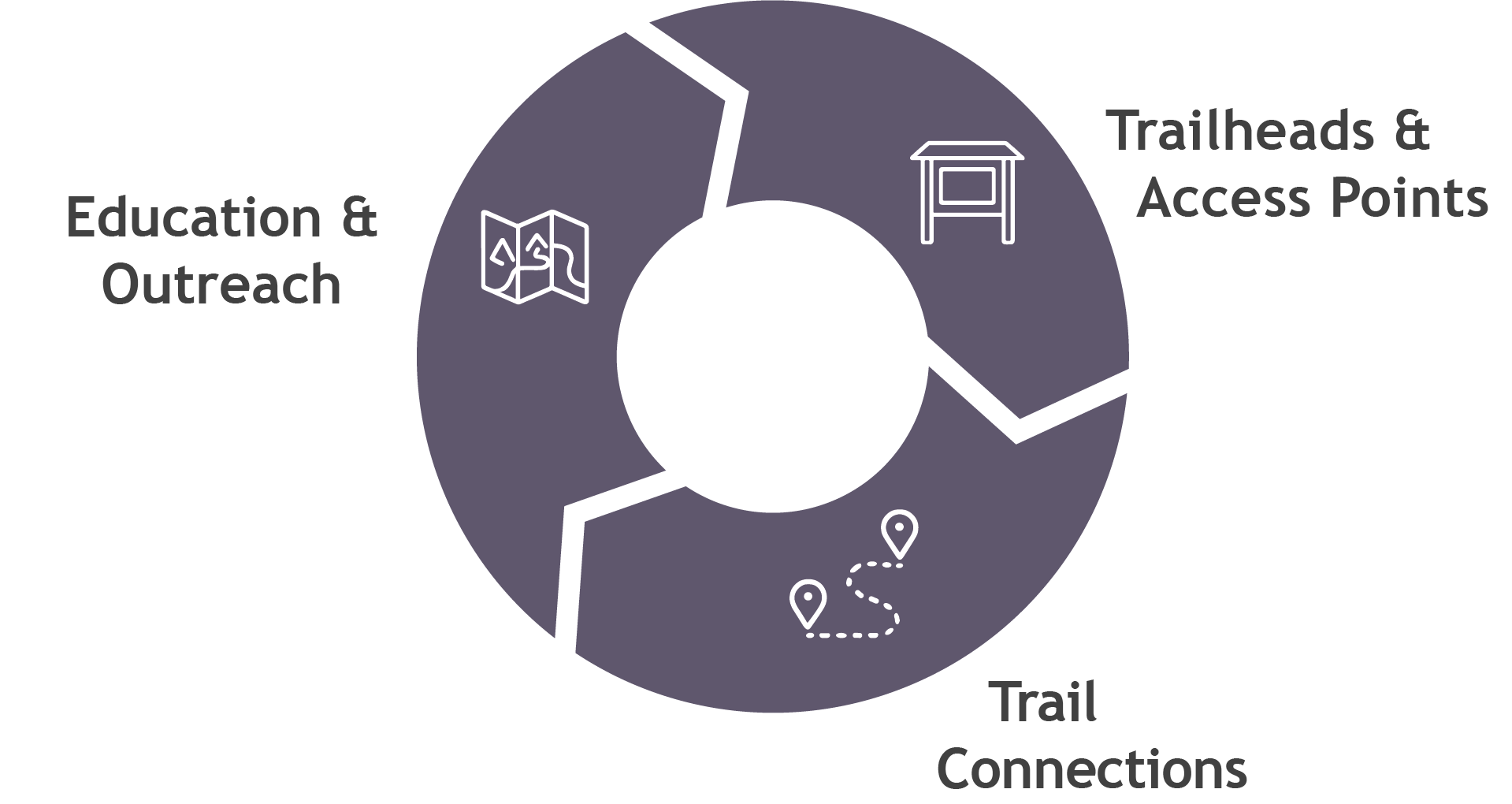
The assessment will focus on OSMP-led actions and may include:
Trail connections that improve access within the OSMP trail system or link to nearby regional trail networks.
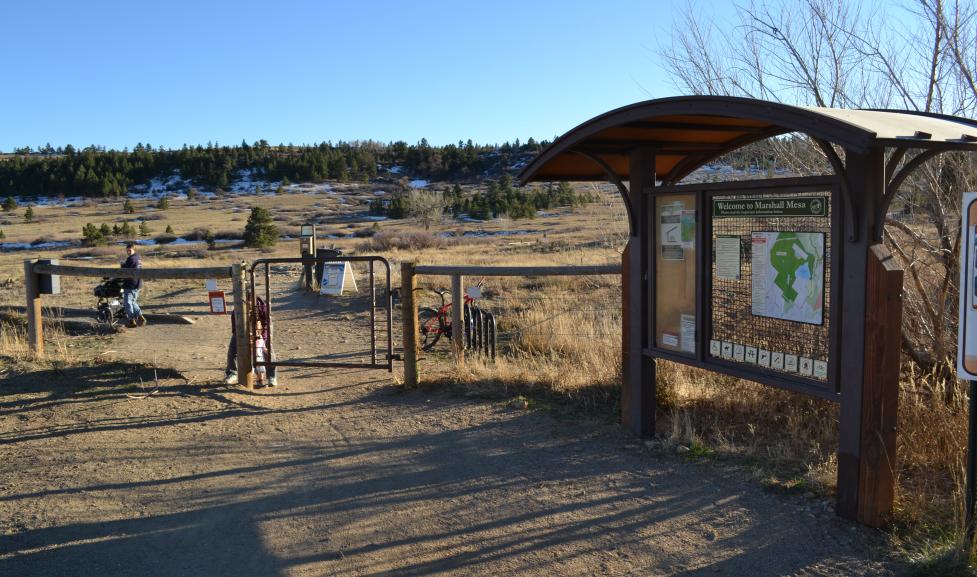
Trailhead and access point improvements, such as signage, wayfinding and safer multimodal access to entry points.
Education and outreach tools to better inform visitors about non-driving access options
While the primary emphasis is on OSMP lands, the project may also identify limited opportunities outside OSMP’s jurisdiction that support safer and more connected access.
Project Goals
Build a shared understanding of how visitors currently access OSMP lands
Identify gaps or barriers to accessing and using trails
Explore small, achievable improvements that support safety, connectivity, and sustainability
Ensure future decisions align with OSMP’s Charter purposes, ecological priorities, and visitor experience goals
Stay Informed and Involved
You can submit a comment below at any time during the project duration.
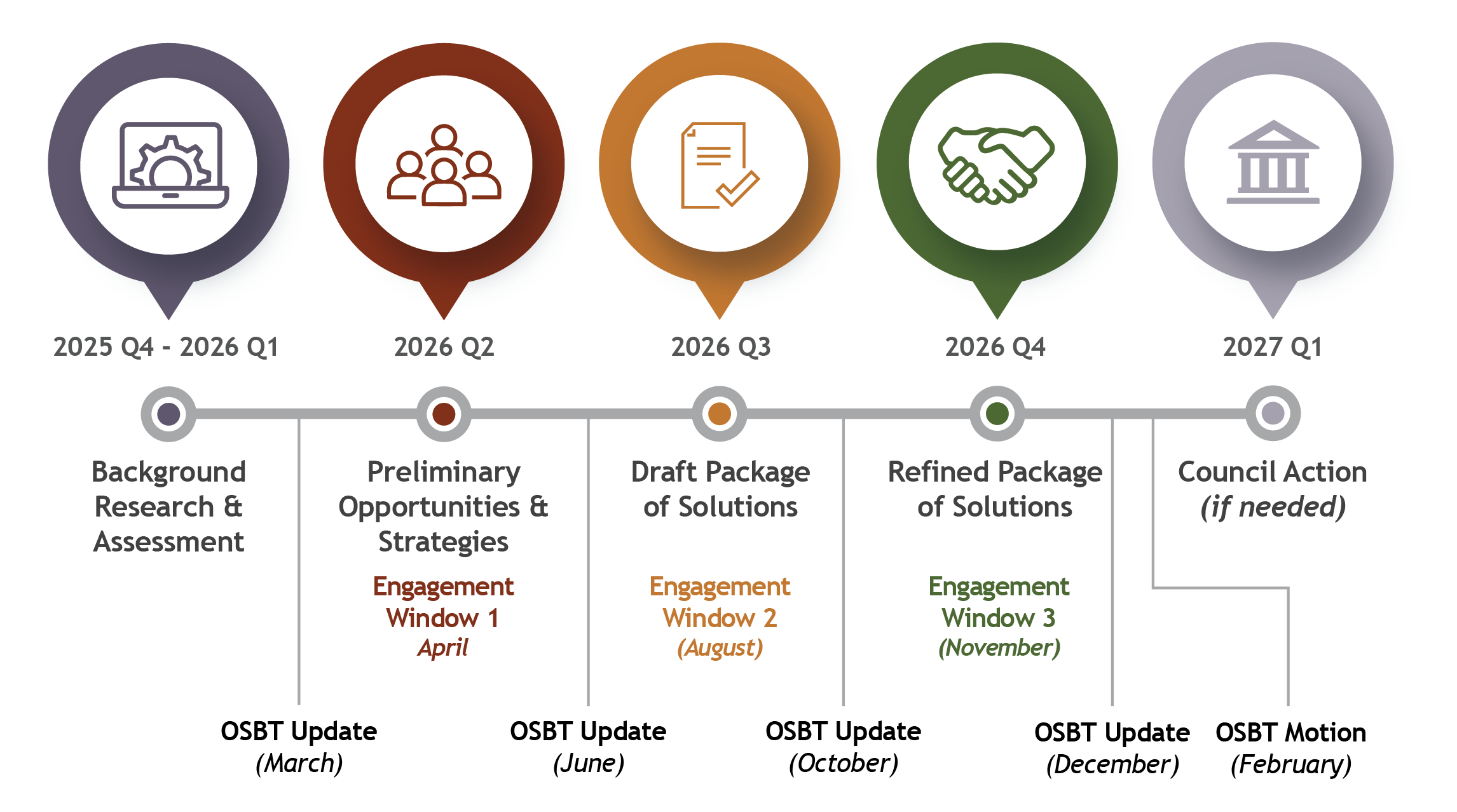
Phase 1: Background Research & Assessment (2025 Q4 - 2026 Q1) Staff built on existing data to understand how visitors accessed OSMP lands, including travel modes, visitation patterns, facility use, and trail and access conditions. This phase identified gaps and preliminary opportunities related to multimodal access.
Staff also provided project updates to the OSBT in December 2025 and March 2026, introducing the assessment and providing a progress update, respectively.
Phase 2: Preliminary Opportunities & Strategies (2026 Q2) OSMP shared early findings and potential focus areas with the community and gathered feedback through a public engagement window and on-the-ground intercept survey. Engagement Window 1 took place in April 2026, followed by an OSBT meeting in June 2026 where staff presented findings from the online questionnaire and in-person intercept survey.
Multimodal Assessment Project Report – EW 1 - an interactive report of survey data collected for Engagement Window 1 as part of the 2026 Multimodal Assessment Project.
Multimodal 2026 Results PDF - The full results from both the in-person intercept survey and online questionnaire, side-by-side.
Phase 3: Draft Package of Solutions (2026 Q3) Using the feasibility analysis results and community input, OSMP developed a draft package of potential improvements. A scoring framework was used to evaluate options based on multimodal effectiveness, ecological resources, implementation and maintenance, and recreational resources. Engagement Window 2 took place in August 2026, followed by an OSBT meeting in October 2026, where staff is presenting findings from the online questionnaire regarding the draft package of solutions and the potential Shanahan–Doudy Draw multi-use trail connection that could be made.
Phase 4: Refined Package of Solutions (2026 Q4) Staff will refine the draft recommendations based on additional community feedback and bring forward a final package of solutions for review. Engagement Window 3 will take place in early November 2026, followed by an OSBT meeting in December 2026 to review the engagement findings and an update on the refined recommendations. In February 2027, staff will return to the OSBT for a final review and to seek a motion on the finalized package of solutions for the Multimodal Assessment.
Phase 5: Council Action (if needed) (2027 Q1)
Multimodal Assessment FAQs
The Multimodal Improvements Assessment is a systemwide project led by the City of Boulder Open Space and Mountain Parks (OSMP) Department. It focuses on understanding how people access and move within open space and identifying opportunities to improve access using transportation options beyond driving, such as walking, biking, and transit.
Visitation to open space has increased over time, leading to congestion at trailheads and increased demand for access. This project supports the city’s climate and transportation goals by exploring ways to make it easier to access open space without relying on a car, while continuing to protect natural resources and visitor experience.
This assessment focuses on improvements that OSMP can directly implement, including:
Trail connections and allowed uses on trails
Trailhead improvements and potential new access point
Signage and wayfinding
Education and outreach to support multimodal travel
The project may also identify small, strategic improvements outside of OSMP-managed land where they could support safer and more connected access, but the primary focus is on OSMP lands.
OSMP is focusing on areas where the department has the ability to directly implement improvements. This helps ensure that recommendations from the project are feasible and can move forward in a timely manner.
At the same time, access to open space often involves connections beyond OSMP land. OSMP is already coordinating with partner agencies on these longer-term opportunities, and this assessment may help identify additional areas for collaboration to support safer and more connected access.
“Key trail connections” refer to trail links that could improve how people access or move through the open space system.
These connections can be:
Small, localized improvements that close short gaps
Larger connections that improve access between areas. Acknowledging that these solutions may be identified as later project efforts that OSMP would lead.
While many opportunities identified in this project may be smaller in scale, the term “key” is used to allow the evaluation process to determine which connections would be most beneficial and appropriate.
No decisions have been made yet. This project is an assessment to identify and evaluate potential opportunities. Any future trail projects would go through additional planning and review before being implemented.
You can submit comments at any time through the project webpage.
Intercept surveys are conducted at a variety of locations to capture a broad range of visitor experiences. Not sharing locations in advance helps ensure more representative feedback and reduces bias in who participates.
This project will not result in immediate changes. The Multimodal Improvements Assessment is expected to take about a year and includes multiple opportunities for public input throughout the process.
Any potential changes to trails, access, or allowed uses would come after the assessment is complete and would be informed by community feedback, data, and staff expertise. Some smaller improvements that don’t require additional design or permitting could begin as early as 2027, while more complex projects could take several years to implement.
Improving access by walking, biking, transit, and carpooling can help reduce vehicle trips and emissions. This project supports OSMP’s climate goals while balancing the need to protect natural resources and maintain a high-quality visitor experience.
June 2026: Multimodal Assessment Project Report - an interactive report of survey data collected for Engagement Window 1 as part of the 2026 Multimodal Assessment Project. Multimodal 2026 Results PDF - The full results from both the in-person intercept survey and online questionnaire
The City of Boulder is committed to digital accessibility. Some content may not be fully accessible due to technical limitations or issues. For alternate formats or accommodations, please visit Accessibility | City of Boulder or contact accessibility@bouldercolorado.gov.