Monitoring ecosystem health through the power of pollinators
A nature‑powered community initiative using honeybees and native bees to help us understand the health of Boulder’s neighborhoods, parks, gardens, and open spaces.
Every day, bees explore our community—flying through gardens, parks, food forests, neighborhoods, and natural areas. As they collect pollen and nectar, they also pick up tiny clues about what’s happening in the environment.
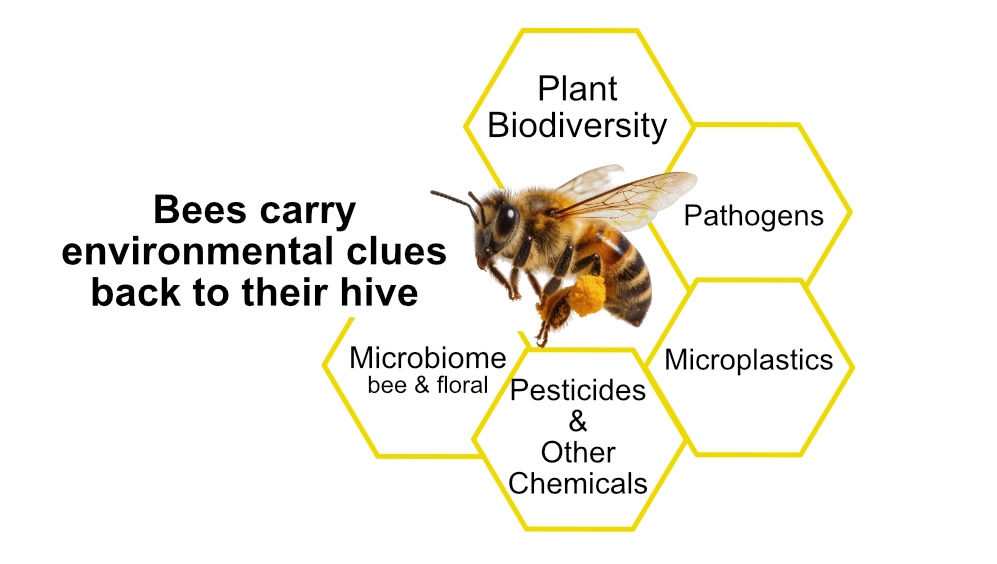
By studying what bees bring back to their hives and nests, we can learn about pollution, biodiversity, microplastics, habitat conditions, and even how seasonal changes affect plants. This gives us an easy, noninvasive way to understand environmental health across Boulder.
How Do Bees Help Us Understand the Environment?
Bees are extraordinary “environmental sentinels.”
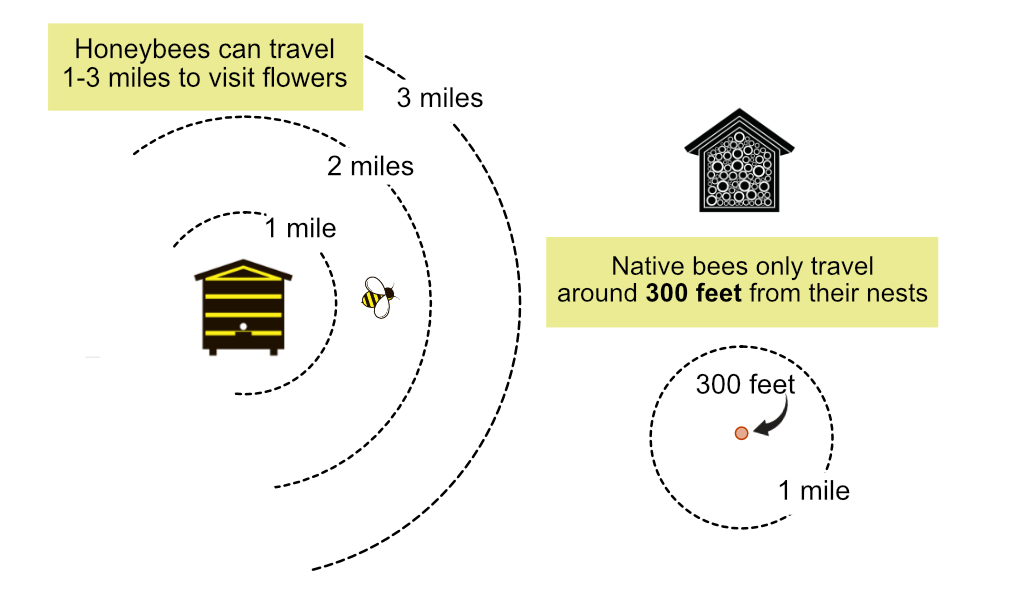
Honeybees travel far—1–3 miles from their hives—providing environmental data from a broad, citywide perspective.
Native bees forage only a few hundred feet, revealing hyper-local conditions in specific parks, gardens, or blocks.
Using both lets us understand big landscape patterns and detailed neighborhood differences at the same time.
What We Are Monitoring
The materials bees bring home provide rich environmental information.
We can determine the plants that the bees visit by analyzing the DNA from the pollen that bees bring back to the hive. This reveals:
Plant biodiversity
Habitat gaps
Invasive species
Seasonal bloom timing
Nutritional plant resources for bees and other wildife
Environmental chemicals are being tested using different approaches.
Honey and pollen samples are being tested for pesticides.
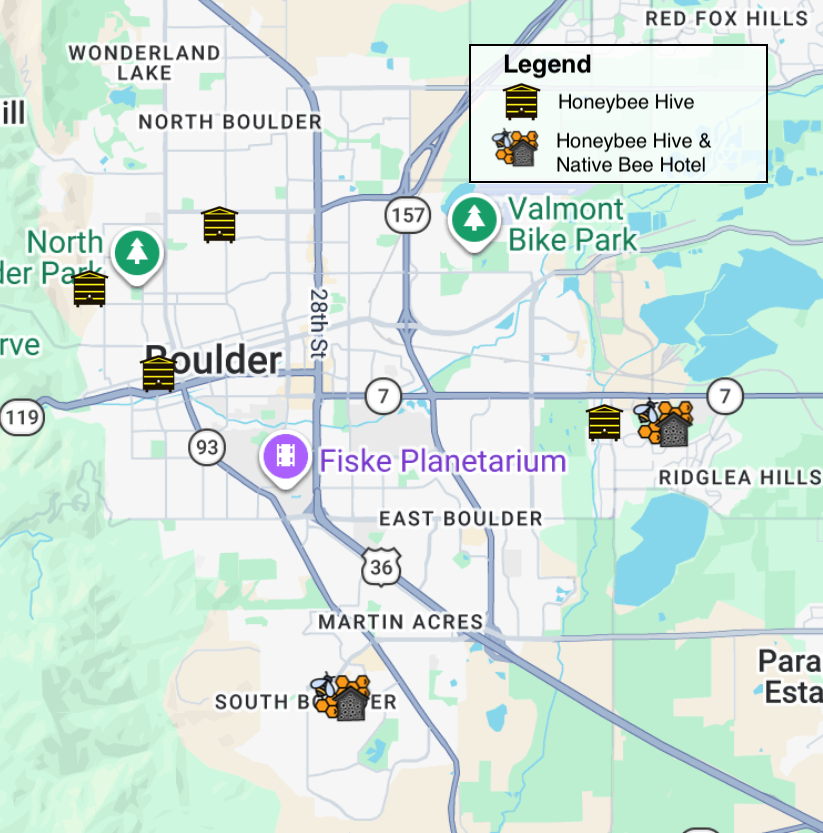
The hives at Tantra Lake Giving Grove Food Forest and the Milk and Honey Farm at JCC are fitted with special sampling devices.
The APIstrip is placed inside the bee hive to capture pesticides and other chemicals.
The APItrap is used to learn about the microplastics that the bees bring back to the hive.
Bio-Monitoring Sites
The Power of This Approach
Bees collect environmental clues constantly—hundreds of tiny data points each day. This continuous sampling reveals important patterns, like neighborhood-level differences in chemical exposure, biodiversity, or environmental stress.
It gives Boulder clear and reliable information to guide environmental stewardship and community planning.
How Bee Bio-Monitoring Strengthens Our Community
This project doesn’t just provide data for the sake of data—it helps each of us understand how to take steps to create a healthier environment in Boulder.
It shows what to plant, and where. By identifying which areas have rich biodiversity and which areas need more support, the project helps community members and the city learn which plants are most beneficial to our own gardens, parks, and shared spaces, and helps us target target habitat improvements where they are needed.
It highlights where communities can reduce pesticide use. Bee‑collected data can show which neighborhoods face higher pesticide exposure. This information can be used to identify environmental issues early so community members, gardeners, and land managers can work together to develop safer practices that protect pollinators, people, and pets.
It helps everyone take meaningful, informed actions. Whether you're planting a garden, managing property, volunteering, or simply curious about your neighborhood’s environment, the information from bees helps guide small steps that add up to big improvements through science-informed decisions that benefit all neighborhoods