Managing Urban Landscapes in the Wildland Urban Interface (WUI) to Reduce Community Wildfire Risk, Increase Water Use Efficiency, Manage Extreme Heat, and Enhance Environmental Health and Biodiversity.
Guide Navigation
Use the blue card menu below to jump into a topic, or use the vertical menu on the left to explore the entire guide.
A Practical Guide to Principles, Practices, and Resources
This guide aims to help residents, developers, and property owners with five critical, interconnected goals for our community’s safety and resilience.
Reduce risk to the community from wildfire.
Increase resilience to climate change impacts, including heat and water availability.
Protect and enhance our urban forest and landscapes.
Enhance both ecological and community health.
To provide clarity for the community about what is required for properties in the Wildland Urban Interface (WUI) Areas and what is recommended throughout the rest of the city.
It includes best practice advice from the best and most current available science. This includes case studies of events such as the Marshall Fire and research testing from both field and laboratory settings from such organizations as FEMA (Federal Emergency Management Organization), NIST (National Institute of Standards and Technology), IBHS (Insurance Institute for Building and Home Safety), and CSFS (Colorado State Forest Service).
This guide is intended to be used by City of Boulder residents, business owners, developers, and designers to clarify citycode requirements and recommendedbest practices for landscape design and maintenance that are intended to reduce the risk of damage or loss from wildfire. A summary table outlining the distinction between what is required and what is recommended is provided in Figure 12 in Section II: “Regulatory and Recommended Actions” below. Separate guidance is available regarding measures to “harden” structures against fire. For more information, please go to: Wildfire Prepared Home, a Program of IBHS - Resources. Some information about decks and patios is included in this guide because of the close relationship between outdoor structures and landscape design and use.
While the focus of these guidelines is to increase the use of wildfire resilience best practices, many of these practices also increase overall ecological and social resilience.
When combined, these guidelines provide guidance on the following:
How to design and maintain your landscapes to reduce the risk of your home or business igniting and being destroyed during a wildfire;
How to achieve an integrated approach for maintaining and enhancing a range of vital climate resilience benefits from our urban landscapes, such as:
Shade and cooling;
Water absorption and conservation; and
Maintaining the diversity and abundance of both plant and other species for the maintenance of healthy and resilient living systems.
Background on Wildfire and Boulder
Wildfire is a common occurrence in and around Boulder, and the city is at great risk of catastrophic wildfire due to multiple factors:
The city’s proximity to open space areas with natural vegetation
The frequency of high wind events that drive fast-moving fires that exceed suppression capacity
Human-caused ignitions
Climate change is leading to more frequent and prolonged drought periods, increasing temperatures, changes to snow packs and water availability etc.
Existing housing stock that was built using highly combustible materials and features
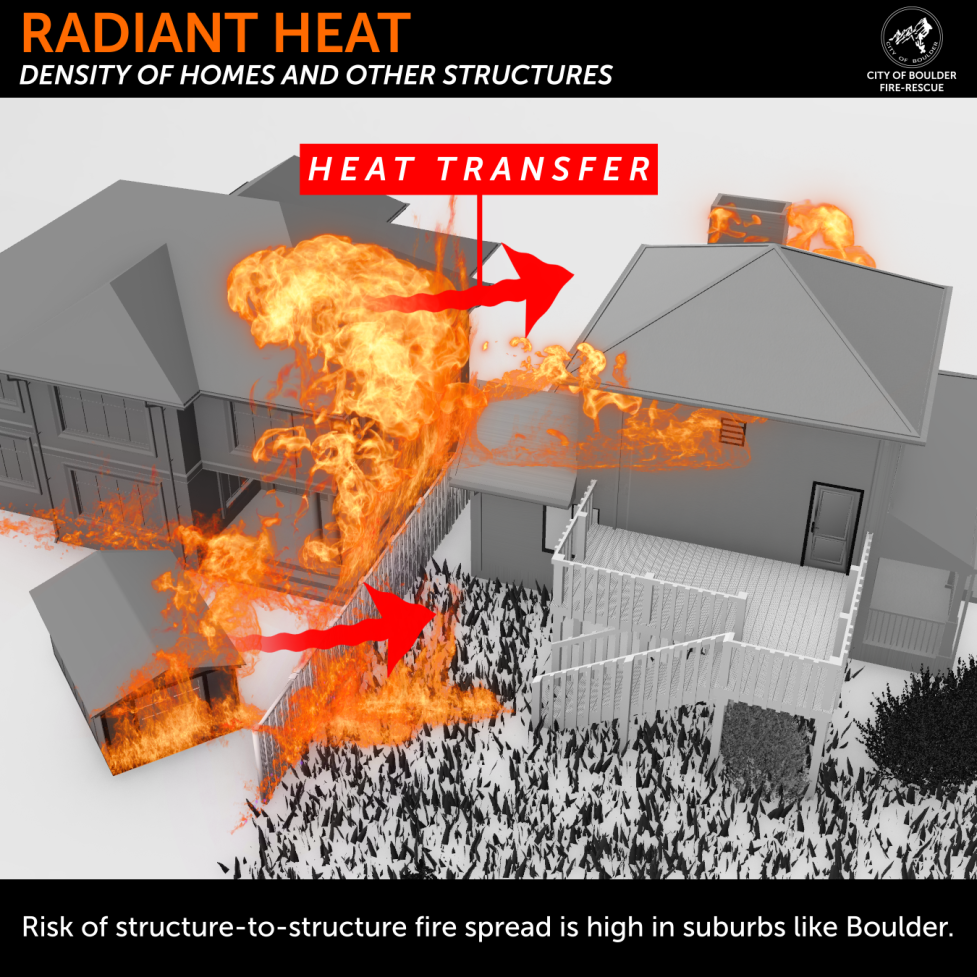
Close structure separation distances, which increases the risk of structure-to-structure fire spread
This risk is increasing. Both scientific modeling of factors like climate change, conducted by the City of Boulder and extensive analysis by organizations like the National Academy of Sciences, and our own personal experience demonstrate that wildfire risk is increasing.
The number of high fire risk days has already increased from an average of 15 days/year before 1980 to over 100 high fire risk days now. This number is expected to nearly double by mid-century to over 200 days/year of high fire risk conditions. As the 2021 Marshall fire and recent examples in California and elsewhere, these conflagrations are expected to continue destroying urban and suburban neighborhoods like those within Boulder.
The risk of urban conflagration depends largely on the flammability of structures and the design and maintenance of our urban landscapes. These events are a structure ignition problem, not a wildfire suppression problem.
What Can We Do?
It’s critical to work together with neighbors in a strategic fashion, following best practices.
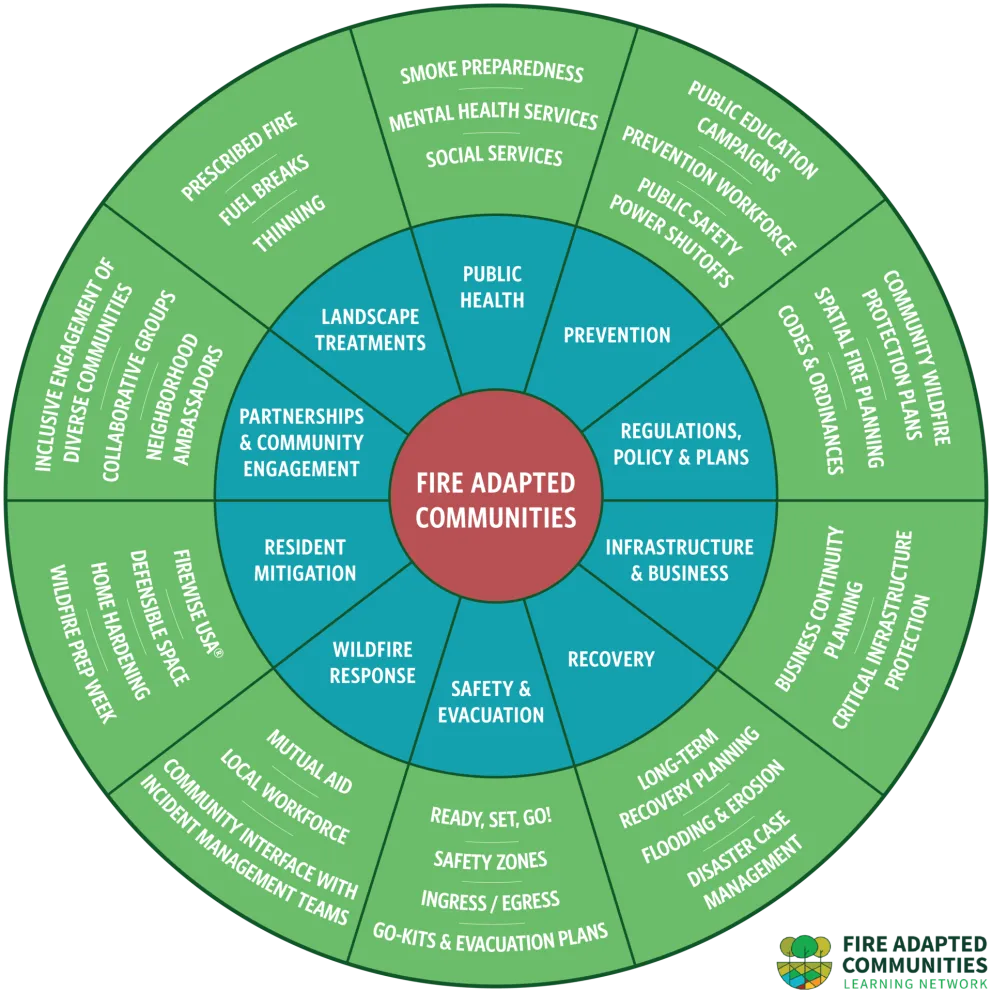
Individual action is a starting point, but wildfire risk can best be reduced when action is taken on a neighborhood or community scale. Every home matters, but the real strength lies in collective effort. Figure 1 shows the range of activities that contribute to creating fire-resilient communities.
This approach aligns with the principles of Fire Adapted Communities (FAC), which emphasize that wildfire resilience requires coordinated action across individual residences, neighborhoods, landscapes, organizations, and agencies. See: Fire Adapted Communities Learning Network | FACNET.
The components of Fire Adapted Communities. The center circle is labeled 'Fire Adapted Communities,' surrounded by eight segments: Landscape Treatments, Public Health, Prevention, Regulations Policy & Plans, Infrastructure & Business, Safety & Evacuation, Wildfire Response, and Resident Mitigation and Partnerships & Community Engagement. An outer ring shows specific programs and strategies associated with each segment, such as prescribed fire, fuel breaks, smoke preparedness, codes and ordinances, evacuation plans, and home hardening. Produced by the Fire Adapted Communities Learning Network.
The components of Fire Adapted Communities. The center circle is labeled 'Fire Adapted Communities,' surrounded by eight segments: Landscape Treatments, Public Health, Prevention, Regulations Policy & Plans, Infrastructure & Business, Safety & Evacuation, Wildfire Response, and Resident Mitigation and Partnerships & Community Engagement. An outer ring shows specific programs and strategies associated with each segment, such as prescribed fire, fuel breaks, smoke preparedness, codes and ordinances, evacuation plans, and home hardening. Produced by the Fire Adapted Communities Learning Network.
The City of Boulder is committed to digital accessibility. Some content may not be fully accessible due to technical limitations or issues. For alternate formats or accommodations, please visit Accessibility | City of Boulder or contact accessibility@bouldercolorado.gov.
Best Practice: Trees, Fire, and Landscape Health
Trees are vital to our community. They provide shade, reduce heat, improve air quality and human health, support wildlife, and increase property values. In fire-prone areas, vegetation management is essential to protect homes and communities while preserving the many benefits trees offer.
Wildfire resilience, ecological health, and water conservation don’t have to be competing priorities—they can all complement one another.
It’s important to note that the removal of existing healthy trees is not required or recommended, except for Junipers. We focus on planting the right tree in the right place and responsibly maintaining existing trees. We can still enjoy the benefits and beauty of our landscapes while creating a safer, more fire-resilient community.
It is recommended to remove Junipers in all areas of the City of Boulder.
Best Practice: We Can Manage Flammability
The risk of structure-to-structure fire spread is heightened due to closely spaced structures and connections, such as combustible fences and vegetation. We can’t change the spacing of our existing structures, but we can reduce the flammability of our built environment (e.g., siding, fences, decks) and manage the condition of our landscaping to reduce ignition potential.
Best Practice: Living With Fire
Wildfire is a natural and necessary part of our local landscape. However, as more people live in fire-prone areas, taking protective action is essential.
Communities must learn to live with fire and not simply fight or prevent it. Effectively protecting ourselves requires a community-wide effort. The risk of catastrophic wildfire events can be reduced.
Understanding Wildfire Risk in Boulder
Boulder is windy because strong Chinook winds roll off the Rockies, and our canyons funnel and speed up those winds.
Boulder is among the windier cities in the US due to its location at the base of the Rocky Mountains, where we have Chinook winds that are dry, warm, and strong with sudden and intense gusts. The many canyons throughout our landscape (our topography) increase the wind’s speed and intensity.
High wind events occur in the fall through spring months (October through April). These high-wind events, combined with dry fuels (predominantly grass), make the months of October through April the highest risk time of year for wildfire in the city of Boulder. The Marshall Fire, occurring in late December, is not an anomaly but rather precisely the time of year we should expect a fast-moving, wind-driven fire to occur.
Fuels
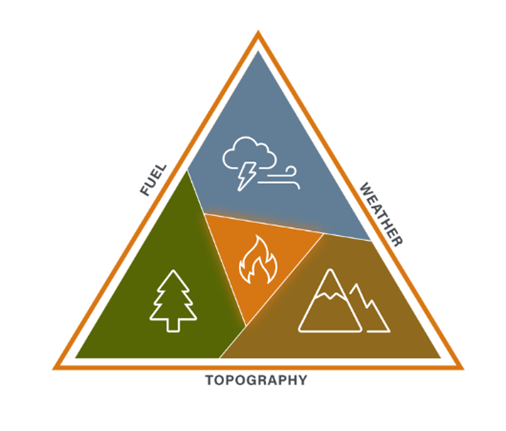
The only part of the behavior triangle we can change is the fuels. Fuels include both those in the natural environment (grass, shrubs, trees) and those in the built environment (homes, fences, decks, mulch). We change the fuels through our land management practices on open space, our design and maintenance of our homes and structures, and our neighborhood landscaping choices.
How Homes Ignite: Embers, Direct Flame, Radiant Heat
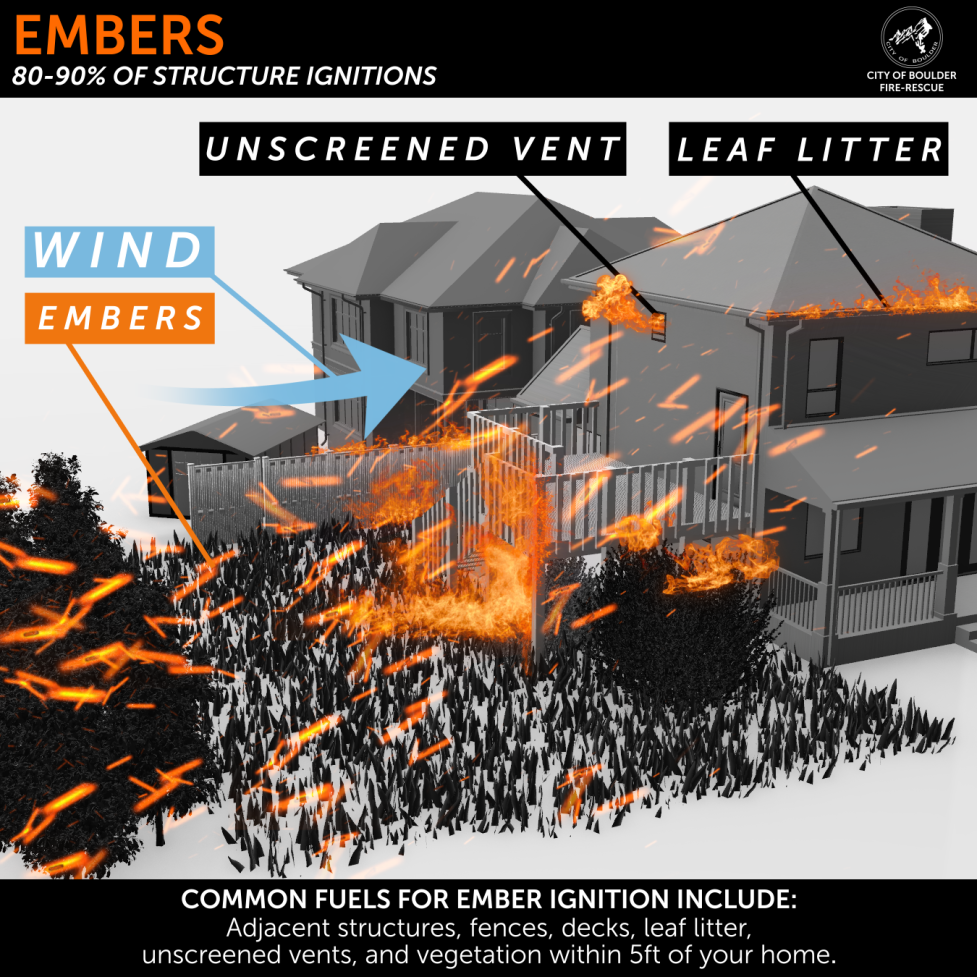
80-90% of the homes lost in wildfires are a result of wind-born firebrands/embers. These embers can be pieces of both natural vegetation and burning structures, and they can travel long distances carried by wind. There are reports from the 2025 L.A. fires that embers traveled 3 miles and caused ignitions where they landed.
Landscape Design—A Vital Factor in Fire Risk and Resilience
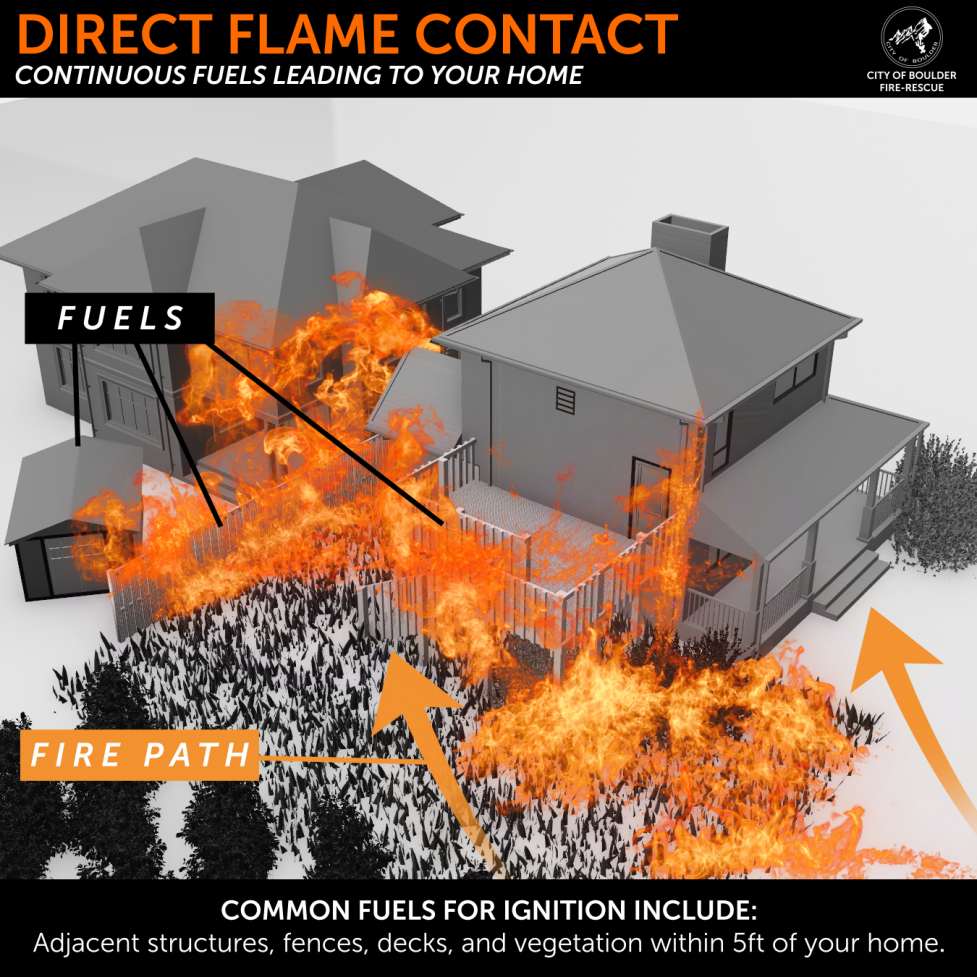
The way that landscaping is organized and maintained can impact the way fuels spread to your home or from your home to neighboring landscapes and structures. Fuels that touch each other (ex., vines on fences, low-hanging branches touching tall grass, etc.) create what is called a continuity of fuels, or “ladder fuels” that act like a fuse that can ignite your home. This can include vertical and horizontal continuity, including vegetation and fences between structures. Disrupting these connections is an important goal of wildfire risk reduction.
The placement, plant type, and condition of vegetation are critical in determining ignition potential.
Best Practice: The First 5 Feet
The most important landscaping choice for wildfire resilience is to create and maintain a 5-foot zone around your home, including any attachments such as decks and fences, that contains no combustible material.
Radiant heat and direct flame contact can come from adjacent vegetation, connections such as fences, and, especially, adjacent structures. In Boulder, the closely spaced structures and connections between homes, such as fences, greatly increase the risk of structure-to-structure fire spread. This highlights the importance of working with your neighbors to collaboratively reduce wildfire risk.
Best Practice: Prevention Is Key
Once a home ignites during a high-wind event, there is a high likelihood it will ignite the structure(s) next door.
Once multiple homes ignite, suppression becomes difficult, if not impossible.
This is not the first time we have faced urban conflagration problems. The lack of building codes and fire protection systems resulted in many towns and cities being destroyed in the 1700s and 1800s. Large urban fires like the great Chicago Fire (1871) and the massive San Francisco Fire (1906) were in part responsible for the development of building codes and fire departments in the early 20th century. We now face a new set of climate change-driven urban fire risks that require a next generation of local policy and regulation designed to address these challenges.
We Can Do It Again
The good news is that we have learned a lot about how homes ignite during wildfires, but, more importantly, how to reduce the chance of ignitions. Following these landscape guidelines is a step in the process of protecting your home and community.
Wildfire Risk Planning and Modeling in Boulder
Following the devastating impacts of the Marshall Fire in 2021, Boulder and other communities across the Front Range began efforts to update community wildfire planning. The city updated its Community Wildfire Protection Plan (CWPP) in 2024. This process conducted an extensive analysis of wildfire risks, existing capabilities, and additional needs, and roles and responsibilities across a broad range of both public and community institutions. To find out more, follow this external link to the CWPP Story Map Page.
As part of this effort, Boulder updated its wildfire risk analysis and fire modeling to identify and map the areas within Boulder that are at greatest risk of wildfire. Previous mapping of these high-risk areas was not fully informed by new information and experience regarding the potential for fire spread, particularly through embers “cast” (blown) long distances downwind. The Marshall fire vividly illustrated the devastating impacts that can result from a fire and these hurricane-force high wind events.
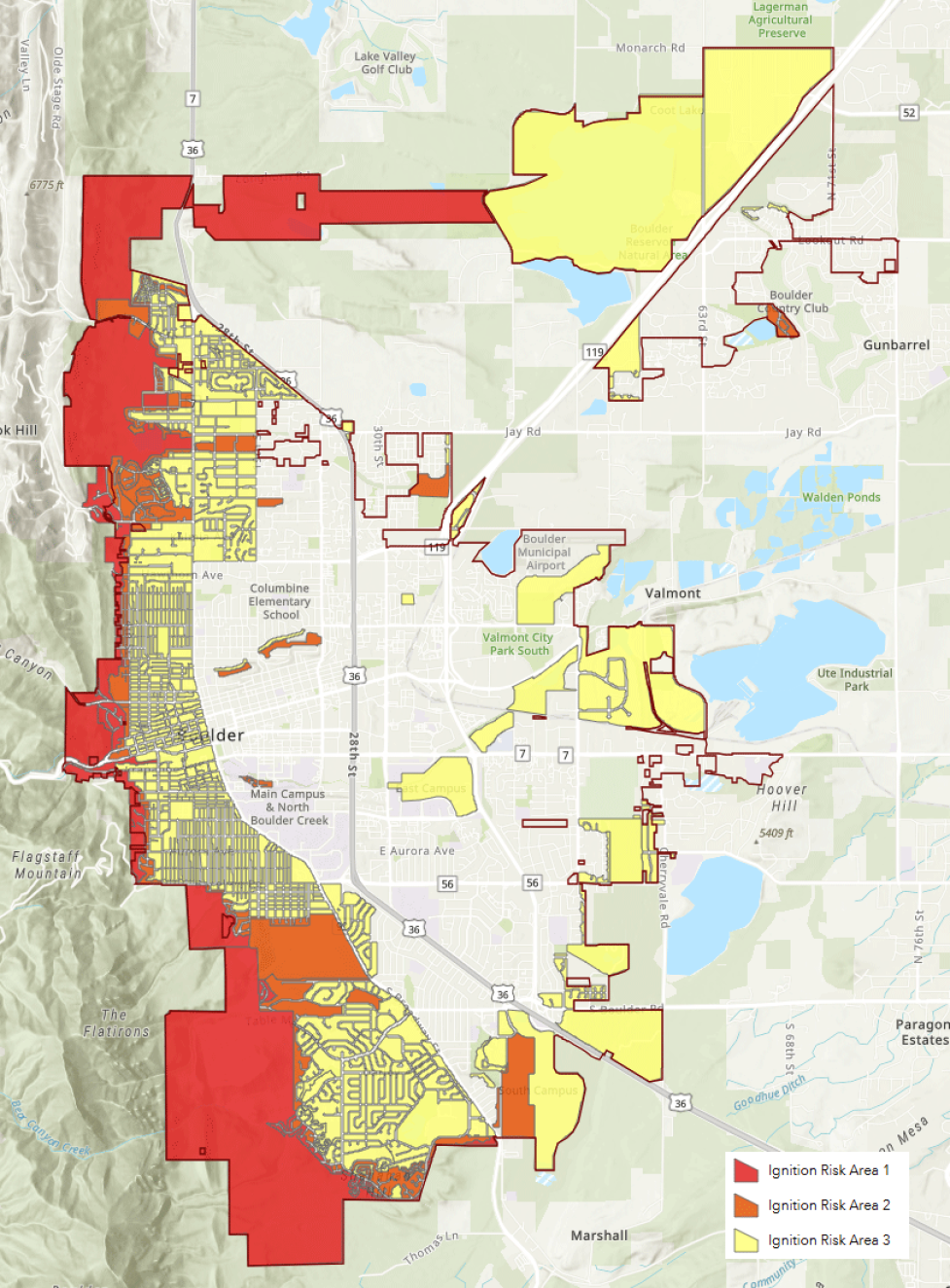
Using new modeling of this ember-cast phenomenon, the city has now established an updated map of these higher-risk wildland urban interface areas and divided them into three levels/areas of potential ignition. This risk mapping has increased the number of homes considered to be at higher risk from around 4,600 homes in the previous mapping to more than 16,000 in the expanded risk mapping. These updated risk areas include three levels of risk noted below.
Ignition Risk Areas
Area
Description
Area 1: Frontline Fire Risk
This area includes properties at the highest risk of immediate impact should a fire start in the western wildland area and transfer into the city via surface fire and/or windblown embers.
Area 2: Adjacent High Risk
These areas are physically close to the front-line risk zone and are at high risk of ignition through either structure-to-structure ignition or embers.
Area 3: Potential Ember Cast Area
This is a new designation of WUI interface and is considered high risk due to the potential for embers being cast from open space and Areas 1 & 2. Using modeling of potential ember casts under high wind conditions, this area extends the WUI area into most of the community located west of Broadway Avenue. There are some areas further east in the city included in this designation, due largely to the presence of more natural vegetation that is vulnerable to ember ignitions.
Wildland Urban Interface (WUI) Code
Property owners within the three designated WUI areas are subject to additional requirements or prohibitions, particularly when considering development or redevelopment projects.
These requirements are in the ‘Regulatory and Recommended Actions’ section below.
Even those who do not have property or live within these areas should still consider utilizing the best practices for wildfire risk reduction within their “home ignition zones".
'Wildland Urban Interface Code Area' showing the city of Boulder, Colorado. Areas are color-coded by wildfire ignition risk: Ignition Risk Area 1 (red, highest risk) along the western and northern edges; Ignition Risk Area 2 (orange, moderate risk) in transitional zones; Ignition Risk Area 3 (yellow, lower risk) scattered throughout eastern portions. Gray indicates city limits and streets are also shown. View the interactive Wildland Urban Interface Map.
What is the Home Ignition Zone (HIZ)
The structure and its immediate surroundings are the primary determinants of a structure’s ability to survive a wildfire.
The best practice is to start with your structure and work out from there.
Best Practice: Where To Start
We advise that you work on your home or structure itself and then work your way out to Home Ignition Zones (HIZ) 1, 2, and 3.
Do not focus on the risk on your neighbors’ property until you have reduced the risk to your own first!
Home Hardening
Reduce the ignition potential of your home or structure through building materials choices and home hardening techniques.
Get specific recommendations from Boulder Fire-Rescue by performing a Detailed Home Assessment (DHA) for your home and property.
Detailed Home Assessments (DHAs) are an opportunity for Boulder homeowners to have their homes assessed by specialists to understand how to best prepare their property and home for the next wildfire.These assessments must be requested, but are free for residents. These DHAs provide actionable improvements to reduce the risk to your property
Home Ignition Zones (HIZ) 1, 2, and 3: Zero to 100 Feet From Your Structure
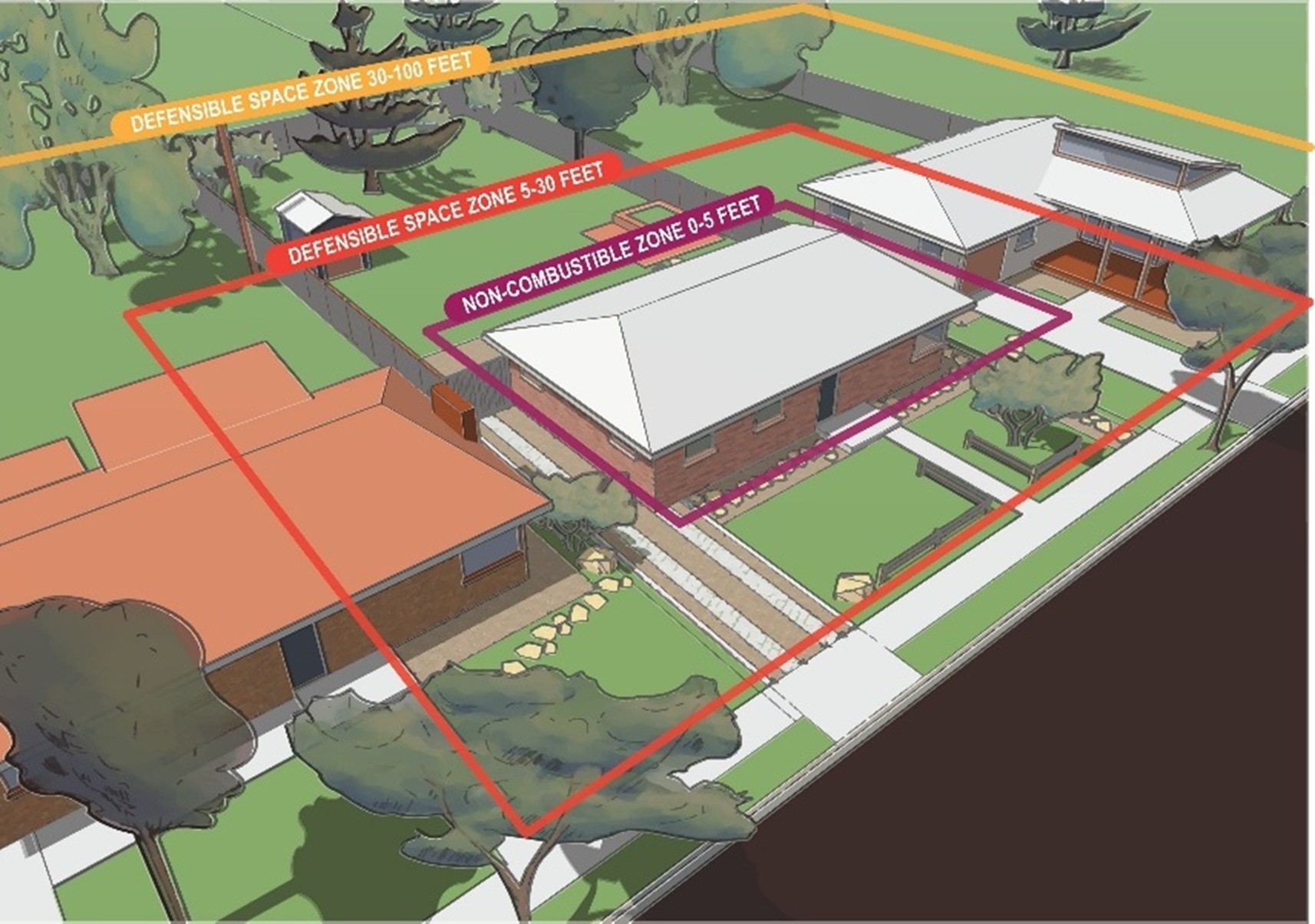
There are three home ignition zones (HIZ).
Zone
Description
Zone 1: 0-5 feet
Starts at your structure's walls (or attached structures like decks or awnings) up to 5 feet from your structure.
Zone 2: 5-30 feet
Starts 5 feet from the structure and includes areas of your property within 30 feet of your structure.
Zone 3: 30-100 feet
Starts 30 feet from the structure and includes areas within 100 feet of your structure.
The zones closest to your home are the most impactful. The most important landscaping choice for wildfire resilience is to create and maintain a 5-foot zone around your home that contains no combustible material, including any attached structures such as decks.
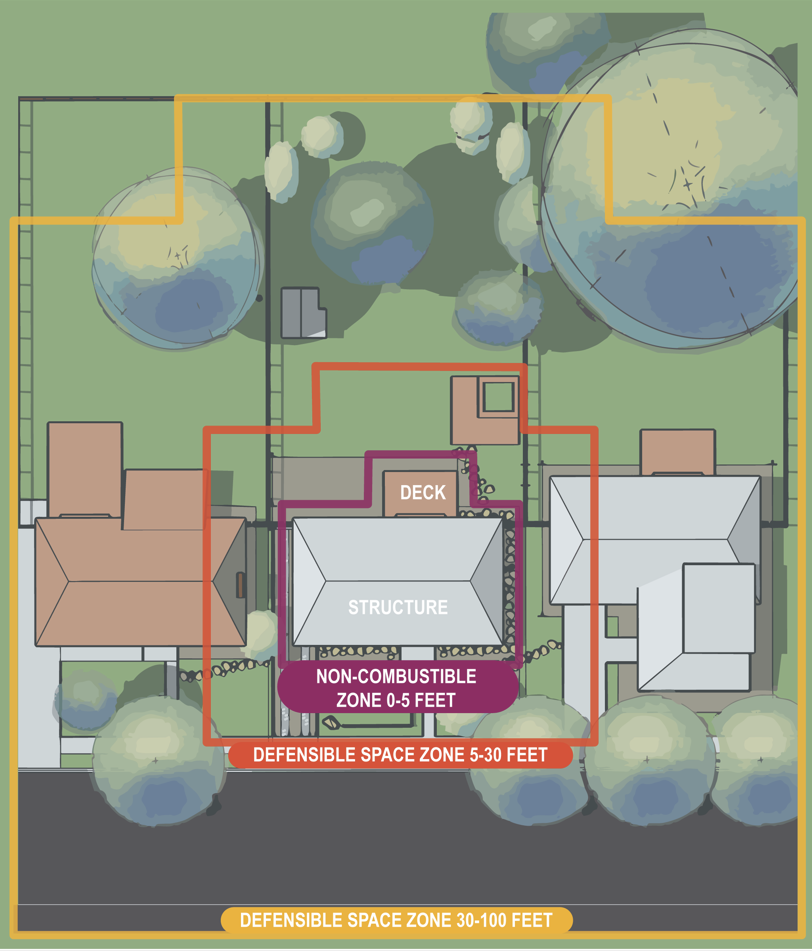
Home Ignition Zones, including the 0-5 foot noncombustible zone and defensible space.
How Neighbors Influence Risk (Shared Responsibility)
Lead by example, address your home and yard first, and always start conversations with your neighbors focused on how you can help. One example is printable "Conversation Cards” that provide a starting point for talking to your neighbors about these types of issues. Conversation Cards can be downloaded from the BoulderODM.gov resource library, under the General Disaster Preparedness heading.
Remember, actions and conversations that bring us together reduce our risk because to truly reduce the risk in our community, we must all work together. Your Home Ignition Zone 2 or Zone 3 is likely to extend onto your neighbors’ property. It is essential to work with them and offer help to get the work done. Remember that it can reduce both cost and time to implement by creating shared projects that are more attractive to contractors.
Key Landscaping Strategies for Home Ignition Zones in WUI Ignition Risk Areas
Home Ignition Zones surrounding a house moving from Zone 1 (0-5ft), Zone 2 (5-30ft), to Zone 3 (30-100 ft).
Best Practices: The Critical Importance of the First 5 Feet
Embers are the #1 cause of homes igniting during wildfire. Combustible structures, plants, mulch, wood chips, leaf litter, and “life debris” can easily ignite and transfer fire to the siding or other vulnerable materials on your home.
Maintaining non-combustible hardscaping surrounding your home or business in the first 5 feet is one of the most important steps a homeowner can take to create a protective barrier. There are indications that this is becoming an increasingly important consideration in both the cost and accessibility of fire insurance.
Removing vegetation around the first 5 feet of our home is required for all development and redevelopment projects within the Wildland Urban Interface Ignition Risk Areas (see image above).
It is strongly recommended for all other structures in Boulder.
If homeowners who are not engaged in development or redevelopment choose to continue to maintain vegetation within this first 5 feet, we strongly recommend they consider using extremely low flammability vegetation such as irrigated turf, high-water content groundcovers, or other low-growing and low-flammability plants (see the Boulder Approved Tree and Plant List at BoulderForestry.org for recommended species).
Zone 1 (0-5 feet)
This is the most important zone besides your structures to focus on!
Create and maintain a 5-foot noncombustible zone around your entire home and any attachments, such as awnings, pergolas, and decks.
All combustible items, building or plant materials, should be removed from this area.
This can simplify the maintenance of your home, and the benefits can go far beyond fire safety.
Use squeegee mulch (¼" or smaller angular gravel) and hardscaping using non-combustible materials (examples: concrete, pavers, and flagstone) within 5 feet of the house.
Decks
Use fire-rated materials (see home hardening information to identify fire rating requirements for these items) for both the structure and the decking of all decks with areas attached to or within 5 feet of the house.
Enclose areas below decks (under 48”) to keep embers from traveling under the deck area.
Avoid collecting clutter or storing items underneath the deck if the space allows.
Clear pine needles, leaves, and other combustible debris from decks (above and below).
Consider installing patios and other hardscaping instead of decks.
Fences
Use non-combustible materials (metal, fiber cement, or masonry) for all fences and gates within 8 feet of the house.
Shade Structures and Pergolas
Use non-combustible materials (metal) for all structures attached to or within 5 feet of the house.
Zone 2 (5-30 ft)
Do not plant new conifers (either tree or shrub varieties) in Zone 2.
Plant only deciduous trees in Zone 2. Well-maintained and spaced deciduous trees are appropriate to plant in Zone 2 to provide shade and energy-saving benefits. Proper tree placement, species selection, and spacing will allow the trees to mature and not cause future risk. See the Boulder Approved Tree and Plant List at BoulderForestry.org.
For new development, within the property boundaries, all vegetation, including trees, must be pruned to maintain a 10-foot clearance from structures.
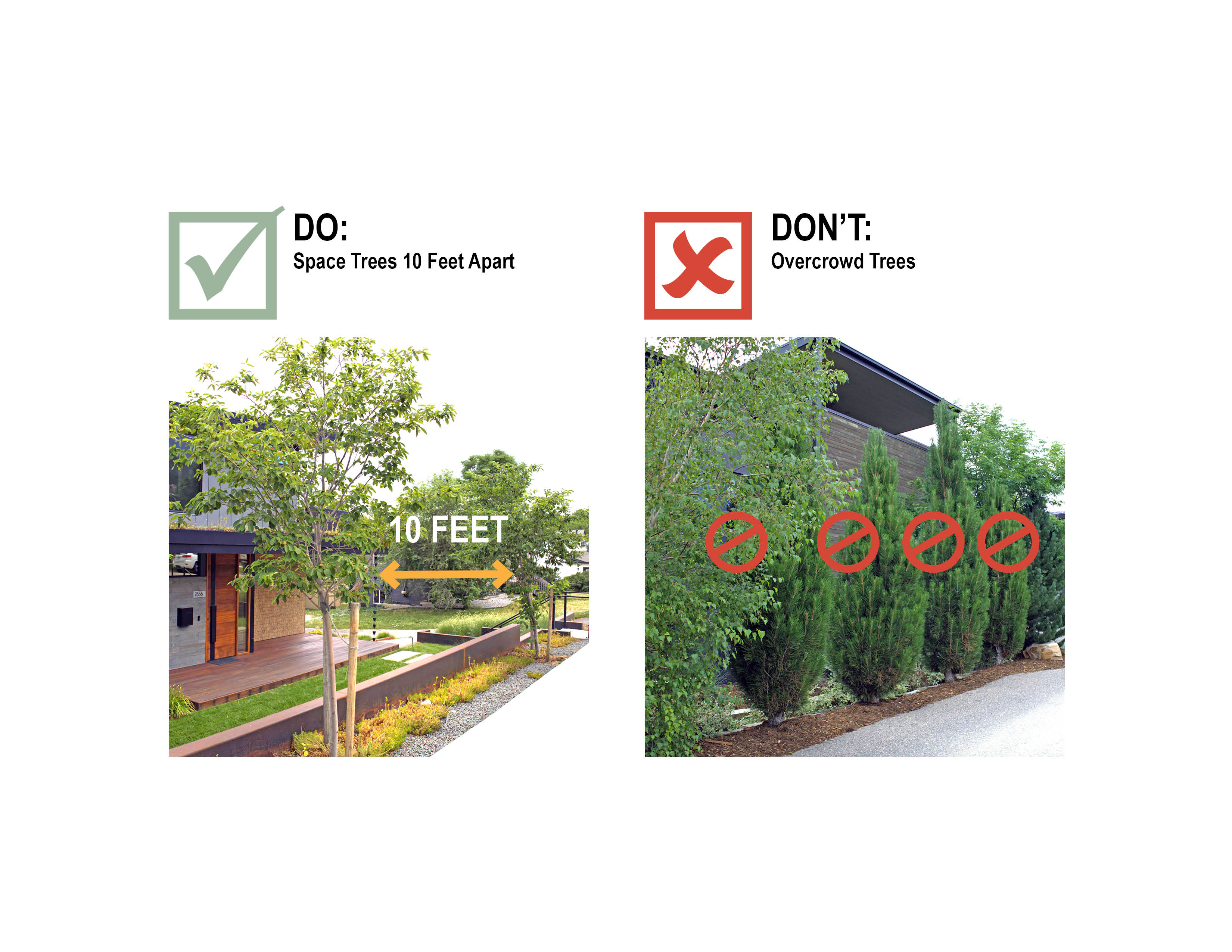
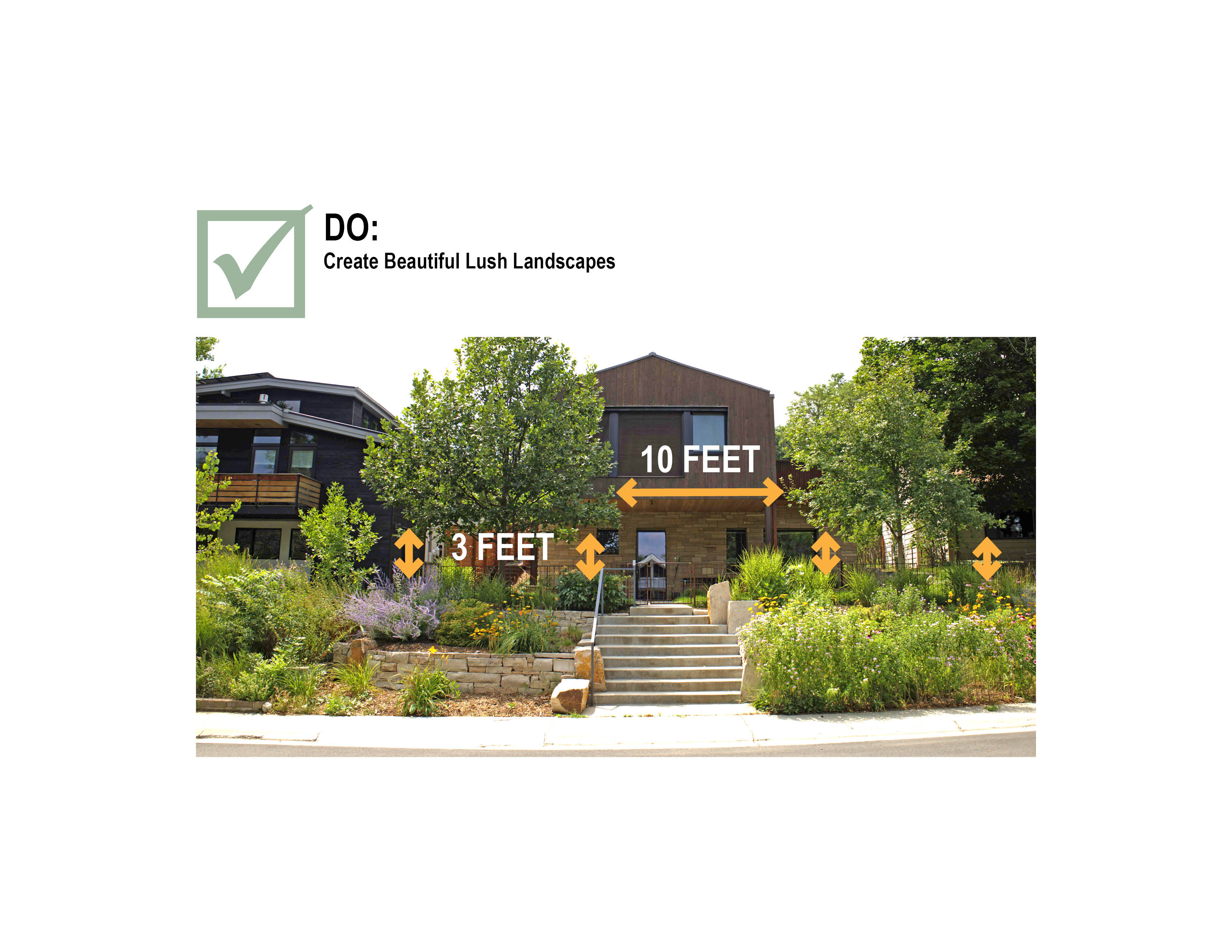
Aim for 10 feet of horizontal spacing between tree crowns. Please see Attachment 3 for additional information on tree management.
As trees grow, prune the lower branches of trees to a height of 6 feet above the ground.
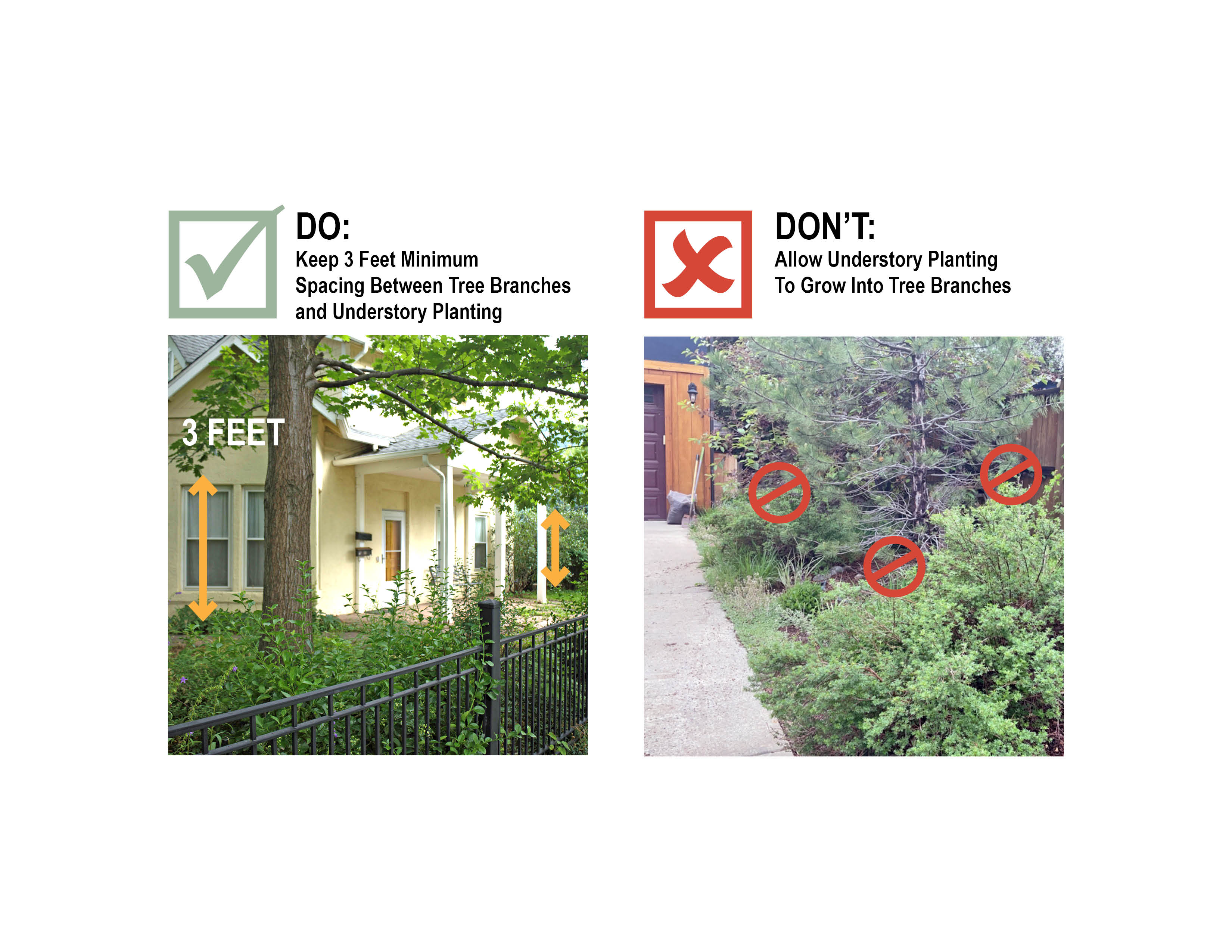
Low, compact plants, under 3 feet tall, with high moisture and low mineral content, are appropriate for Zone 2.
Use recommended mulches (squeegee, aged-recycled arbor mulch, and low-growing, high water-retaining groundcovers and grasses) that improve water retention in the landscape (See below recommended mulch materials)
Use low-flammability plants and shrubs listed as approved for this zone in the Boulder Approved Tree and Plant List (found at BoulderForestry.org).
Avoid plants that generate dry fuels or contain volatile oils, terpenes, and/or resins that ignite easily and burn at a high temperature. They are not suitable choices for WUI fire risk areas. Image removed.
Choose varieties of low-flammability grasses, perennials, and shrubs that stay hydrated without much extra water - they are less likely to dry out and provide fuel for fire.
Best Practice: Choosing The ‘Right Plant for the Right Place’
See the Boulder Approved Tree and Plant List hosted on the Urban Forestry Website, BoulderForestry.org, for tree recommendations and examples of perennials, grasses, and shrubs that are appropriate for this zone.
This list includes recommendations for plant and landscape care that apply to all zones around the house.
Consult the Urban Forestry website for tree recommendations within the varying WUI fire risk areas of Boulder.
Zone 3 (30-100 ft)
Beyond 30’ from structures, plant clusters of low-flammability grasses, shrubs, perennials, and trees broken up by open areas where possible.
As trees grow, prune the lower branches of trees to a height of 6 feet above the ground. For small or immature trees, make sure there are no dead branches and no branches touching the ground (guidance on tree care in a section below).
Shrub groups should be maintained to reduce ignition potential
Prune dead branches and remove leaves and litter under shrubs
Do not allow weeds or grasses to grow within shrubs
Existing evergreens should be thinned to reduce or eliminate connected crowns where possible. New evergreens should be planted to provide 10-15 feet of space between tree crowns.
Zone 3
Zone 1 (0–5 feet, pink/magenta border) immediately surrounding the structure; Zone 2 (5–30 feet, red/orange border) extending further from the home; and Zone 3 (30–100 feet, orange border) covering the broader property and adjacent area.
1 of 2
Zone 1 (0–5 feet, pink/magenta border) immediately surrounding the structure; Zone 2 (5–30 feet, red/orange border) extending further from the home; and Zone 3 (30–100 feet, orange border) covering the broader property and adjacent area.
2 of 2
Zone 1 (0–5 feet, pink/magenta border) immediately surrounding the structure; Zone 2 (5–30 feet, red/orange border) extending further from the home; and Zone 3 (30–100 feet, orange border) covering the broader property and adjacent area.
1 of 2
Zone 1 (0–5 feet, pink/magenta border) immediately surrounding the structure; Zone 2 (5–30 feet, red/orange border) extending further from the home; and Zone 3 (30–100 feet, orange border) covering the broader property and adjacent area.
2 of 2
Regulatory and Recommended Actions
With this overview of fire risk and fire behavior, fire risk reduction planning, and resources for designing fire risk and resilient landscapes, the following section provides more detailed information regarding the specific landscape requirements and prohibitions for properties within the property boundary for new development/redevelopment at the time of building permit in the three WUI areas. It also summarizes recommendations for those properties outside the designated WUI areas.
Please note that the below table summarizes the requirements and recommendations based on City of Boulder Codes and Ordinances. These represent the minimum requirements for all property owners within these designated areas. Some property owners who live in Home Owners Associations or other special development zones may be subject to additional requirements as stipulated in these property owner agreements.
Both the City’s codes and ordinances and the recommendations provided in this document have been developed with the recognition that landscapes serve many functions beyond reducing fire risk. Finding the appropriate balance of reducing risk while maintaining and enhancing the other important benefits landscapes provide—cooling, absorbing water, maintaining healthy ecosystems, and, of course, beauty and recreational enjoyment—will be an ongoing and dynamic process informed by our continued efforts to live in and with fire-prone landscapes.
Requirements Within the Property Boundary for New Development/Redevelopment (Non‑Right‑of‑Way)
Required Planting & Construction
Ignition Risk Area 1
Ignition Risk Area 2
Ignition Risk Area 3
Rest of City
Do not plant new Juniperus species of trees or shrubs.
Yes
Yes
Yes
Yes
Use noncombustible materials for all fences and gate sections within 8′ of the structure.
Yes
Yes
Yes
No
New landscape plantings within 5′–30′ of the structure must be selected from the City of Boulder approved plant list.
Yes
Yes
Yes
No
Maintain a vegetation‑free, combustible‑materials‑free zone within the first 5′ of the structure.
Yes
Yes
Yes
No
Do not plant new conifer trees or shrubs within 30′ of the structure.
Yes
Yes
Yes
No
Minimize contiguous tree canopies by maintaining 10′ horizontal crown spacing.
Yes
Yes
Yes
No
Required Maintenance
Ignition Risk Area 1
Ignition Risk Area 2
Ignition Risk Area 3
Rest of City
Prune trees within the property lines to maintain 10' clearance from the structure
Yes
Yes
Yes
No
Lift prune trees limbs to provide 6' clearance from the ground
Yes
Yes
Yes
No
Prune deadwood regularly from trees and shrubs
Yes
Yes
Yes
No
Use only approved mulch materials (See Attachment 2 of City Wildfire Resilient Landscapes Guide)
Yes
Yes
Yes
No
Recommendations
Recommended Planting & Construction
Ignition Risk Area 1
Ignition Risk Area 2
Ignition Risk Area 3
Rest of City
Use shrubs under 3' tall within 5'-30' of the structure
Yes
Yes
Yes
Yes
Avoid new plantings of all confer trees within 30' of the structure
Yes
Yes
Yes
Yes
Integrate fire resilient/water efficient plants - See city plant lists
Yes
Yes
Yes
Yes
Recommended Maintenance
Ignition Risk Area 1
Ignition Risk Area 2
Ignition Risk Area 3
Rest of City
Prune trees within the property lines to maintain 10' clearance from the structure
Yes
Yes
Yes
Yes
Remove non‑native shrub forms of Juniperus species within 30' of the structure
Yes
Yes
Yes
Yes
Prune deadwood regularly from trees and shrubs
Yes
Yes
Yes
Yes
Lift prune existing conifer trees and shrubs between 30'–100' of the structure to avoid ground contact
Yes
Yes
Yes
Yes
Maintain irrigation to all trees within the property boundary and in the Right of Way to maintain soil moisture and tree health
Yes
Yes
Yes
Yes
Use only approved mulch materials (See Attachment 2 of City Wildfire Resilient Landscapes Guide)
Yes
Yes
Yes
Yes
How to Take the Next Steps: Getting Started and Additional Resources
Schedule a Detailed Home Assessment (DHA): The Boulder Fire-Rescue Community Risk Reduction team offers free, in-depth assessments of your property anywhere in Boulder to help homeowners identify vulnerabilities to wildfire and provide site-specific recommendations for improvement. The report is available to access online to update progress and provide additional resources to achieve recommendations. As wildfire science develops and new research is published, the reports are automatically updated with the current science.
Use the Boulder Approved Tree and Plant List (see BoulderForestry.org) to find options that balance fire safety, water efficiency, and biodiversity.
Review the WUI Code: if you are planning to build, remodel, or landscape within the designated WUI areas, be sure to read all requirements.
How to Use Your Detailed Home Assessment (DHA)
Prioritize Zone 1 (0-5 feet): This is the most impactful area to address first. Remove combustible materials and replace with noncombustible hardscaping.
Create an Action Plan: Use your DHA checklist as a to-do list. Many improvements can be done in stages or seasonally. Find contractors/landscapers that can read the report and understand the priorities given in the DHA.
Talk to your Neighbors: Wildfire doesn’t stop at your property line. Use your DHA as a conversation starter to reduce shared risk.
Ongoing Maintenance and Community Engagement
Keep it up! Wildfire resilience is a process and not a one-time fix.
Host a Block Workday or HOA meeting: work together with neighbors to implement fire-resistant landscaping across multiple homes. Update HOA rules and regulations to have fire-resilient landscaping be a part of landscaping guidelines, or home hardening be a priority of Architectural Review Committees.
Volunteer or Stay Connected: Have wildfire community meetings, start a Fire Mitigation Committee in your neighborhood, or become a Fire Wise community.
Planting and Plant Maintenance
Reference the Boulder Approved Tree and Plant List for the City WUI Areas, HIZ, and Plant Type Irrigation Requirements. You can find the list at BoulderForestry.org.
Plants: Ensure the ‘Right Plant, Right Place’
Use site-appropriate and diverse plant material to create a healthy ecosystem that helps contain potential plant health problems.
Healthy plants stay green and keep the ground moist. Native plants and other drought-tolerant species should also be considered, as they are more likely to thrive in the long term.
Assess environmental conditions and plant environmental and maintenance requirements before planting.
Group plants with similar needs together.
Plant garden beds densely and irrigate them to serve as a “living mulch,” and consider the use of cover crops to prepare new beds.
Consider adding a bioswale or rain garden in lower spots to make the most of natural precipitation, filter water, and rehydrate soil.
Mulch: Ensure Your Mulch Is Working for You
The goal of a good mulch is to improve water retention, reduce weeds, improve soil structure, improve plant health, and reduce combustion spread in the landscape.
Best Practice: The 3 Best Practice Mulching Options
The 3 best practice mulching options should be used in combination. Each option is appropriate based on the location and application of the mulch.
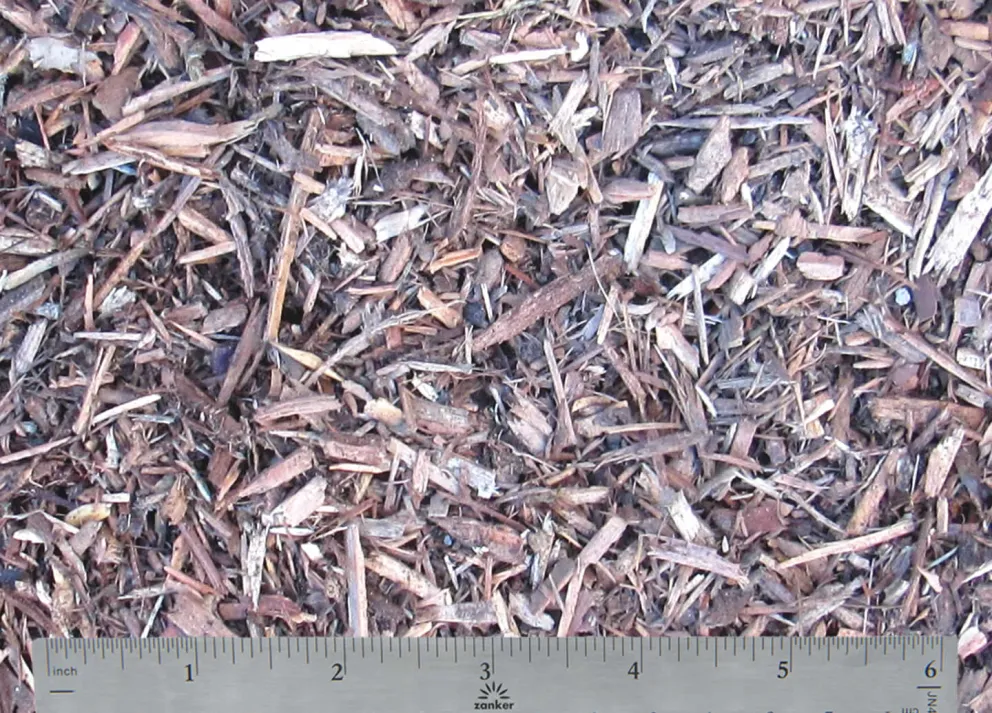
Organic: Recycled Arbor Chip Mulch (1”- 1-1/2” mixed wood chip) Use under trees and locations that require drip irrigation. Approved for use in WUI HIZ Zones 2 and 3.
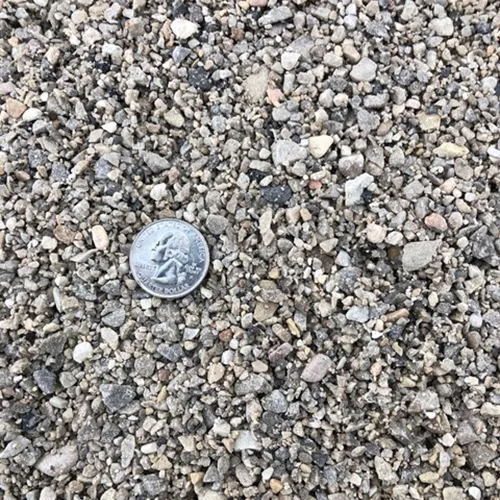
Inorganic: Squeegee (1/4” angular gravel no fines) Use in cactus, succulent, and native prairie plantings, and locations that require drip irrigation. Approved for use in WUI HIZ Zones 1, 2, and 3.
Living: Short Native Colorado Grasses or Creeping Groundcover Use in locations where micro-spray irrigation is permissible. Approved for use in WUI HIZ Zones 2 and 3.
Based on industry standards, mulching (whether with organic or inorganic mulches as the top layer) is done in combination with a compost and soil amendments to enhance soil health and productivity. Amendments could include: biochar, amendments to remediate certain soil conditions, mycorrhizal treatments, squeegee mixed in for soil aeration, etc..
Effective mulching assumes a 3” deep layer of mulch, whether it is organic or inorganic.
Landscape fabric under mulch is not recommended because it has several drawbacks. While it may produce results in the short term, in the long term, it creates more problems than it solves:
It does not allow the full penetration of water into the soil beneath from rain or spray irrigation
It creates a barrier that makes maintaining drip irrigation more difficult
It breaks down over time and does not retain its weed-preventative qualities
It encourages the growth of weed seed that thrives in shallow soils by holding dust and dirt.
Installation and Maintenance: Start Well and Keep Up the Good Work
The size of the hole for container-grown plants (including grasses, forbs, and shrubs) should be the depth of the root ball, allowing the crown to sit just slightly above the level of the surrounding soil. The width of the hole should be twice as wide as the root ball. Once the hole has been dug, gently place the plant in the hole, being careful to handle the root ball and not the trunk. Fill the hole with the native soil, taking care to firmly but gently pack the soil to avoid air pockets.
Allow shrubs to have their natural form whenever possible and avoid excessive pruning, which can stress woody plants. Consider regenerative pruning during the dormant season to reduce shrub size instead of shearing.
Maintaining healthy plants is one of the most important things you can do to reduce fuel for wildfires in your landscape. Monitor your landscape regularly and manage plantings so that they retain fire-resistant properties. Frequent health checks allow you to address deficiencies, diseases, pests, and weeds while they are still minor.
When pests do strike, follow an integrated management strategy that also incorporates an understanding of wildlife habitat requirements to limit potential harm.
Weed frequently around shrubs and perennials to remove potential fuels from your landscape and to promote the health of your desired plantings. Remove other fallen debris, such as leaves and twigs, from around plants to reduce fuel in planted areas.
Avoid herbicides that can harm soil health and leave dead or dehydrated plant material behind that can serve as fuel.
Irrigation: Water Strategically to Reduce Fire Risk and Water Use
How much water a plant’s leaves contain is the single most important factor to how easily it will catch fire, according to the Colorado State Fire Service. Maintaining plants with the right amount of water for that plant keeps them healthy and reduces the risk of fire by making sure they’re leaves are not dried out.
Careful watering leads to better establishment success. Immediately after planting, water to soak the root ball and the surrounding area.
Use irrigation that can effectively deliver water to the plant’s root zones - micro-irrigation and drip irrigation can be more efficient than overhead spray. Pay attention to plant health and adjust the rate and duration of irrigation as needed. Water needs will also change throughout the growing season.
Group plants with similar water needs together.
Water thoroughly and deeply every week through the first spring, summer, and early fall. Establishment watering may be required in the second growing season as well. Many tree species may require summer supplemental watering given the arid conditions of our landscapes.
From late fall to early spring, we recommend watering your landscape on warm, sunny days, especially if it’s been dry and windy.
Water plantings sufficiently to maintain plant health during the dry season and to reduce fire risk. Look for symptoms such as dull leaf color, wilted leaves, and stunting throughout the season to determine if your plantings are getting sufficiently watered.
Consult the irrigation requirements for plants and trees in the Boulder Approved Tree and Plant List to understand the water needs and recommended irrigation application rates for each plant species.
Meet the Mulches
The goal of a good mulch:
Improve water retention, reduce weeds, improve soil structure, improve plant health, and reduce combustion spread in the landscape.
The three ‘good options’ for mulching shown below are in line with our current Urban Forestry practice and the Combustibility Studies provided by our Fire-Rescue partners, and our Integrated Pest Management strategies, as well as waterwise landscape practice recommendations from our area.
The Good Options
Type
Photo
Description
Recycled Arbor Chip Mulch
1”- 1-1/2” max particle size with mixed sources (small sticks, leaves, bark, and wood chipped) aged in a compost pile
As it breaks down, this mulch type improves soil structure and improves the water retention capacity of the soil. This process minimizes the air space and improves the water retention capacity of the mulch which lowers its flammability. The size and mix of material are important to creating this potential.
It is recommended by the City of Boulder Forestry for tree health. This type of mulch is the lowest combustibility option for organic mulches.
It is often available for free at local arborist yards. The city also has a free mulch pile adjacent to its Parks Operations facility on Pearl Parkway east of 49th street. Look for signs along Pearl Parkway directing where to turn into the free mulch area.
Compatible with drip irrigation.
Appropriate for WUI Home Ignition Zones 2 and 3.
Squeegee Gravel Mulch
¼” minus angular gravel without fines. This size of gravel is a by-product from the production of other stone materials and processes at stone quarries and suppliers, and is usually not mined as a product on its own.
This product is good for use in succulent and cactus gardens, recommended for Front Range Native perennial gardens, and useful in sites that get reduced maintenance (needs less reapplication than organic mulch).
It is a non-flammable material that is compatible with drip irrigation.
Appropriate for WUI Home Ignition Zones 1, 2, and 3.
Living: Short Native Colorado Grasses or Creeping Groundcover
Low-growing, native grass and forb mixes that have very low water requirements as mulch.
These are grasses and groundcovers that naturally grow without mowing under 8” in height (minus flower and seed heads). Seed applied as hydroseed with perennials and shrubs planted in the grass matrix creates a complete ground cover in an understory/overstory structure.
Overhead micro-spray watering is required for this mulch rather than bubbler or Netafim drip, and so this option is not suited for areas under 10 feet wide that risk overspray.
Appropriate for Home Ignition Zones 2 and 3.
Mulch Products to Avoid
Type
Image
Description
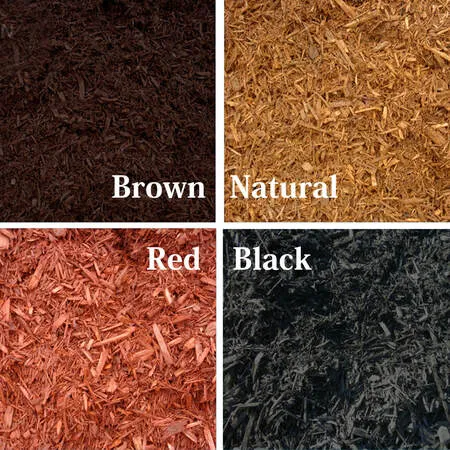
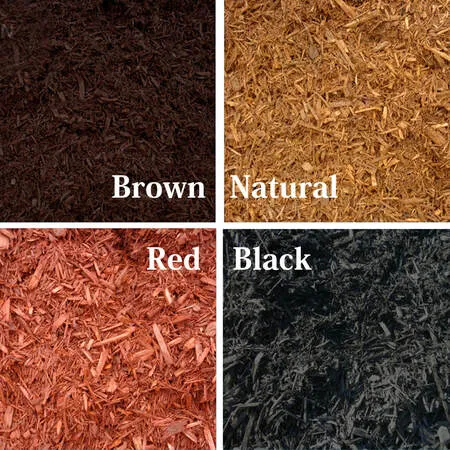
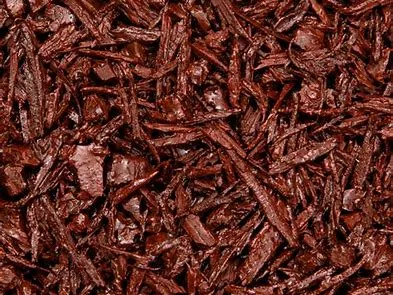
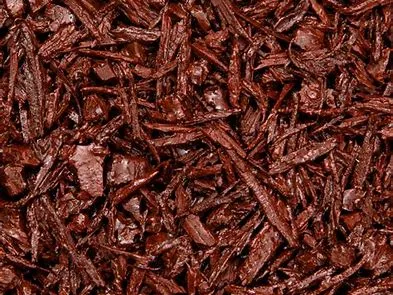
Color Treated Mulches
Chemical treatment dries out these mulches, preventing the decomposition that improves soil structure and water retention.
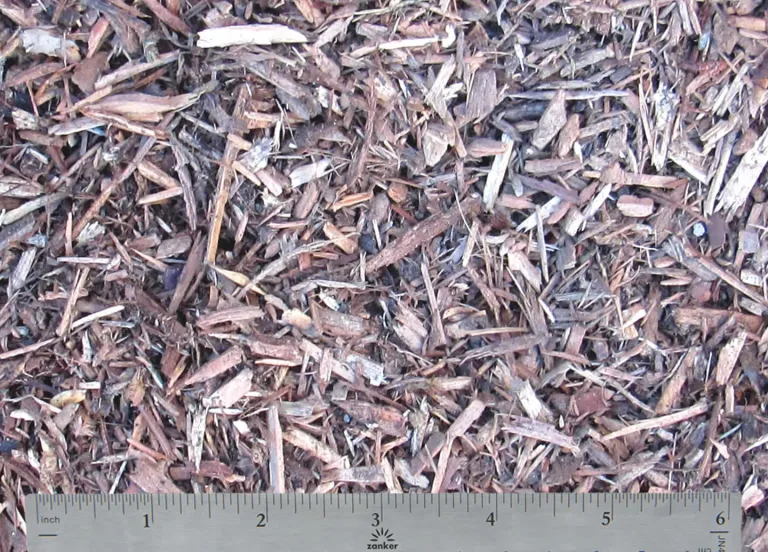
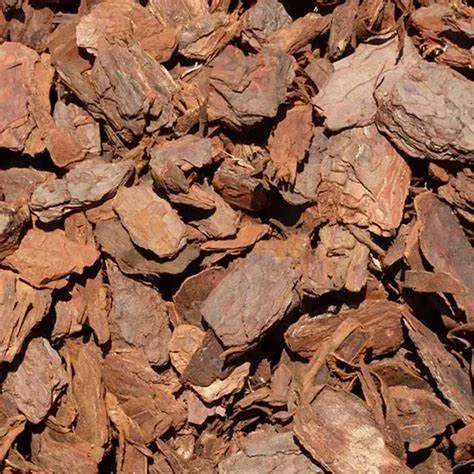
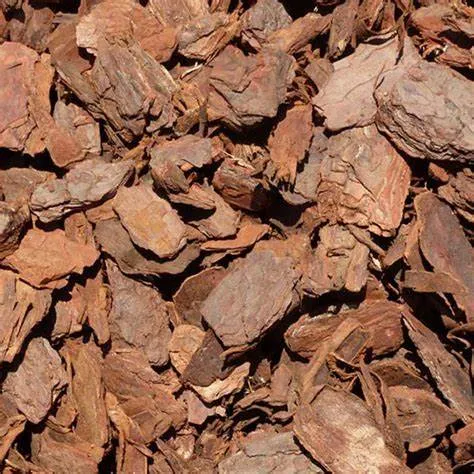
Large Format Cedar, Redwood, or Pine Mulches
The size and format of this mulch type discourages water retention and allows for more air gaps within the mulch. These properties increase their flammability and prevent the decomposition that improves soil structure.
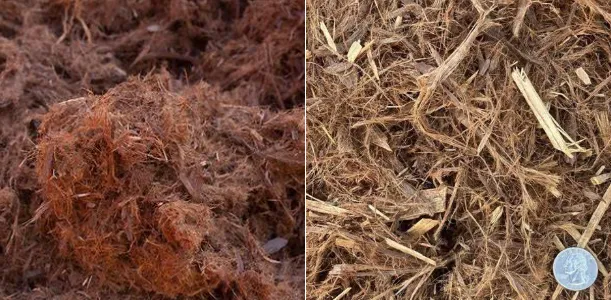
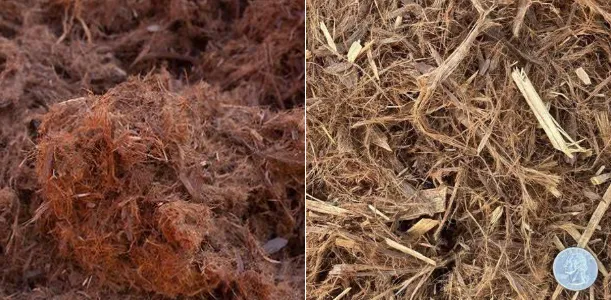
Shredded Mulch aka. Gorilla Hair
The size and format of this mulch type discourages water retention and allows for more air gaps within the mulch. These properties increase their flammability and prevent the decomposition that improves soil structure.
Rubber Mulch
This is a petroleum product that is highly flammable. It off-gasses, does not decompose, and improves soil structure, and increases soil temperatures.
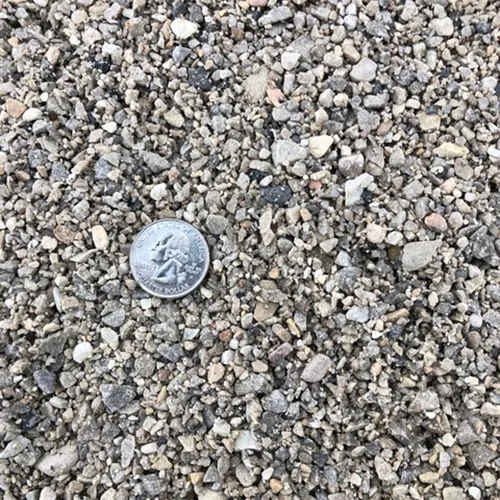
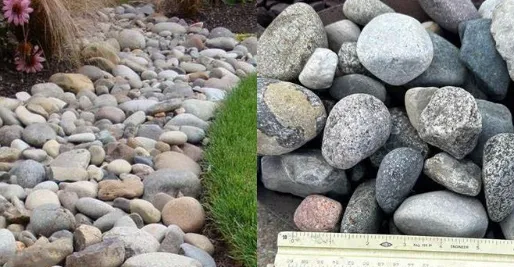
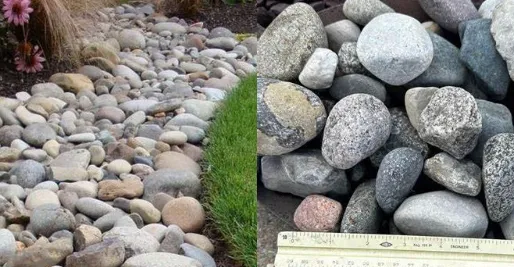
Rock and Cobble Mulch – Greater than ¼”- ½” size product
Size and format prevent these rocks and cobbles from improving the water retention of soil and soil structure over time in the same way that squeegee does. Rock of this size is more likely to be quarried as a product. Rounded river rock is sourced from creeks in ways that are detrimental to stream function and health. Large gaps between rocks encourage weed establishment in the gaps, encouraging the use of landscape fabric (which discourages water infiltration) or herbicides (which are detrimental to environmental health).
They may be a landscape feature desired for other reasons (ex. natural downspout splash block), but they do not work functionally as a mulch.
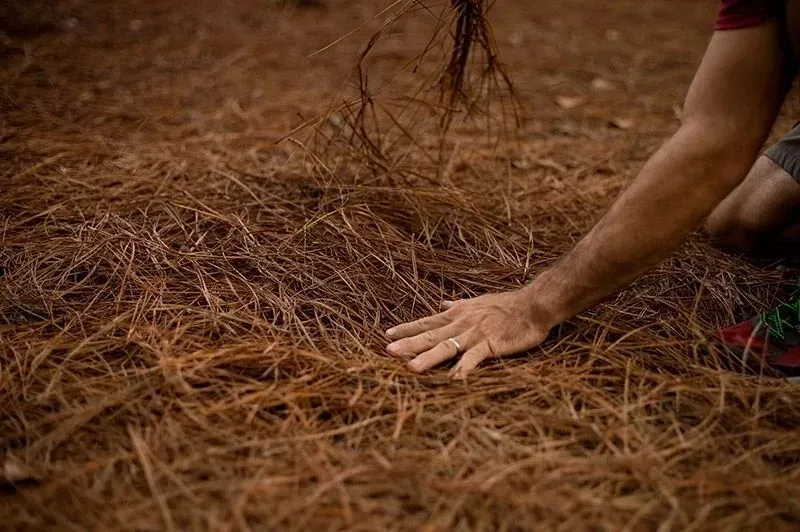
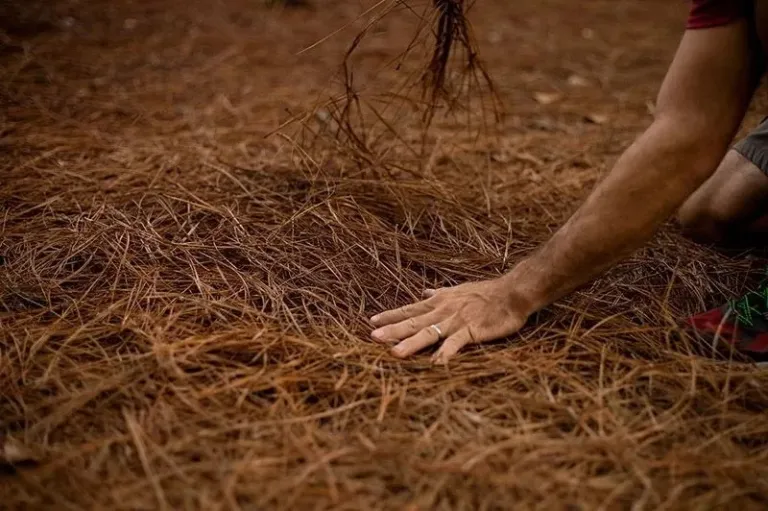
Pine Straw
Pine needles are a mulch with higher flammability that increases soil acidity.
Tree Pruning and Maintenance Guidance
The following are tree and shrub planting, maintenance, and removal recommendations to ensure tree health while mitigating fire risk.
Trees: Ensure the ‘Right Tree, Right Place’
Proper tree locations should be thought about before planting a tree; it is important to know how large trees will grow at maturity and space them accordingly.
Boulder Forestry will plant a shade tree for free in the public street rights-of-way (ROW). Property owners can review the program guidelines and access the webform to request a free tree at BoulderForestry.org, then click on Street Tree Planting Program.
Pruning and Maintenance: Keep Up the Good Work
Prune trees to maintain a 10-foot clearance from structures.
Aim for 10 feet of horizontal spacing between tree crowns, especially for coniferous trees.
As trees grow, prune the lower branches of trees within 30’ of the structure to a height of 6 feet above the ground, but never prune more than 1/4 of its total height at any given time, especially in smaller trees. In smaller trees, make sure no branches touch the ground and that there are no dead branches.
Reduce or eliminate any surface fuels under trees, by mowing taller grass, pruning or removing shrubs, and raking any leaves and needles beyond the edge of the tree canopy.
Pruning more than 20% of the live tree canopy at any time may negatively impact tree health. It may take two or more pruning events, spaced over several years to achieve the appropriate distance from the ground, structures and other trees, so as not to stress or harm the tree.
Remove any deadwood that is at least 1-2" in diameter and larger every few years.
Deciduous trees are more fire-resistant than most evergreens. Deciduous trees, even when planted in dense clumps, generally do not easily ignite and readily burn. The greatest fire risk from deciduous trees is the accumulation of dead leaves, dead branches, and tall grasses and shrubs beneath the trees.
Tree pruning and removal work can be dangerous, and if done incorrectly can negatively impact tree health. Anyone doing tree work within the city must be licensed to ensure they have the correct insurance and meet at least the minimum knowledge requirements. Always check with a tree care company before hiring them to prune or remove any trees, to ensure they are a City of Boulder licensed “Certified Arborist”. The current list of licensed certified arborists can be found on our website.
Removal: How to approach tree removal and materials management
Remove all dead and dying trees and shrubs.
The planting, maintenance, and removal of any shrubs, including juniper shrubs, in the street rights-of-way (ROW) are the responsibility of the adjacent property owner. Adjacent property owners do not need a permit to remove shrubs, but a ROW permit may be required if traffic control - even a sidewalk or bike lane closure - is necessary to complete the removal safely. For more information, refer to: Right-of-Way Permits
If the shrubs were planted to fulfill landscaping requirements for a development project or building permit, replacement may be required.
Shrubs in the ROW may not be pulled out because of the potential for damage to nearby trees and hardscapes (sidewalks, curbs, etc.). Adjacent property owners are responsible for damage to public property, including nearby trees or hardscapes. Cutting them out and grinding the stumps is a much safer option.
Irrigation: Water Strategically to Reduce Fire Risk and Water Use
A tree’s moisture content is the single most important factor governing its volatility (likelihood to catch fire).
Water trees in your landscape to keep moisture levels high and maintain tree health.
All trees in the Front Range need supplemental watering throughout the growing season. Check the soil moisture at least once a week.
Winter watering is also very important in Colorado, especially for evergreen trees. Water trees once per month when the temperature is above 40 degrees F. Winter drying and damage can show up immediately as branch dieback, or whole tree browning, or can stress the tree and make it more prone to attack from insect or disease pests for years after.
Mulch your trees to conserve soil moisture, improve soil structure, moderate soil temperatures, protect trees from mowers and string trimmers, and reduce weed growth.
Consult the irrigation requirements for plants and trees in the Boulder Approved Tree and Plant List (found at BoulderForestry.org) to understand the water needs and recommended irrigation application rates for each tree species.
Our Shared Resources: Trees and Shrubs in the Public Street Rights-Of-Way (Row)
Trees in the public street rights-of-way are protected by city ordinance, and their maintenance (pruning, removal, planting, stump grinding, pesticide application) is under the jurisdiction of Boulder Forestry.
Boulder Forestry currently has a 14-year pruning rotation for public street rights-of-way trees. Rotational pruning is focused on tree health and minimizing the risk of tree failure. Trees are only pruned outside the pruning rotation for major (tree) structural issues or large deadwood. Adjacent property owners are allowed to contract the pruning of public street ROW trees at their expense with authorization from Boulder Forestry. Submit an Inquire Boulder request for permission. Only Boulder-licensed Certified Arborists are allowed to prune public trees. For the links to Inquire Boulder and the current list of Certified Arborists, visit www.BoulderForestry.org.
Wildfire Ready Landscape Installation and Maintenance Contractors