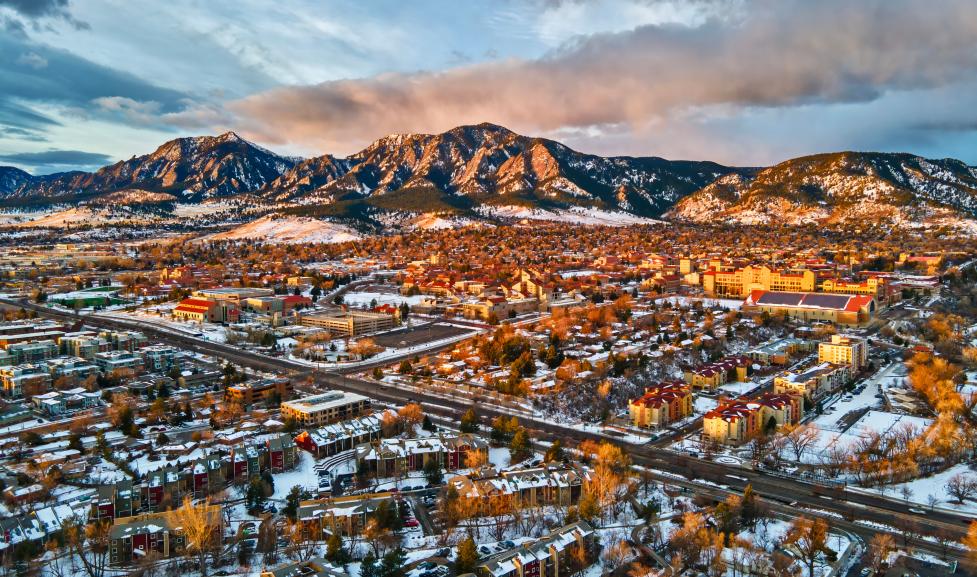
Creating healthier, safer and more resilient homes and workplaces for everyone in Boulder

  1. Plan

    Summer-Winter 2024

  2. Community Engagement

    Spring 2025

  3. Complete

    Summer 2025

  4. Implement

    2025-2035

Current Phase
Implement

Project Overview

The Roadmap is Boulder’s 10-year guide to making existing homes, businesses and community buildings healthier, more efficient, and more climate-ready. Developed with input from thousands of community members, the roadmap outlines how the city will reduce building emissions while improving comfort, safety and affordability.

This Roadmap is a living document that will adapt over time to new information and changing conditions.

The Roadmap aims to:

  • Reduce greenhouse gas emissions from existing buildings.
  • Improve comfort and resilience, especially during extreme heat and weather events.
  • Advance equity and affordability by supporting frontline community members and equity-priority buildings.
  • Expand access to cooling, efficient appliances and healthy indoor air.
  • Strengthen the local clean-energy workforce and increase job opportunities.
  • Make energy upgrades easier and more accessible through better support and navigation.

Policy Update Timeline

YearDescription
2024-25 Roadmap development
2026

Phase 1. Early wins

  • For commercial and multifamily buildings over 50,000 square feet, align the Building Performance Ordinance (BPO) with the state’s energy performance standards.
  • Exempt multifamily buildings that are regulated by the BPO from SmartRegs (see above).
  • For new rental licenses only, update the SmartRegs checklist to: (a) eliminate natural gas appliance incentives and (b) require cooling access.
2027-29

Phase 2. Mid-term efforts

  • For midsized commercial and multifamily buildings (20,000 to 50,000 square feet, and potentially smaller), update the BPO with alternative pathways and phased implementation.
  • Require end-of useful-life (EUL) replacement in the building code for certain heating and cooling appliances.
2030-35

Phase 3. Later policy efforts

  • Expand EUL replacement to more appliance types.
  • Update SmartRegs minimum energy-efficiency standards for all rental licenses.
  • Evaluate whether to adopt a time-of-sale requirement for home sales. At a minimum, this might be an energy disclosure to the buyer or require energy improvements tied to home sale.

Other Key City Activities - 2026 to 2035

Consider adopting zero-NOx (nitrogen dioxide, nitric oxide) standards, if necessary, to require replacement of appliances with all-electric equipment.

  • Actively promote free resources to mobile homeowners. Promote free energy-efficiency and electrification resources, solar subscriptions and bill assistance to owners of mobile homes.
  • Revise city-funded income-based incentives. Only offer rebates to homeowners under 150% of the Area Median Income (AMI), with generous rebates for households below 100% AMI.
  • Mitigate displacement risk, especially for low-income renters, understand existing landlord approaches to in-place vs. at-turnover vs. relocation practices, use of tenant liaisons and resources to support temporary relocation.
  • Use Voluntary Agreements to limit rent increases. Require landlords who receive city funding to stabilize rents for a certain period to prevent landlord pass-along costs from displacing tenants.
  • Prioritize community solar for low-income households. Seek to expand access to community solar programs to reduce energy burdens for income-qualified residents.
  • Small business and equity priority buildings. Continue to proactively promote resources and offer additional support.

Advocate for on-bill financing legislation. Support passage of state legislation to establish an On-bill Repayment Program for favorable financing for energy-efficiency and electrification upgrades.

  • Work with large industrial campuses. Three large industrial campuses produce a large share of GHG emissions from buildings in Boulder. Work with these industrial campuses to pursue emissions reduction and decarbonization.
  • Work with homeowners' associations (HOAs). Work with interested HOAs to develop streamlined approaches to pursue efficient electric heating and cooling. In HOAs with attached walls, especially, the need to secure approvals from property managers and HOA boards can discourage homeowners from pursuing heating and cooling appliance upgrades.

Work through regional partnerships, including with Workforce Boulder County, the Denver Regional Council of Governments, Front Range Community College and the school district to address workforce needs.

  • Expand Boulder’s Clean Energy Workforce. Increase training programs for heat pumps and solar installation to create local jobs and support small businesses.
  • Support under-resourced workers. Seek to provide wrap-around services, including transportation, childcare and career support to reduce barriers to entry into clean energy jobs.

  • Enhance navigation for city energy regulations. Establish a One-stop Shop to support building owners in navigating incentives, permits, securing contractors, and energy data reporting and to offer general guidance.

Roadmap Development

The Roadmap was informed by a Building Stock Analysis and robust engagement.

Learn more about the findings of the Building Stock Analysis.

Learn more about Roadmap Engagement and what different stakeholders had to say.

Read a two-page overview of the Roadmap.

What’s Next?

Phase 1, Aligning Local and State Regulation for Commercial and Residential Buildings over 50,000 Square Feet

The City will begin Phase 1 implementation in 2026, with annual progress updates and ongoing community engagement. As programs and policies are developed, community members will have opportunities to share input and get support tailored to their building type and situation.

This phase focuses on commercial and residential building over 50,000 square feet.