
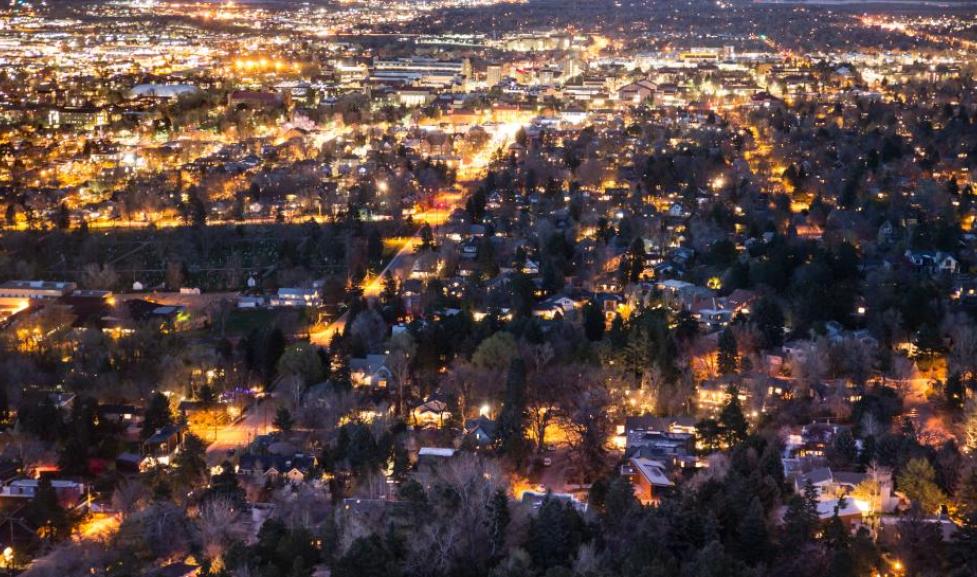
Streetlights include lights that are on the public right-of-way, such as public streets, sidewalks and multi-use paths.
The city does not own or maintain area lights, which are lights over private property, such as at condos or parking lots.

The City of Boulder owns and operates about 5,100 streetlights.
This includes over 4,400 streetlights we purchased from Xcel Energy in 2024. We finished converting these lights to more efficient LEDs in April 2026. This effort has saved costs, updated technology, improved reliability and safety, and reduced carbon emissions.
Streetlights include lights that are on the public right-of-way, such as public streets, sidewalks and multi-use paths.
The city does not own or maintain area lights, which are lights over private property, such as at condos or parking lots.
If there is an issue with a streetlight within city limits, you can make a service request on Inquire Boulder. Your ticket will be closed on Inquire Boulder once we document your request in the maintenance system. Depending on the location and severity of the issue, response times may vary from a few weeks to a few months. We appreciate your patience and understanding as we work through this important upgrade to our streetlighting system.
Most city-owned streetlights have been converted. A few city streetlights will be converted at a later time due to additional complexities, including the types of streetlight fixtures. This includes Pearl Street streetlights.
We have a map showing where streetlights have been converted:
Provides for the safety and comfort needs of all community members. We previously paid Xcel Energy for streetlight services. These costs have risen significantly. While we had no way to control costs, we were responsible for all costs Xcel incurred. We will save money now that we have acquired the lights and brought them under city control.
Many of the streetlights previously owned by Xcel Energy used outdated technology that was inefficient and provided a lower-quality light. Newer technology, called Light Emitting Diode or LEDs , is efficient, dimmable, and provides better light quality, along with energy and greenhouse gas reductions. Since LED lights are much more efficient than the lights in current streetlights, we estimate that by converting all city streetlights, we can reduce emissions by about 1,000 metric tons of carbon, which is roughly equivalent to taking 254 gas vehicles off the road.
High-performing and reliable streetlights can self-report outages. The streetlights previously owned by Xcel Energy didn’t automatically notify the City when they were out. People had to report an outage to get lights fixed or replaced. This system led to unnecessary, prolonged outages. We have now converted the lights to new technology that automatically lets us know when the lights need repairs or replacement.
LEDs offer improved visibility, better color rendering and higher uniformity compared to the previous HPS lights. The LEDs will also help address certain dark spots in the city.
Color temperature is how warm or cool a light is, such as whether it appears yellower or bluer. LEDs come in a range of color temperatures.
In 2023, the community weighed in on the selection of the new LED color temperatures. The pilot included: 2,200K, 2,700K, 3,000K, 4,000K. Overwhelmingly, participants indicated their preference for warmer lighting at 2700 Kelvin, a conclusion additionally supported by best practices and technical analyses. 3,000K and below is considered dark sky compliant. We selected the second-lowest of the commonly available product color temperature options (2700k). We will replace lights with this warmer color temperature moving forward.
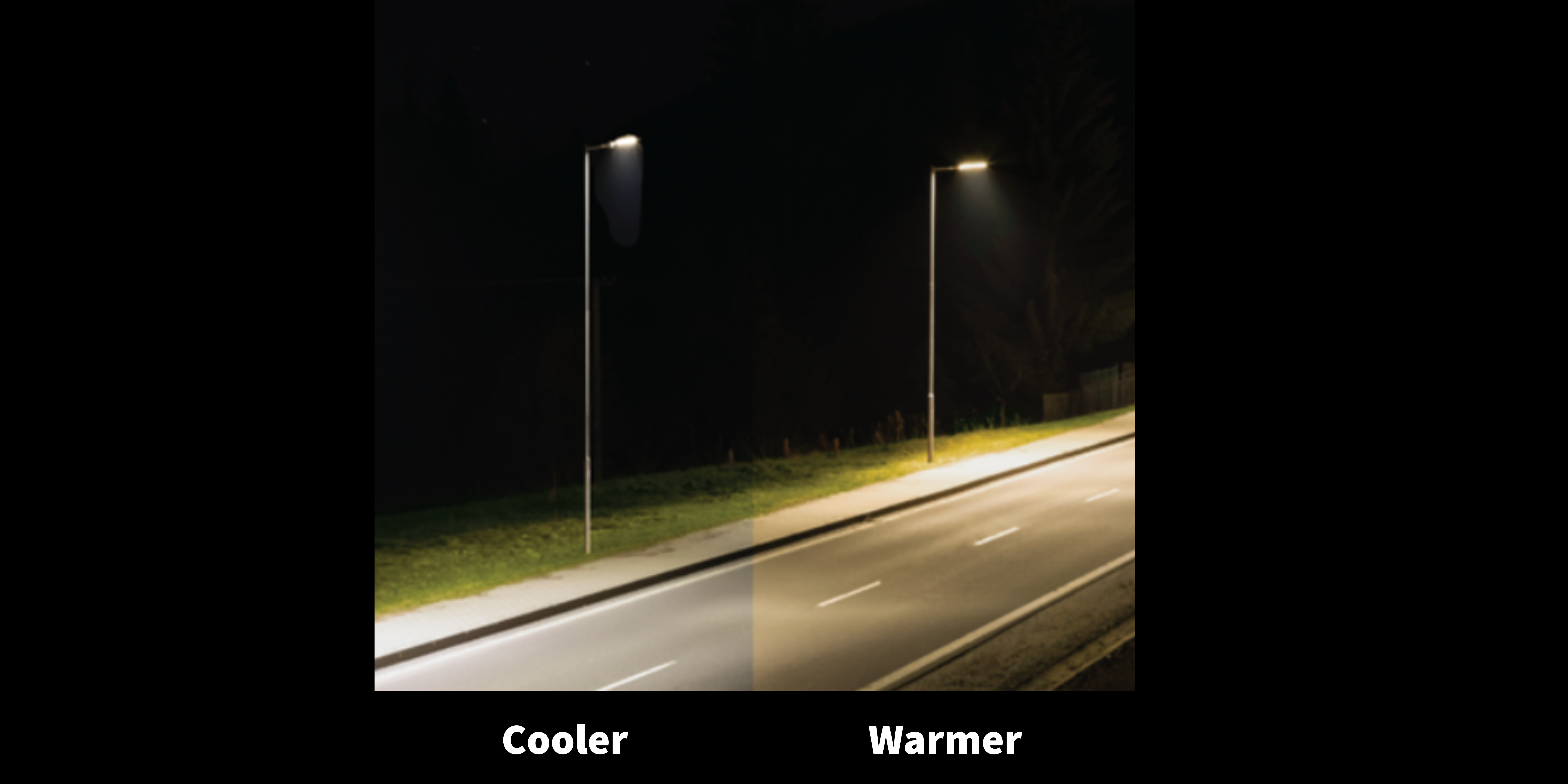
The decision was based on what we heard from the community, feedback from Community Connectors, data on costs and efficiency, and other technical considerations.
Community engagement was a key part of the project. In 2023, the community weighed in on the selection of the new LED color temperatures — how warm or cool a light appears. Overwhelmingly, participants indicated their preference for warmer lighting at 2700 Kelvin, a conclusion additionally supported by best practices and technical analyses. Read a summary of what people in Boulder think about streetlights.
A consultant who specializes in lighting prepared a comprehensive photometric analysis of the entire streetlight system to ensure that the converted streetlights will properly illuminate roads and sidewalks. This work considered the street layout, pole locations, mounting height, street classification and pedestrian activity for identifying the proper luminaire, or fixture, and target lighting levels. The selection of the proper luminaire encompasses both a wattage/lumen output (quantity of light output) and the distribution type (area of lighting) specification. This includes selecting distribution types to maximize the light on streets and minimize light trespass. The target lighting levels are based on the RP-8 (Recommended Practices for Lighting of Roadways), which is published by the Illuminating Engineering Society of North America (IESNA) and is considered the industry’s best-practice approach.
There are several benefits to our community:
While the new lights may appear brighter and may take some time to get used to, the newly installed LEDs have comparable lumens to the previous HPS lights.
The previous lighting provided by Xcel Energy did not meet current lighting standards. The older lighting was far below recommended photometric standards and inconsistent with our citywide initiatives. The target lighting levels are now based on the best national practices. Boulder had many older lights, some of which had reached the end of their lifespan and had even turned off entirely, which is another reason why these LEDs seem brighter than what everyone is used to.
We specifically selected new dark-sky-friendly light fixtures that will focus light where it is needed and reduce light spillover affecting the night sky and wildlife, such as migratory birds.
All streetlight luminaires are “fully cut off” – meaning that the fixture is designed to minimize light pollution by directing all light downward. This prevents light from escaping sideways or upward into the night sky, which causes glare and skyglow.
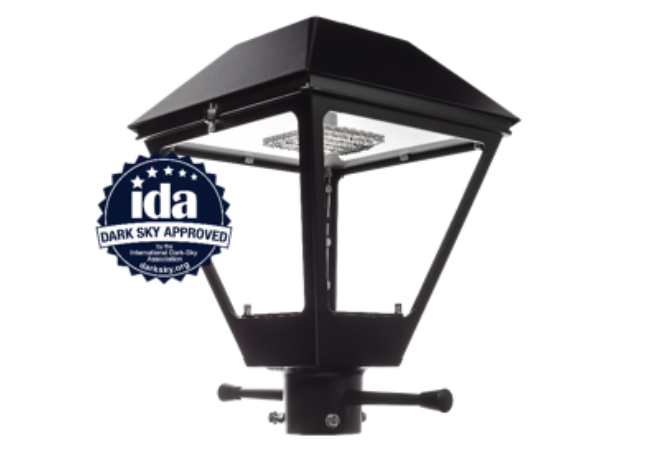
The city’s dark-sky-compliant post top luminaire. It is an open type with no panels for maximum performance.
For International Dark Sky (IDA) certification, the No Side Panel option and 3000k or warmer LEDs must be selected. The City selected luminaires without side panels and a color temperature of 2700k.
Additionally, streetlights are one of several exemptions from the outdoor lighting ordinance, as this regulation applies specifically to private property lighting. Streetlights are public lighting, located within the right-of-way. They are essential for maintaining safety on the roads for all forms of transportation.
A consultant who specializes in lighting prepared a comprehensive photometric analysis of the entire streetlight system. For each streetlight, the analysis identified the type of LED design required, along with the need for shields. The design considered various factors described in the FAQ, and we will continue to support these photometric results. Shields will be provided for locations that the photometric analysis identified.
Though the new LEDs are fully dark-sky compliant, the city has implemented a data-driven service policy for dimming. Streetlights located on residential streets, in low-density residential zones, will be dimmed by 50% at 11 p.m. each night. This corresponds with city noise ordinance guidelines and peer city best practices.
We recognize that the brightness of the streetlight may feel different from what you are used to. We kindly ask our community to allow some time to adjust to the new LED streetlights.
Side panels are not a viable option for several reasons.
The streetlight conversion was a one-for-one replacement. Evaluating the number and locations of streetlights will take place during a future city process.