Lakota: The Oglala Sioux Tribe and The Rosebud Sioux Tribe

Contributors

  • Ms. Ione Quigley, Tribal Historic Preservation Officer, Rosebud Sioux Tribe
  • Mr. Jhon Duane Goes In Center, Cultural Specialist for the Oglala Lakota Tribe
  • Mr. Benjamin Young, Cultural Resource Specialist
  • Former Fifth Member Mr. Justin Pourier, Tribal Historic Preservation Officer for the Oglala
  • Lakota Tribe (attended one site)

Respecting the Land: A Lakota Perspective

Respecting the land and all its inhabitants is a core principle in Lakota tradition. It is important to recognize the interconnectedness of all living beings and act with care toward the environment. As Jhon Goes In Center shared, “It’s a whole different idea of loving this land... and that’s a feature that we don’t talk enough about.” This love is expressed not through ownership or domination, but through relationship, humility, and gratitude. For the Lakota, land is not a commodity—it is a living entity, a relative that sustains life and deserves to be treated with care.

This ethic of respect extends to all aspects of the natural world, from the smallest plant to the largest animal. “We always make a prayer and ask permission of the animals that we’re going to hunt... and then we give them gratitude,” said Ione Quigley. She emphasized that hunting is not a sport but a sacred exchange. “We only hunt what we’re going to eat, what we’re going to need. And same thing with the plants. We only take what we need, no more.” This tradition of intentional, mindful use stands in stark contrast to modern extractive practices, where, as Benjamin Young put it, “from a Native perspective, we’ll look at a tree and it has life and it has a heart and has branches. And from a non-Native perspective, they’ll look at it and see how many toothpicks can I get out of this.”

In today’s world, where environmental degradation is rampant, the Lakota perspective serves as a guide for more ethical and sustainable living. “All of a sudden you’re finding out there’s more traffic and more traffic,” Mr. Goes In Center noted, referring to the increasing human impact on natural places. “Just have a conscious mind in designing places, you know.” Noise, air pollution, and unchecked development all disrupt the delicate balance that Indigenous communities have long worked to protect. “The pollination would be changed with the air from the helicopters and of course, the noise,” Ms. Quigley added, emphasizing how even subtle disruptions can have cascading effects on plant life and ecosystems. Underlying all of this is a spiritual and philosophical grounding in balance and reciprocity. Mr. Goes In Center reflected, “I think about my ancestors – how great it is that they lived in equilibrium... A society that attained equilibrium with their environment.” Unlike dominant cultures that have often sought to exploit land and resources, Lakota tradition prioritizes harmony and long-term thinking. “They never built cities. They never – they followed it, you know... it gives me a sense of pride today and speaking to the next generation about our ancestors.”

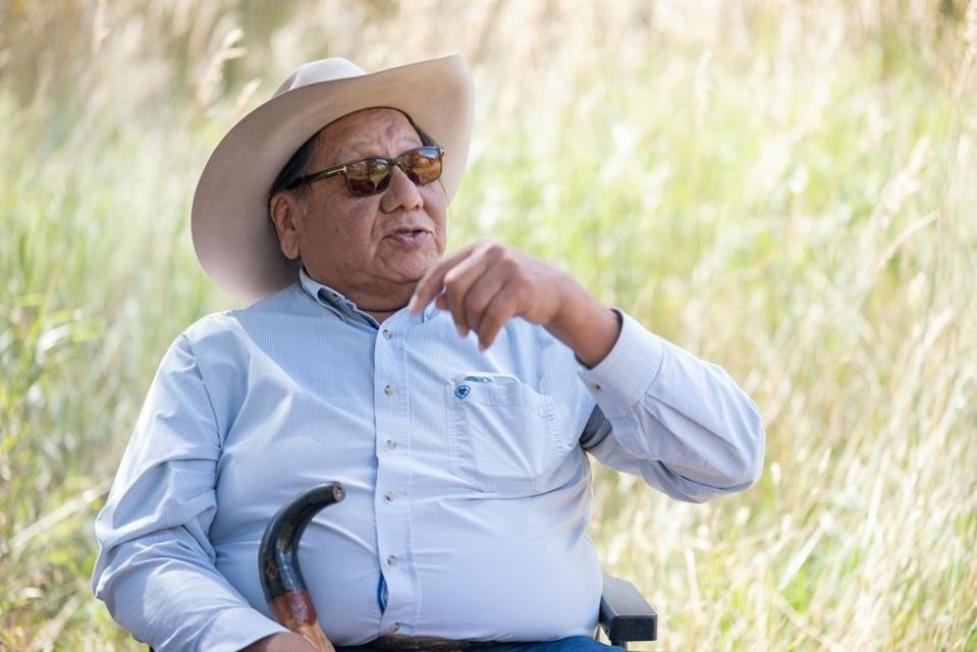
Portrait of Mr. Jhon Goes in Center speaking to someone off‑camera, seated with tall grasses blurred behind.

Mr. Jhon Goes In Center

This legacy of balance is rooted not only in practical tradition but in a moral and ethical view of the world. The Lakota do not compartmentalize nature into lifeless resources. Instead, as Ms. Quigley said, “We don’t do that. We connect and communicate with our flora and fauna so much differently than the world of science.” This worldview challenges the dominant Western narrative of control, competition, and consumption, which has led to both environmental destruction and social disconnection. Today, Lakota voices challenge us to confront uncomfortable truths about modern society’s relationship to the land. “It bothers me when I look at the worldview,” Ms. Quigley said. “Greed; all about resources. The colonists had used up all resources on their lands. The lands were so contaminated that they could no longer produce food.” The consequences of historical exploitation are no longer distant echoes; they are present realities in the form of climate change, resource depletion, and ecological collapse.

Yet even in the face of these challenges, Lakota teachings offer a path forward—not through guilt, but through transformation. “America needs that,” Mr. Goes In Center stated. “Their maturation as a society is to connect to the land.” This is not just a call to environmentalism, but to a deeper relational understanding—of history, of place, and of responsibility. “Everybody should know the history of where their family comes from and what happened when they got here,” he said. “So, we can kind of have a better understanding... and honor each other in that way.”

Ultimately, the Lakota perspective is not a criticism of today’s world, but an invitation to reconnect—with nature, with community, and with the values that sustain life. “Asking people to be respectful of the area. Especially a lot of people with their dogs and all that,” Mr. Goes In Center noted, pointing out that even everyday actions like picking up after one’s dog and using a leash reflect deeper attitudes. Respect is not abstract; it is practiced in how we walk through the world, how we gather, how we build, and how we give thanks. In listening to these voices, we’re reminded that the path to ecological restoration and social harmony lies not in dominance, but in humility. It lies in remembering that “this earth is going to shake and destroy us” if we continue down a path of arrogance. But it also lies in hope—in the idea that we can still choose balance, still choose respect, and still learn to love the land as the Lakota have done for generations.

Roots and Relationships

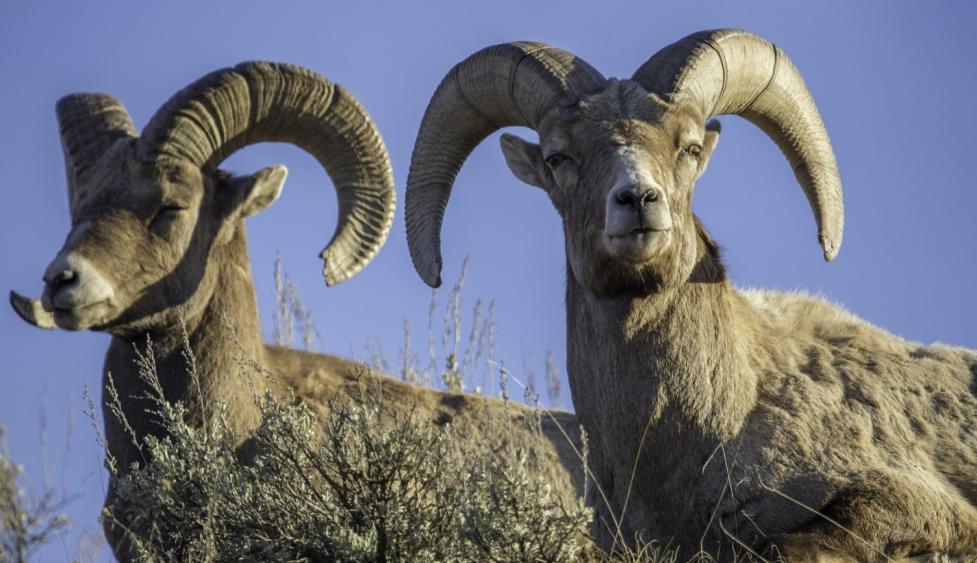
Lakota lifeways are deeply rooted in a relational understanding of the world, where humans are seen as part of a larger, interconnected system that includes plants, animals, water, air, and the land itself. The big horn sheep that once roamed the Boulder area were (and still are) associated with Chiefs, and the Boulder Valley would have been a place Lakota people traveled to get sheep's wool to make shirts for Chiefs. Unlike the compartmentalized and hierarchical structures common in Western science, the Lakota worldview does not separate nature into distinct categories. As Ms. Quigley explained, “We live with the flora, with the fauna... the air, the water, everything around us, the rocks. We're part of it, we're not compartmentalized.” This view shapes not only how the Lakota interact with the land but also how they speak, think, and live. “Indigenous language is relational,” they continued. “It’s not so much noun-driven,” unlike English, which tends to “look at the land in the sense of linear lines.”

Two bighorn sheep with large horns look off into the distance.

Big horn sheep, public domain

One of the most misunderstood aspects of Indigenous history is the concept of nomadism. The term "nomadic" is often applied to Lakota people inaccurately, implying rootlessness or aimlessness. But, as multiple Lakota Representatives clarified, “We weren’t just wandering... we moved season by season,” following medicinal plants and resources essential to their way of life. “We knew where we were going. We knew what we were doing and the purpose behind where we go.” The Lakota seasonal movements were precise and deeply informed by generations of ecological knowledge. Calling them “nomadic,” one speaker noted, suggests “somebody is lost and wandering around”—but in fact, they followed a careful, intentional pattern that honored the earth’s natural rhythms.

This deeply rooted knowledge of land and ecology stands in contrast to how outsiders have historically tried to categorize Indigenous peoples. “What’s a Paleo-Indian, what’s an Archaic Indian?” Mr. Young asked rhetorically, pushing back against arbitrary academic labels. These terms often fail to reflect Indigenous self-understanding. “Those names were given to us by people who do not understand the history of the Indigenous people on this continent.” Instead of reducing people to categories or eras, Lakota lifeways emphasize continuity—living traditions passed down through “older ancestors” and grounded in place.

Harmony and balance were also key values in social relationships. Contrary to popular depictions, the Lakota were not perpetually at war. “There’s always some misconception out there that Tribes were constantly fighting,” Ms. Quigley explained. “But it wasn’t that way. There might have been a battle here and there... but it was never territorial.” Conflicts, when they arose, were about resources—hunting grounds, not conquest. The arrival of the horse did introduce new forms of rivalry, such as stealing horses for prestige. “The advent of the horse... caused us to compete and steal horses from one another. It became part of our status symbols.” Yet even then, the competition was often more symbolic than destructive. “We never conquered each other. We proved ourselves against each other.”

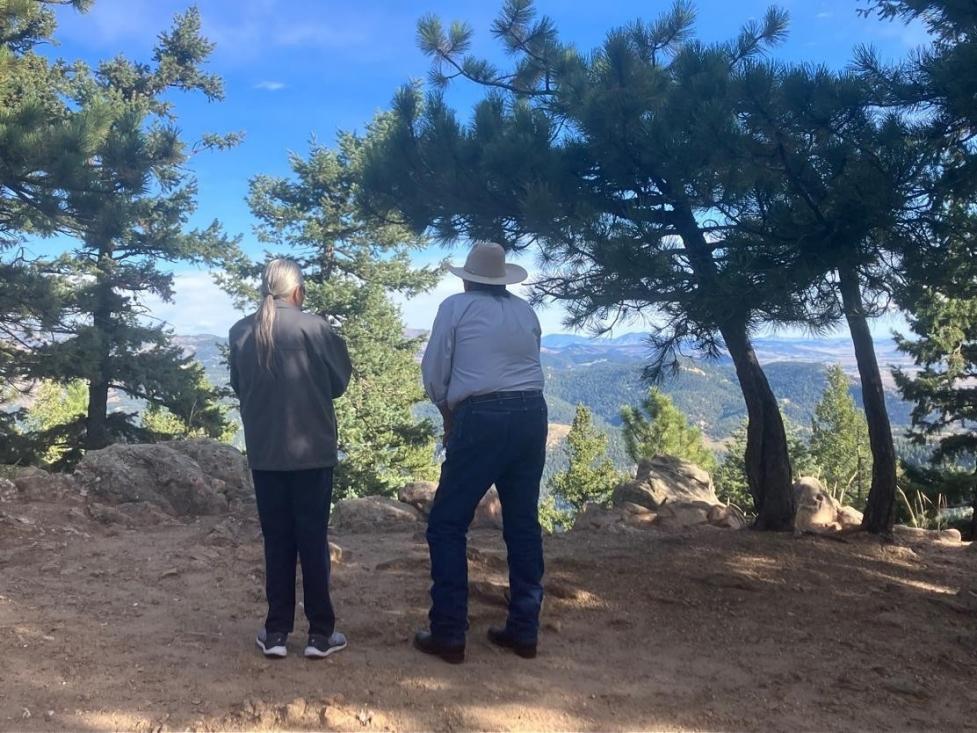
Ms. Ione Quigley and Mr. Jhon Goes in Center face away from the camera, overlooking green conifers and distant mountains.

Mr. Goes in Center and Ms. Ione Quigley

Underlying all of these traditions is a worldview grounded not in domination but in relationship—with the land, with other people, and with the spirits of all things. This relationality is the foundation of Lakota life, ethics, and language. It resists the mindset of separation and superiority that has characterized settler colonialism. “I struggle with the word nomadic,” said Mr. Young. “Because we were not lost.” They call instead for a deeper historical truth, one that recognizes not only the injustices of colonization but also the sophistication and intentionality of Indigenous societies.

As the Lakota continue to reflect on the impact of colonization and resist reductionist narratives, they also look toward education as a way to bridge understandings. “There’s a book that everybody should read. It’s called The Indigenous Continent,” recommends Mr. Goes In Center. “It gives you a perspective... of what really happened to us.” The competing interests of France, England, and Spain—and later the expansionist agenda of the United States—deeply altered Indigenous lifeways (Hämäläinen, 2022). And yet, through resilience and adaptation, Lakota communities maintain a deep connection to the land and their cultural foundations. At the heart of the Lakota way is a simple yet profound truth: everything is related. This isn’t a metaphor; it is a lived reality. The land is not a resource to be measured and divided—it is a relation, a part of the family. And the Lakota, far from being wandering tribes, were and are knowledgeable stewards of their environment, living in a rhythm with nature that holds critical lessons for a world struggling with disconnection, ecological crisis, and cultural loss.

Boulder Valley: A Lakota Perspective on Living Land, Sacred Place, and Changing Systems

From a Lakota perspective, the Boulder Valley in Colorado is not merely a scenic landscape—it is a living, breathing place, deeply imbued with spirit, memory, and ancestral significance. Though it may lie outside the core of their traditional homelands, the Lakota people traveled throughout the area for hunting and resource gathering (Brett, 2003). Many Lakota people have formed powerful, ceremonial, and emotional ties to this land through presence, listening, and reverence. “It’s a whole different world,” Mr. Goes in Center recalled. “It connects you to something that’s really part of reality—more than anything else that’s contrived down there.” The winds, mountains, creeks, and rocks are not just features of the terrain; they are relatives, and the valley itself is understood not as a finished product, but as an ongoing creation. “The first Rocky Mountains disintegrated over time and created all the prairie sculpted by the wind... this planet is still being created.” The Lakota people have names for places in Colorado, explained below, the naming of places is just one of the many ways the Lakota connection to the area is reinforced.

Lakota NameRough TranslationCommon NameExplanation
ȞenúŋpaTwo Mountains Longs PeakLongs PeakThis peak name is adapted from the Arapaho name Neníisótoyóú'u, meaning "There are Two
Mountains.
íŋyaŋ ŠáRed Stone Red RocksRed RocksAccording to Walt Pourier (Oglala Lakhota), the Lakhota came here to pray at this sacred site, alongside many other First Nations.
Ȟé WahíŋFlint MountainMount ArkansasThe source of the Arkansas River.
Wičháȟčala Tȟathípi MaȟpíyaGrandfather's Cloud LodgePike's PeakBlack Elk experienced a vision in which he was taken atop this summit which he called "Grandfather's
Cloud Tipi." The Sixth Grandfather, Raymond J. DeMallie, 1984, p.
98.
Kxaŋgxí WakpáCrow RiverCrow CreekA tributary of the South Platte River. The stream name is from the Cheyenne who call it "Ohetani Ohe,"
(Crow River). George Bird Grinnell, "Cheyenne Stream Names," American Anthropologist, New Series, Vol. 8, No. 1,
1906, page 21.

Spiritual understanding arises through direct, felt experience with the land—through silence, vision, and participation. In Boulder, the ancient forces of water, wind, and time are still at work, shaping a landscape that teaches those willing to listen. “You could see it all… these are things that gave us repose and connection again,” Mr. Goes in Center shared, remembering his time as a student in Boulder. “Even though we come from far away, we look for places like this.” The valley, like other sacred geographies, becomes a point of grounding—physically, emotionally, and spiritually. This way of relating to the world reflects an understanding of ecosystems that existed long before modern science. “You have to understand,” Mr. Goes in Center continued, “this is a giant recharge system for hydrology... Boulder Creek, Saint Vrain, Little Thompson, Big Thompson—they're all a result of a system of geology that accommodates the percolation of water.” This understanding emerges not from abstraction but from a lived relationship with place—an Indigenous science that watches, listens, and learns through relationship, not reduction.

Naming is one way of affirming these connections. The City of Boulder and The Tribal Working Group worked in partnership to rename a park in Boulder from Settler’s Park to The People’s Crossing in 2023. “We renamed the park down below [The] People’s Crossing. It felt good. It felt right. There were so many Indigenous people up here getting together” (Quigley, 2023). Names matter because they reflect memory, purpose, and care. They recognize a deeper history and continued presence, countering the myth of absence in places like Boulder Valley. In the Lakota worldview, land is not passive—it is active. Places like Boulder hold spiritual potential— if people are willing to be quiet, pay attention, and show respect. “It strengthens me to talk about these things,” Ms. Quigley shared. “It reaffirms and gives us strength again... it's always a good feeling to have someone really, truly, genuinely interested in what you're saying.”

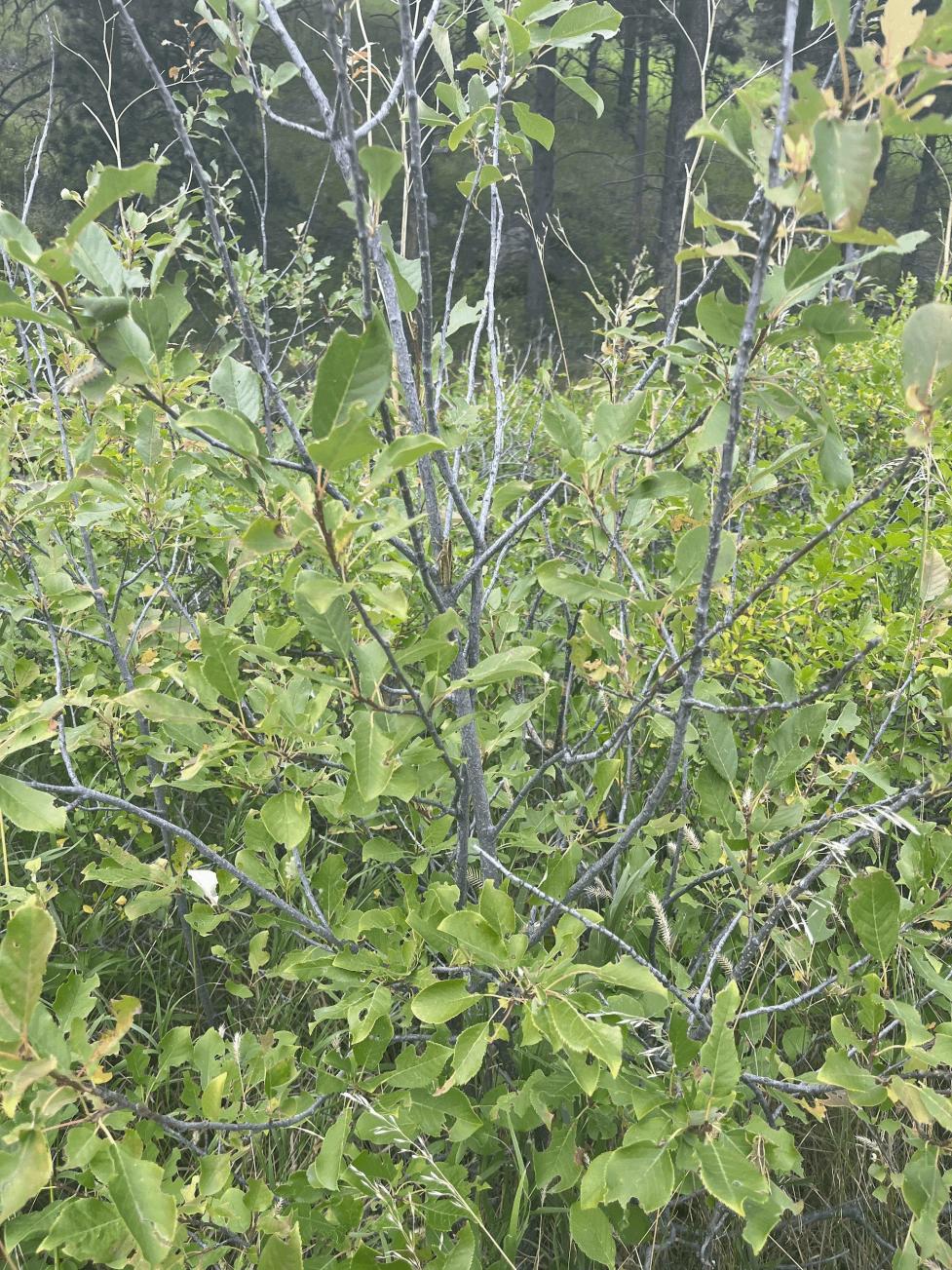
A chokecherry bush in Boulder.

A chokecherry bush growing in the City of Boulder

The Boulder Valley is also a place of sustenance—not only in its obvious resources like water, but culturally and spiritually. Indigenous knowledge recognizes a wealth of resources in the region’s flora: chokecherries, kata (plum, kɑndɑ)*, uzizitka (rosehip, ued͡ ʑd͡ ʑdkɑ), peji hota (sage, pad͡ ʑi ɧohdɑ), wipazutka (juneberries, wipɑ zwɛndkɑ), and mullein—each harvested with care, ceremony, and purpose. Mullein, often dismissed by modern landscaping as an “invasive,” is valued in Lakota medicine for treating asthma. Ms. Quigley shared that prairie sage (artemesia ludoviciana) in the Fall curls up its leaves to rest before it goes to seed, as it will need to put its energy into seeding. It is best not to take the tallest prairie sage that sits in the middle of the plant, as he is ‘the grandfather protecting the others’ and needs to protect his relatives. Humans can protect the plant as well by cutting off the needed amount instead of pulling it up from the root. These relationships are built on generations of observation and care, where plants are not objects but relatives—beings to be asked, thanked, and respected. However, climate change is now disrupting these seasonal and spiritual rhythms. “Juneberries used to be ripe in June. That’s why they’re called Juneberries. Everything’s changing”, she continued. Even sacred plants like sage are showing signs of distress. “They were a little shorter in July than they usually are. And this was the second year in a row.” These observations are not anecdotal—they are ecological indicators, rooted in centuries of local, Indigenous science. “We need to actually take a good look at the plants that we really need and make sure they are rejuvenating.”

* plants are transcribed as: Lakota name (common English name, Lakota name in the International phonetic alphabet)

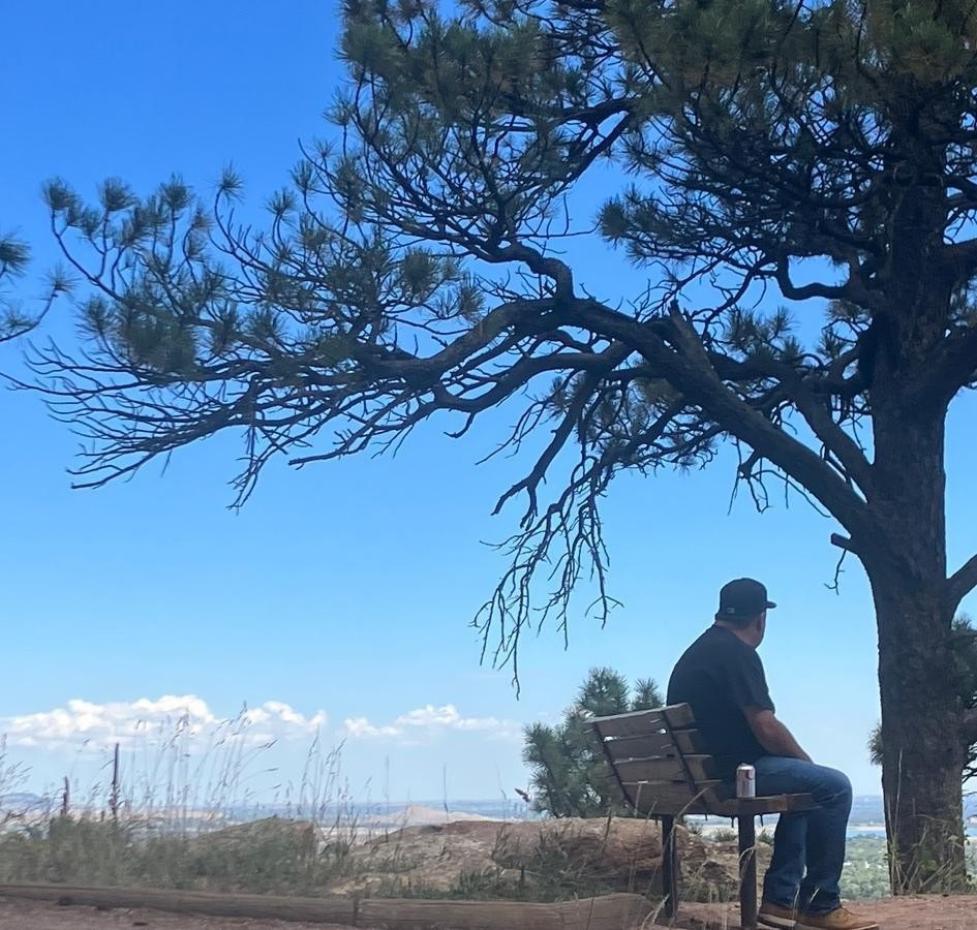
Mr. Benjamin Young sits on a bench under a tree, facing away as he looks out over green mountains.

Mr. Ben Young

High places in the Boulder Valley—its ridgelines and peaks—hold special meaning for Lakota people. They are places of ceremony, vision, and connection to the universe. “I was inspired by this ability to see in the universe and cardinal directions. So high places are very important to Lakota people. Even today, when we go driving to our reservations, all our cemeteries are on the rises in the prairies” (Goes in Center, 2023). These places allow people to orient spiritually and physically—to connect with the cosmos, the directions, the ancestors.As the climate continues to change and landscapes like Boulder Valley face development pressures, Lakota voices call for a deeper shift—not just in environmental management, but in worldview. “We’re not any different,” Ms. Quigley said. “At the end of the day, we all want to survive. But the world of Indigenous people actually consists of one more sense—and that is intuition. That spiritual connection.” In this light, Boulder is more than a backdrop for recreation or a site of natural beauty. It is a sacred place that invites relationships, demands care, and offers teachings. “What better way to do self-reflection,” she asked, “than to be actually alone when you have no one else to help?” For the Lakota, Boulder Valley remains a teacher, a healer, and a place of grounding— a place not just to visit, but to honor.

Native Science: Intuition, Relationship, and Generations of Knowing

Lakota Native science is not confined to laboratories or peer-reviewed journals—it is a body of knowledge forged through generations of lived experience, observation, and deep relationality with the natural world. Rooted in land, spirit, and story, this way of knowing emphasizes balance, humility, and trust in both the tangible and intangible. At its core, Lakota science uses the five senses—seeing, touching, tasting, hearing, and smelling—to understand the world, but it also embraces a sixth: intuition. This often-overlooked dimension is not an abstract belief or superstition; it is a legitimate and vital form of perception. As Ms. Quigley explained, “We have had thousands of years to actually see, hear, touch, taste… and to do it. So, we know that that plant will work for certain illnesses. But the world of science wants to take that plant apart and see what it’s comprised of. We learn to live with those plants and we learn to accept what they are.”

In this worldview, plants are not objects to be dissected or chemically analyzed—they are relatives. Their healing powers are not “discovered,” but remembered, received, and affirmed through respectful engagement and ancestral continuity. A plant that eases a cold or delivers nourishment is valued because it works, not because it has been validated by a microscope. “Our ancestors didn’t know about vitamin C,” Ms. Quigley explained, “but they knew this plant helped with flu. So they used it, and it worked.” This approach reflects a fundamental difference in how knowledge is valued and acquired. Western science tends to treat knowledge as valid only when it is empirically proven, repeatable, and objectively verifiable. As Ms. Quigley noted, “When we look at the worldview of science, people are not accepting until they prove it. Until they can see evidence… But we’ve lived here for many, many years. We know that plant.”

The Lakota way values experiential and intuitive knowledge passed through generations, often through dreams, oral tradition, and direct experience. “If we’re shown a plant in our dream,” Ms. Quigley shared, “we wake up and ask about that plant. We look for that plant because it is something somebody in our family needs.” Dreams, in this context, are not mere subconscious impressions—they are part of a spiritual communication system that guides care, medicine, and decision-making. This form of insight is not about guesswork; it is about trust in relationship and receptivity to guidance from forces beyond the physical. In contrast, Western scientific culture often resists accepting intuition as a valid source of knowledge. “Nobody wants to accept that. Everybody wants to see hardcore evidence,” Ms. Quigley remarked. “They forget that we’ve known these plants for thousands of years.” The spiritual dimension of Lakota science cannot be separated from its ecological knowledge. It is precisely this spirituality—this intuitive, relational way of being—that forms the foundation of connection to flora, fauna, water, and land. “Our spirituality does keep us connected with everything,” Mr. Goes In Center explained. “But scientists refuse to acknowledge the intangible… that difference surely needs to be looked at more.”

This doesn’t mean the Lakota view science with contempt. Rather, there is a call for mutual understanding—an invitation to recognize that different knowledge systems can coexist. “I’m not asking anyone to accept their intuition,” Ms. Quigley said, “but that does exist with Native Americans. And that way of being—of knowing—deserves respect.” Lakota science is not antiempirical. It is empirical in its own right—grounded in centuries of observation, trial, and adaptive learning. It is just rooted in a different philosophy: one of humility rather than control, of coexistence rather than conquest. Plants are not specimens; they are helpers. Knowledge is not something to be extracted; it is something to be honored. In this way, Lakota Native science challenges dominant narratives about what counts as “real” knowledge. It asks us to consider: What if the spiritual, the intuitive, the relational, and the ancestral were not dismissed as unscientific—but embraced as a necessary part of knowing the world?

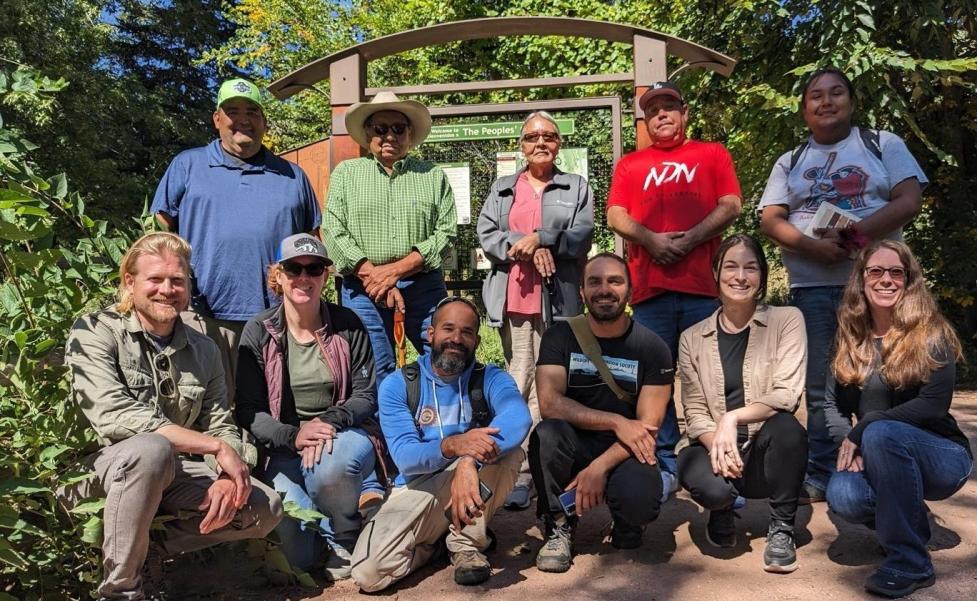
Group photo of Lakota Tribal Representatives, LHA staff, and City of Boulder staff posing together in front of a trailhead sign, with some kneeling and others standing.

A group photo of the research team

Bibliography

Bad Heart Bull, Amos, and Helen H. Blish. 2017. A Pictographic History of the Oglala Sioux. 50th anniversary ed. Lincoln: University of Nebraska Press. Originally published 1967. Black Elk, Linda S. 1998. Culturally Important Plants of the Lakota: Based on Interviews, Research, and a Comprehensive Review of Historical Documents. Fort Yates, ND: Sitting Bull College.

Brett, John A. 2003. Ethnographic Assessment and Documentation of Rocky Mountain National Park. Prepared for Rocky Mountain National Park. Denver, CO: Department of Anthropology, University of Colorado at Denver.

Campbell, Gregory, and Rosemary Sucec. 2005. Documenting and Inventorying Ethnographic Resources at Yellowstone National Park. Prepared for the National Park Service. Missoula, MT: University of Montana.

Deloria, Ella. n.d. Ella Deloria Archive. Dakota Indian Foundation. http://zia.aisri.indiana.edu/deloria_archive/about.php.

Ewers, John C. 1938. Teton Dakota: Ethnology and History. Rev. ed. Berkeley, CA: U.S. National Park Service and Western Museum Laboratories.

Frémont, John C. 1850. The Exploring Expedition of the Rocky Mountains, Oregon and California: To Which Is Added a Description of the Physical Geography of California, with Recent Notices of the Gold Region from the Latest and Most Authentic Sources. Buffalo, NY: Geo. H. Derby and Co.

Grobsmith, Elizabeth S. 1994. Lakota of the Rosebud: A Contemporary Ethnography. Case Studies in Cultural Anthropology. Fort Worth, TX: Harcourt Brace College Publishers.

Gunnerson, James H., and Dolores A. Gunnerson. 1988. Ethnohistory of the High Plains. Cultural Resource Series no. 26. Denver, CO: Bureau of Land Management, Colorado State Office.

Hämäläinen, Pekka. 2022. Indigenous Continent: The Epic Conquest for North America. New York: Liveright Publishing.

Hanson, Jeffrey R., and Sally Chirinos. 1997. Ethnographic Overview and Assessment of Devils Tower National Monument, Wyoming. Prepared for the National Park Service, Intermountain Region. Arlington, TX: University of Texas at Arlington.

Kelley, Shawn, et al. 2017. USAFA Ethnographic and Ethnobotanical Survey. Prepared for the United States Air Force Academy and the United States Army Corps of Engineers, Philadelphia District. Albuquerque, NM: Parametrix.

LeBeau II, Sebastian C. 2009. “Reconstructing Lakota Ritual in the Landscape: The Identification and Typing System for Traditional Cultural Property Sites.” PhD diss., Department of Anthropology, University of Minnesota.

Mello, Christina G. 2004. “Gender and Empowerment: Contemporary Lakota Women of Rosebud.” McNair Scholars Journal 8 (1): 35–51.

Munson, Patrick J. 1981. “Contributions to Osage and Lakota Ethnobotany.” Plains Anthropologist 26 (93): 229–40.

Neihardt, John G. 1985. The Sixth Grandfather: Black Elk’s Teachings Given to John G. Neihardt. Lincoln: University of Nebraska Press.

Nickens, Paul R. 2018. The National Environmental Policy Act Review of Lakota Historic, Cultural, and Religious Resources for the Dewey-Burdock In Situ Uranium Recovery Project, Fall River and Custer Counties, South Dakota. Prepared for the U.S. Nuclear Regulatory Commission, Office of Nuclear Material Safety and Safeguards. Arlington, VA: SC&A, Inc.

O’Meara, Sean. 2022. Indigenous Connections: Native American Ethnographic Study of Golden, Colorado, and the Clear Creek Valley. Prepared for the City of Golden and the Golden History Museum & Park. Tucson, AZ: Anthropological Research, LLC.

Phillips, Scott C., Thomas A. Witt, and Holly K. Norton. 2013. Ethnographic Context for the Ross In-Situ Recovery Project Area, Crook County, Wyoming. Prepared for the U.S. Nuclear Regulatory Commission. Broomfield, CO: SWCA Environmental Consultants.

Posthumus, David. 2015. Transmitting Sacred Knowledge: Aspects of Historical and Contemporary Oglala Lakota Belief and Ritual. PhD diss., Department of Anthropology, Indiana University.

Posthumus, David. 2017. “All My Relatives: Exploring Nineteenth-Century Lakota Ontology and Belief.” Ethnohistory64: 379–400.

Posthumus, David. 2019. “The Ritual Thiyóšpaye and the Social Organization of Contemporary Lakota Ceremonial Life.” North American Dialogue (April).

Sack, Carl. 2017. “Invisible Nation: Mapping Sioux Treaty Boundaries.” Paper presented at the Nelson Institute Center for Culture, History, and Environment Symposium, University of Wisconsin–Madison, Madison, WI. https://northlandia.wordpress.com/2017/02/18/invisiblenation- mapping-sioux-treaty-boundaries/.

Southwick, Sally Jo. 1999. Building on a Borrowed Past: History, Place, and Identity in Pipestone, Minnesota. PhD diss., Department of History, University of Arizona.

Stromberg, Joseph. 2010. “Lands of the Lakota: Policy, Culture, and Land Use on the Pine Ridge Reservation.” Senior honors thesis, Environmental Studies and Anthropology, Washington University in St. Louis.

Toupal, Rebecca, Richard W. Stoffle, Nathan O’Meara, and Jill Dumbauld. 2004. The Ever-Changing Pipestone Quarries: Sioux Cultural Landscapes and Ethnobotany of Pipestone National Monument, Minnesota. Prepared for the National Park Service, Midwest Region. Tucson, AZ: Bureau of Applied Research in Anthropology, University of Arizona.

Van Vlack, Kathleen, et al. 2015. Ethnographic Evaluation of Effigy Mounds National Monument. Prepared for Effigy Mounds National Monument and the National Park Service, Midwest Region. Tucson, AZ: Bureau of Applied Research in Anthropology.

White Hat Sr., Albert. 1999. Reading and Writing the Lakota Language: Lakota Iyapi Un Wowapi Nahan Yawapi. Salt Lake City: University of Utah Press.

Zedeño, M. Nieves, and Robert Christopher Basaldú. 2004. Pipestone National Monument, Minnesota: Native American Cultural Affiliation and Traditional Association Study. Prepared for the National Park Service, Midwest Region. Tucson, AZ: Bureau of Applied Research in Anthropology.
Ethnographic Education Report Navigation

Explore the other reports linked below.

Pawnee Nation

The City of Boulder Ethnographic Education Report: Pawnee Nation

Ethnographic Education Report Introduction