Introduction and Methods

Written by:

  • Living Heritage Anthropology, LLC
  • The Cheyenne and Arapaho Tribes of Oklahoma
  • The Comanche Nation
  • The Oglala Sioux Tribe
  • The Pawnee Nation of Oklahoma
  • The Rosebud Sioux Tribe
  • The Ute Mountain Ute Tribe

For:

  • The City of Boulder, Colorado
Boulder OSMP lookout view through trees toward wooded mountains with snowy peaks beyond.

Acknowledgements

This ethnographic education report would not have been possible without the generous collaboration, guidance, and support of many partners. We express our deep appreciation to the Tribal Nations who participated directly in this phase of the report. Each Nation dedicated time to travel to Boulder, engage with the landscape, and generously share knowledge, stories, and perspectives that created this work. We thank:

  • The Cheyenne and Arapaho Tribes
  • The Comanche Nation
  • The Oglala Sioux Tribe
  • The Pawnee Nation
  • The Rosebud Sioux Tribe
  • The Southern Ute Indian Tribe
  • The Ute Mountain Ute Tribe

We extend our sincere gratitude to the City of Boulder, especially the City Manager’s Office, City Council, and the Open Space and Mountain Parks (OSMP) staff. Their commitment to fostering respectful, long-term relationships with Tribal Nations through dedicated time, resources, and ongoing consultation created the foundation for this work. Their support made this research effort possible.

  • Ana Silvia Avendaño-Curiel
  • Dan Burke
  • Pam Davis
  • Christian Driver
  • David Ford
  • Aimee Kane
  • Ken Kasparek
  • Amy McMahon
  • Cole Moffat
  • Jennifer Pelache
  • Lynn Reidel
  • Nuria Rivera-Vandermyde
  • Curry Rosato
  • Zack Stansfield
  • Phil Yates

We would also like to acknowledge the Boulder Tribal Working Group, composed of representatives from sixteen Tribal Nations. For several years, this group has served as a vital advisory body to the City, offering insight and collaboration on matters related to signage, cultural education, site-specific concerns, stewardship, and shared projects. Their ongoing partnership continues to shape a more meaningful and responsible approach to Tribal consultation in Boulder.

We extend our sincere appreciation to Ernest House, Jr. of the Keystone Policy Center. His unwavering commitment to this effort, combined with his steady guidance and genuine friendship, provided both direction and inspiration throughout the process.

Finally, we would like to thank the Living Heritage Anthropology team and associates that helped make this report possible.

  • Alannah Bell
  • Reshawn Edison
  • Joanie Finch
  • Joseph Gazing Wolf
  • Kristina Gmurzynska Juergensmeyer

This report was funded in part by the State Historical Fund (SHF), which supports historic preservation in Colorado.
Acronyms

Term Definition
LHALiving Heritage Anthropology
NAGPRANative American Grave Protection and Repatriation Act
NEPANational Environmental Policy Act
OSMPOpen Space and Mountain Parks
THPOTribal Historic Preservation Officer

Executive Summary

For thousands of years, the Boulder Valley and the surrounding Front Range have been home to Indigenous peoples who have maintained deep and enduring connections to this landscape. The valleys, creeks, and mountain foothills that define Boulder today are part of a much larger network of homelands. These places provided abundant resources for hunting, fishing, and gathering and served as important travel corridors linking the plains and the mountains. More importantly, they are places of ceremony, teaching, and renewal where stories, songs, and traditions continue to connect people to the land and to one another.

This report was developed in partnership with Tribal Nations to document Indigenous histories, cultural connections, and ongoing relationships to the Boulder Valley. It is part of a continuing collaboration between the City of Boulder and Tribal Nations that began in the 1990s and was renewed through the 2016 Indigenous Peoples’ Day Resolution and subsequent consultations. Through these collaborations, Tribal representatives have expressed a desire not only to see Indigenous presence recognized in public interpretation and education, but also to ensure that Indigenous knowledge and values help guide how Boulder cares for its lands today.

The participating Tribal Nations, the Cheyenne and Arapaho Tribes of Oklahoma, Comanche Nation, Oglala Sioux Tribe, Pawnee Nation of Oklahoma, Rosebud Sioux Tribe, Ute Mountain Ute Tribe, brought together cultural resource staff, elders, and experts to share knowledge and guide the research process*. Each Nation conducted field visits, reviewed materials, and advised on how information should be represented and protected. This collaborative approach reflects Tribal sovereignty and ensures that the report honors Indigenous voices and cultural protocols.

The project uses ethnography, a way of learning that values time spent with people, listening to stories, and observing how knowledge and culture are lived every day. It also follows a community-based participatory research (CBPR) model, meaning that Tribal representatives shaped every part of the process, from developing research questions to reviewing drafts and determining what information could be shared publicly. This approach centers mutual respect, shared decision-making, and the understanding that research is a relationship, not an extraction of information.

Throughout this report, you will see the legal names of the Tribal Nations who participated in this work. However, these are not the names they call themselves. The list below provides the legal names of each Nation, and what they call themselves in their language.

  • The Cheyenne and Arapaho Tribes of Oklahoma: Hinono’eiteen (Arapaho), Tsétsėhéstȧhese (Cheyenne)
  • The Comanche Nation: Nʉmʉnʉʉ
  • The Oglala Sioux Tribe and Rosebud Sioux Tribe: Oc'eti S'akowin
  • The Pawnee Nation of Oklahoma: Čariks i Čariks
  • The Ute Mountain Ute Tribe: Núuchiu

*The Southern Ute Indian Tribe was unable to join in person due to a last minute emergency, but they were able to join by phone for part of the Ute Mountain Ute Tribe’s visit.

The findings of this study show that the Boulder Valley is part of a living cultural landscape. Like the Golden and Clear Creek Valley study (O’Meara, 2022) before it, this report highlights that Indigenous peoples have maintained a continuous presence along the Front Range for millennia and continue to visit, pray, and care for these places today. Sites such as The Peoples’ Crossing and other areas within Boulder’s Open Space and Mountain Parks are part of broader networks of migration, ceremony, and ecological knowledge that connect to Lookout Mountain, Clear Creek Valley, and beyond (O’Meara, 202). These connections demonstrate that Indigenous homelands are not defined by modern boundaries; they are continuous, living, and rooted in relationships.

This report aims to support a deeper public understanding of Indigenous histories and ongoing connections to Boulder’s landscape while guiding future education, land management, and interpretation in partnership with Tribal Nations. By honoring Tribal sovereignty, following government-to-government consultation, and embracing Indigenous knowledge systems, the City of Boulder can continue to build meaningful relationships that respect the past, acknowledge the present, and strengthen the future of these homelands we share.

To continue and expand this important work, History Colorado awarded the City of Boulder a State Historical Fund grant to support the next phase of the project. Over the next two to three years, additional Tribal Nations will join the collaboration, conducting new field visits and contributing their histories and perspectives. Their participation will result in additional chapters that build upon this report, further deepening the collective understanding of Indigenous connections to the Boulder Valley and surrounding region. The City of Boulder will co-fund this ongoing work in partnership with the Colorado State Historical Fund, ensuring that the research, relationships, and educational efforts established here continue to grow in scope, inclusivity, and impact.

Sloping green hills with scattered conifers under a partly cloudy blue sky in Boulder OSMP.
Photo by Living Heritage Anthropology

“We were here when they discovered all this gold... that’s when they pushed us out... they made treaties to make what they did was right... they stole all that.” 
Mr. Terry Knight, Ute Mountain Ute Tribe 

Introduction

Since time immemorial, the Boulder Valley and the surrounding Colorado Front Range served as a vital homeland and seasonal gathering place for numerous Indigenous peoples. This region, characterized by a striking diversity of ecosystems ranging from prairie grasslands to mountain foothills and riparian corridors, offered abundant resources for hunting, fishing, and plant gathering. Its valleys and waterways provided key travel corridors linking the Great Plains to the Rocky Mountains, facilitating trade, communication, and cultural exchange among Indigenous peoples. Archaeological evidence, oral histories, and ethnographic studies demonstrate that Indigenous communities camped, hunted, traded, and conducted spiritual practices across the Boulder Valley, establishing deep cultural and ecological relationships to the land long before the arrival of European settlers in the mid-19th century (Fisher and Brunswig, 2007; O’Meara, 2022; Young Atekpatzin, 2019). These connections were not only practical but also deeply symbolic, as specific sites were associated with ceremony, storytelling, and seasonal cycles, reflecting a worldview in which humans existed in a reciprocal relationship with their environment.

These longstanding connections continue to be recognized by the City of Boulder today through Tribal consultations, collaborative stewardship initiatives, commemorations, and educational programs. Indigenous presence and influence remain a vital part of Boulder’s history and identity, though it has often been marginalized in public narratives and local planning. In recognition of this, the City of Boulder adopted Resolution No. 1190, formally declaring the second Monday in October as Indigenous Peoples Day in August of 2016 (City of Boulder, 2016). This resolution explicitly acknowledges that the Boulder area lies on the ancestral homelands of Indigenous Nations and recognizes the enduring impacts of colonialism, Indian removal policies, and systemic inequities endured by the region's Native people. The resolution affirms that Boulder has directly benefited from historical policies that violated human rights and treaty obligations and emphasizes the importance of confronting these histories to build a stronger, more resilient community. It further articulates a shared responsibility to “forge a path forward to address the past and continuing harm to Indigenous People and the land” (City of Boulder, 2016).

Beyond symbolic recognition, the Indigenous Peoples’ Day resolution directs concrete actions by the City of Boulder to address historical erasure and promote Indigenous representation in public spaces, educational curricula, and cultural programming. These efforts include updating signage in Open Space areas, co-developing educational materials, correcting omissions of Native American presence in public interpretation, and revising naming conventions for parks and landmarks. A key outcome of these initiatives is the renaming of Settler’s Park to The Peoples’ Crossing by the associated Tribal Nations, reflecting both the historical role of the area as a crossroads for Indigenous Nations and the common linguistic trait that many Tribal Nations’ name for themselves translates to “the people” (City of Boulder, 2016). The renaming, along with associated interpretive and educational efforts, exemplifies how collaboration between Tribal Nations and municipal staff can produce tangible outcomes that respect Indigenous knowledge, sovereignty, and historical memory.

Historic and Cultural Context

The Boulder Valley exists within a much larger Indigenous cultural landscape that stretches along the Colorado Front Range. Archaeological and ethnographic evidence indicates that these lands were integral parts of a connected network of homelands used by Indigenous Nations for more than 12,000 years (O’Meara, 2022; Fisher & Brunswig, 2007). Seasonal migrations followed water corridors like Clear Creek, Boulder Creek, and the Platte River, which served as vital travel routes between the mountains and plains. The valleys offered shelter, game, and diverse plant resources, while the surrounding foothills provided vantage points, spiritual sites, and materials for tools and ceremony. Fisher and Brunswig (2007) note that similar ecological and topographic features guided prehistoric settlement in the Front Range and Rocky Mountain National Park, suggesting consistent patterns of resource use and movement that extend into the Boulder Valley.

According to the Golden Report (O’Meara, 2022), the Arapaho (Hinono’eiteen), Cheyenne (Tsétsėhéstȧhese), and Ute (Núuchiu) people each maintain distinct yet overlapping histories within this landscape. Although the study focuses on these three Tribal Nations, they are not the only peoples to have historical connections to the area (Young, 2019). The Ute peoples, whose ancestral territory encompassed much of western and central Colorado, describe the Front Range foothills as part of their “mountain homes,” where they hunted elk and deer, gathered medicinal plants, and performed ceremonies tied to mountains (O’Meara, 2022; Fisher & Brunswig, 2007). Ute oral histories place their ancestors in the Golden area long before European contact, identifying the region as part of a continuous route extending from the high Rockies down through the Clear Creek Valley. The Arapaho and Cheyenne, whose homelands extended across the Great Plains, also used these corridors seasonally, establishing encampments along Clear Creek and nearby tributaries while traveling between the plains and the mountains for trade, ceremony, and resource gathering (O’Meara, 2022).

Young (2019) further emphasizes the presence of Apache (Di De’i) groups in the Boulder region, highlighting how historical documents, oral histories, and archaeological patterns converge to reveal a complex network of Indigenous land use that includes both mountain and valley corridors. These findings complement the archaeological framework outlined by Fisher and Brunswig (2007), which integrates material culture, settlement patterns, and ethnobotanical evidence to show the deep connections between people and place in the Front Range. Indigenous connection to land is not symbolic but lived (Young, 2019; O’Meara, 2022).

Key Concept: Indigenous Connection to Land

  • Indigenous Peoples maintain ongoing relationships with Boulder-area lands through ceremony, resource gathering, and travel along ancestral corridors.
  • Oral histories, stories, and songs preserve knowledge of land, plants, animals, and seasonal cycles, linking past and present generations.
  • Movement across the landscape, like hunting, trading, harvesting, and ceremonial travel, is an active practice that sustains culture and identity.

By understanding the Boulder Valley within this broader network of Indigenous homelands, it becomes clear that Boulder is interconnected with the surrounding area through shared histories of movement, trade, ceremony, and ecological knowledge. The same streams, mountain passes, and plains that guided animal migrations also guided human ones, forming patterns of travel and gathering that persist in memory, practice, and material remains. Recognizing these connections underscores the importance of approaching this work not merely as local history but as part of a larger, ongoing Indigenous presence across the Front Range (Fisher & Brunswig, 2007; Young, 2019).

This deeply rooted knowledge of land and ecology contrasts sharply with how archeologists have historically described Indigenous peoples. “What’s a Paleo-Indian, what’s an Archaic Indian?” asked Mr. Ben Young (Rosebud Sioux Tribe), pushing back against labels that erase identity and continuity. “Those names were given to us by people who do not understand the history of the Indigenous people on this continent.” As Jhon Mr. Goes In Center (Oglala Sioux Tribe) added, “We finally get to say it's not good to call us Indians, we’re Lakotas... There’s a lot of diversity... and there's so much rich diversity amongst us in ecoregions.”

For many, Boulder remains a sacred and restorative place “a universal place where people crossed, prayed, and camped,” in the words of Mr. Chester Whiteman (Cheyenne and Arapaho Tribes of Oklahoma), who expressed gratitude to the City of Boulder for acknowledging this through the renaming of The Peoples’ Crossing. “It strengthens me to talk about these things,” shared Ms. Ione Quigley (Rosebud Sioux Tribe). “It reaffirms and gives us strength again... it's always a good feeling to have someone really, truly, genuinely interested in what you're saying.” Their voices remind us that this land has always been home. “It wasn’t wilderness. We were comfortable in our home,” as Mr. Frank Medicine Water (Cheyenne and Arapaho Tribes of Oklahoma ) reflected. True respect begins with listening, learning, and understanding that these relationships to place are not relics of the past, but enduring ways of life.

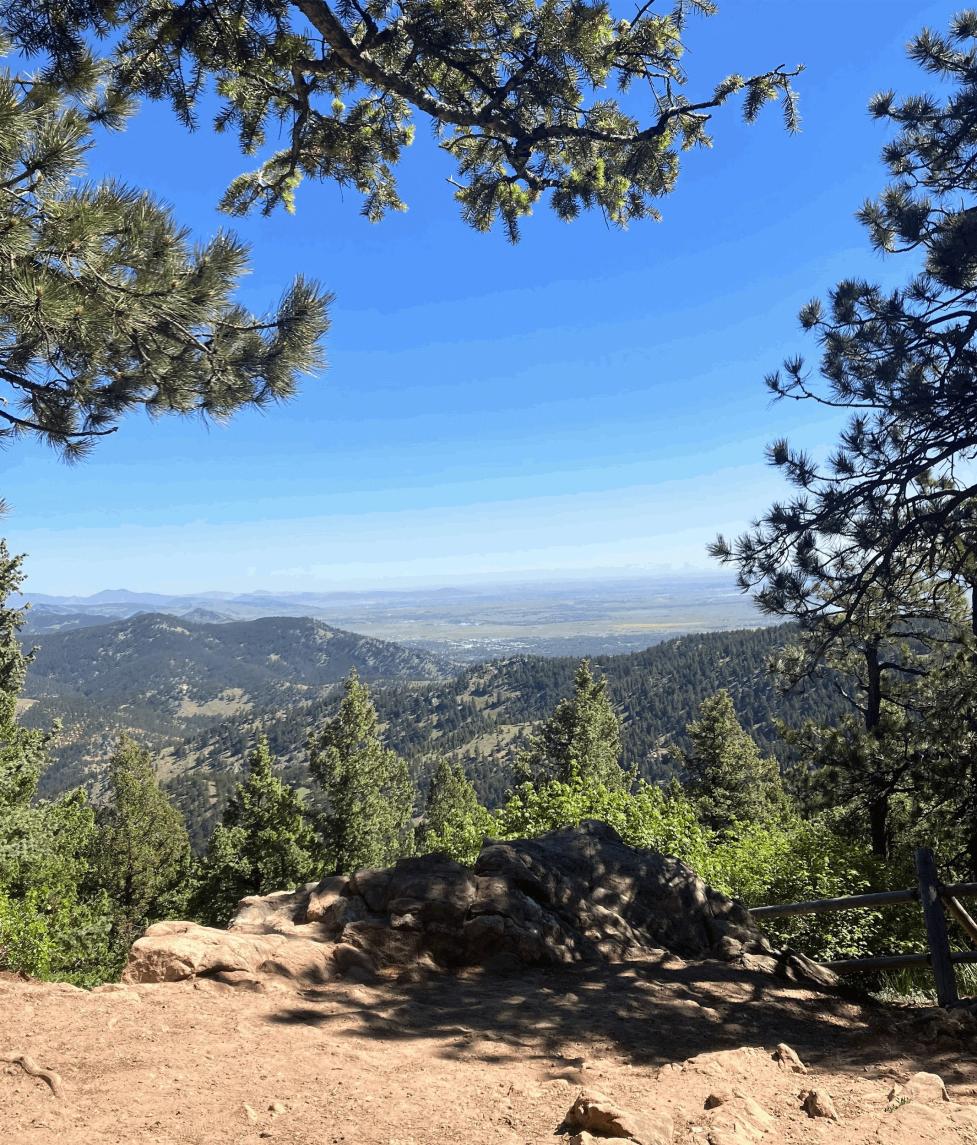
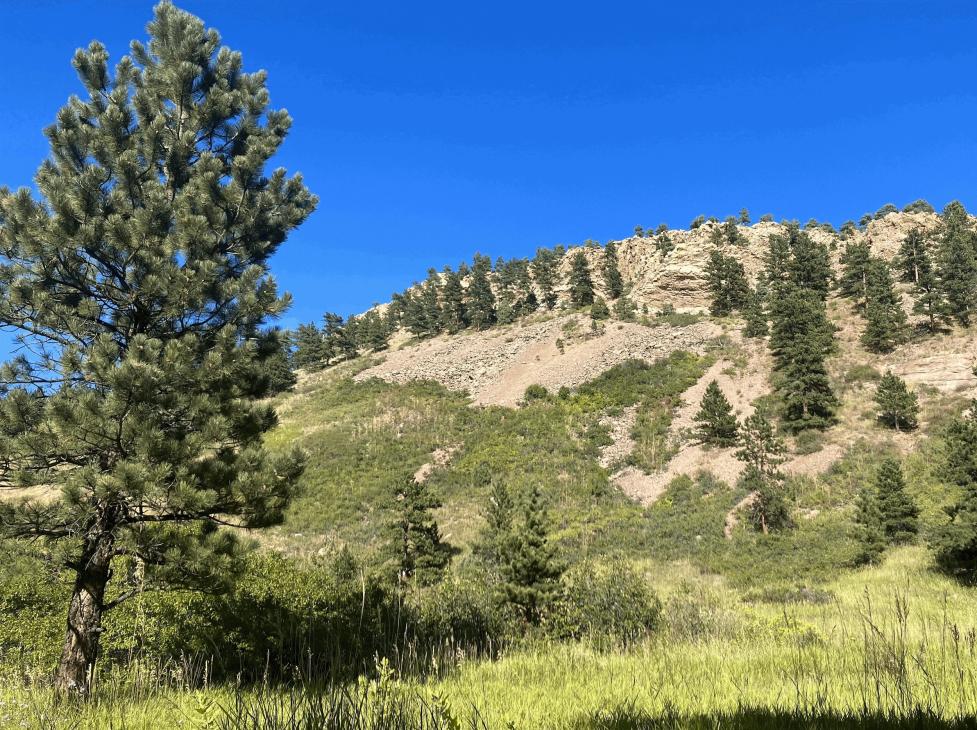
Rocky outcrop in Boulder OSMP with flat green field and conifers sloping up to a rocky, tree-scattered ridge.
Photo by Living Heritage Anthropology

“Whenever you're gonna take something from the earth, you pay it back or it ain't gonna ever work. That's our way of telling Mother Earth, ‘thank you’.” 
Ms. Ruth Toathy, Comanche Nation

Project Development

Pre-2019 Consultation

The City of Boulder first began consulting with Tribal Nations in the 1990s and early 2000s, well before such practices became common nationally. After these early efforts, however, there was an interval between formal Tribal Consultations. The passage of the 2016 Indigenous Peoples’ Day Resolution reignited the City’s commitment to reestablish meaningful dialogue with Tribal Nations. By 2018, discussions had resumed in preparation for renewed consultation efforts.

2019 Consultation

In March 2019, the City of Boulder’s Open Space and Mountain Parks Department hosted an in-person Tribal Consultation. One of the central topics of discussion was the proposed renaming of Settler’s Park, now known as The Peoples’ Crossing. During this consultation, Tribal Nation representatives emphasized that renaming alone was not sufficient. They wanted to see educational components incorporated to deepen public understanding of Indigenous histories and connections to the Boulder area.

2021 Consultation and Working Group

Building on those conversations, the City held a virtual Tribal Consultation in April 2021, during which the City of Boulder and Tribal representatives agreed to form a quarterly Working Group. The group’s purpose was to develop educational efforts highlighting Indigenous peoples’ enduring relationships with Boulder and the surrounding landscape.

During an October 2021 Working Group meeting, Tribal representatives expressed concerns about developing curriculum or other educational materials before having the opportunity to reconnect more deeply with the Boulder landscape. They recommended the completion of an ethnographic Cultural Landscape Report to ground educational initiatives in cultural and historical context.

In the February, May, and August 2022 Working Group meetings, members developed the foundational structure for the ethnographic study. They provided detailed guidance on the process, approved draft informed consent forms and interview questions, and recommended that the final report be made available to the public, all while ensuring that culturally sensitive information would be shared only with the respective Tribal Nations.

Following the signing of the research contract, the City of Boulder and Living Heritage Anthropology provided project updates and additional questions to the Working Group. At that stage, the focus shifted toward Tribally specific meetings and discussions, as approved by the Working Group, since much of the ethnographic report involved information particular to each Tribal Nation. The ethnographic study plan was presented at the September 2022 virtual Tribal Consultation and its progress was reviewed during the March 2023 in-person Consultation in Boulder. In both meetings, the City invited representatives to continue participating in the Working Group for ongoing conversations about the Ethnographic Project.

Memorandum of Understanding (MOU)

Between the 2019 Consultation and its signing in 2024, the City of Boulder and the Tribal Nations collaboratively developed a Memorandum of Understanding (MOU). This agreement formalized their shared commitment to educational collaboration, stating:

“The City and the Tribes agree to work together to provide accurate educational information about the history of each respective Tribe and other Indigenous Peoples in Boulder and Jefferson Counties. This continuous, ongoing work will include accurate, truthful Indigenous Peoples stories, both past and present, through educational and interpretative materials, such as signage and education curriculum.”

The MOU marked an important milestone, codifying years of partnership, dialogue, and mutual respect into a lasting framework for collaboration.

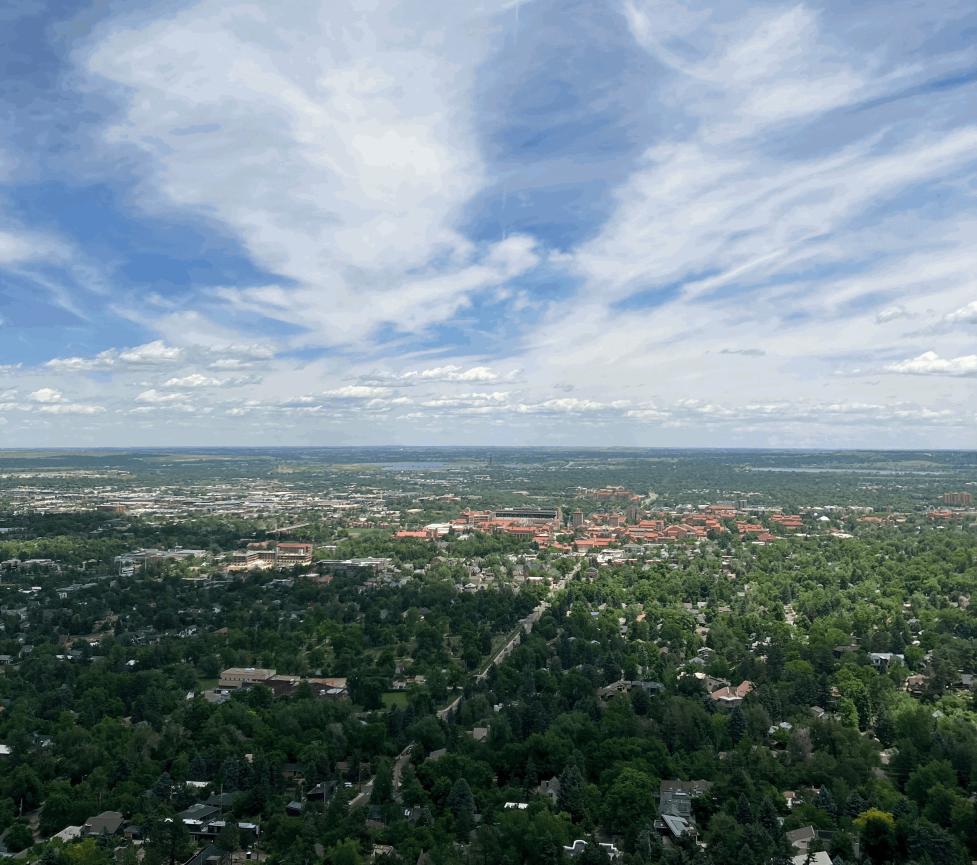
Boulder OSMP lookout with CU campus, red roofs amid green trees, blue sky with wispy clouds.
Photo by Living Heritage Anthropology

“We’re still here, we’re carrying on our traditions even though we were told, ‘nope, you can’t speak it, you can’t do this.’ We kept that inside us and now we’re teaching it to our kids and carrying on what we can for the next generations.” 

Ute Moutain Ute Tribal Elder 

Project Approach

The primary purpose of this report is to document the cultural, historical, and ecological connections of Tribal Nations to the Boulder Valley. By foregrounding Tribal perspectives, the report aims to provide guidance for education, land stewardship, public interpretation, and community engagement. This project centers Indigenous knowledge within the contemporary management of Open Space and Mountain Parks (OSMP) lands, acknowledging the ongoing responsibilities of both municipal authorities and Tribal Nations to protect and interpret these spaces in ways that honor historical and contemporary relationships. The report also seeks to strengthen collaborative partnerships, serve as a model for Tribal Nation-requested research, and advance efforts to integrate Indigenous knowledge systems into environmental management, education, and policy.

A critical component of this research is recognizing Tribal sovereignty, which refers to the inherent authority of Indigenous Nations to govern themselves, manage their lands, and make decisions regarding their people, cultures, and resources. A critical component of this research is recognizing Tribal sovereignty, which refers to the inherent authority of Indigenous Nations to govern themselves, manage their lands, and make decisions regarding their people, cultures, and resources. Tribal sovereignty is not something granted by the United States as it predates the country’s founding and arises from the status of Tribal Nations as distinct political and cultural entities that have existed since time immemorial. Over time, this sovereignty has been reaffirmed through treaties, Supreme Court decisions, and federal policies that acknowledge the government-to-government relationship between Tribal Nations and the United States. Treaties, in particular, represent formal agreements between sovereigns, outlining mutual responsibilities and rights that continue to hold legal and moral weight today. Recognizing this sovereignty is essential to honoring Tribal self-determination and ensuring that Indigenous Nations are not treated as stakeholders but as equal partners in governance and decision-making (U.S. Executive Office of the President, 2000).

Key Concept: Tribal Sovereignty

  • Tribal Nations within U.S. borders are recognized as distinct political entities with the inherent right to govern themselves.
  • Tribal Nations manage natural resources, conduct education and health programs, and preserve cultural heritage as an exercise of their sovereignty.
  • Respecting Tribal sovereignty is essential for supporting Indigenous governance, legal rights, and cultural continuity.

Government-to-Government Consultation refers to the formal process by which federal, state, or local governments engage directly with federally recognized Tribal governments when policies, projects, or decisions may affect their lands, resources, or cultural heritage. This principle is reinforced by Executive Order 13175 (U.S. Executive Office of the President, 2000), which mandates that federal agencies consult with Tribes in a manner that respects their sovereignty and right to self-governance. Government-to-government consultation is both a legal obligation for federal work and an ethical practice as it ensures that Tribes have a meaningful voice in decisions that impact them and helps prevent the repetition of past injustices where Tribal concerns were ignored. In the context of Boulder, adherence to this framework ensures that Indigenous perspectives are respected in decision-making processes, particularly regarding land management, cultural resource protection, and public interpretation. Doing so fosters equitable collaboration, builds trust, and serves as a foundation for responsible and inclusive research and stewardship.

The research described in this report uses ethnography, which is a way of studying people and cultures by spending time with them, listening to their stories, and observing how they live (Madden, 2017; Atkinson, 2015). Instead of just reading books or collecting numbers, ethnographers learn by being present with the community. For example, a researcher might participate in a ceremony, share a meal with, or walk with community members to learn about important places on the land. Through these experiences, researchers can see how traditions, relationships, and stories connect to everyday life. This kind of work helps them understand what the land, history, and culture truly mean to the people who live there (Bernard, 2011; Madison, 2012; Pelto, 2016). In this project, ethnography helps document Indigenous connections to the Boulder Valley by including oral histories, ceremonial knowledge, ecological observations, and lived experiences. By working directly with Tribal representatives, researchers can make sure the final report reflects Indigenous perspectives, rather than relying only on outside sources or historical documents.

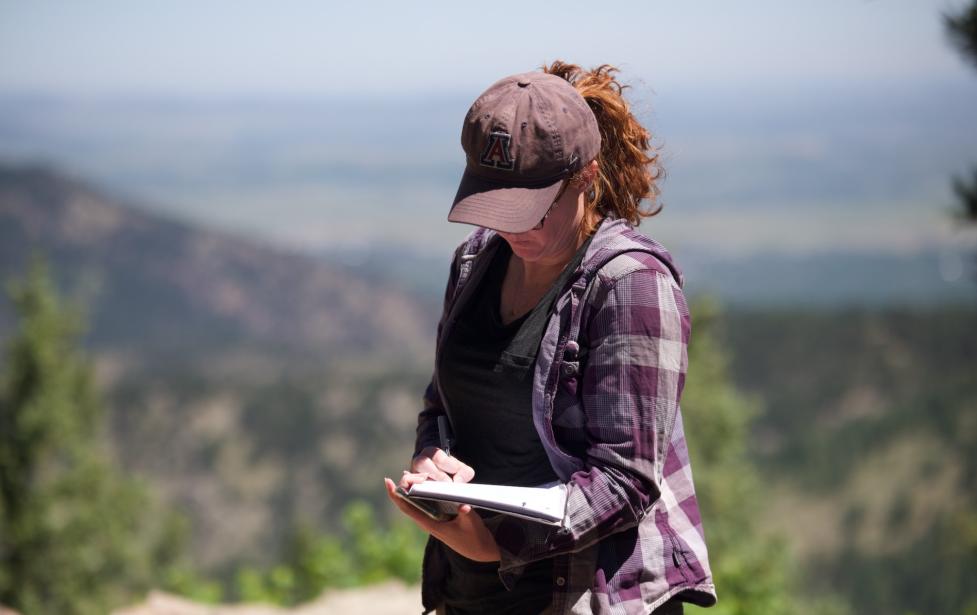
Ethnographer Jessica Yaquinto stands in the foreground, writing in a notebook, with a blurred mountainous landscape behind her.
Photo by Phil Yates

Ethnographer Jessica Yaquinto takes ethnographic notes

Community-Based Research Approach

This project followed the principles of community-based participatory research (CBPR), which means that Tribal Nations were partners in every stage of the work. Tribal representatives helped decide what questions to ask, how to collect information, how to understand the results, and how to present the final report. Instead of researchers simply taking information, this approach focused on giving back to the community and working together as equals. It helped build trust, supported learning and capacity within the community, and made sure the research reflected Tribal priorities and values.

That project demonstrated the effectiveness of sustained, Government-to-Government Consultation grounded in trust, reciprocity, and Tribal-led review. Similarly, this Boulder ethnographic study was developed through ongoing dialogue with Tribal representatives who guided every stage of the process, from defining the scope of inquiry to approving the interpretation of findings. Both efforts reflect a shared understanding that Tribal Consultation must go beyond compliance to become an ongoing relationship. By aligning with these established models of Indigenous-led ethnography in the Front Range, the Boulder project situates itself within a growing regional movement toward collaborative research, public education, and cultural revitalization led by Tribal Nations.

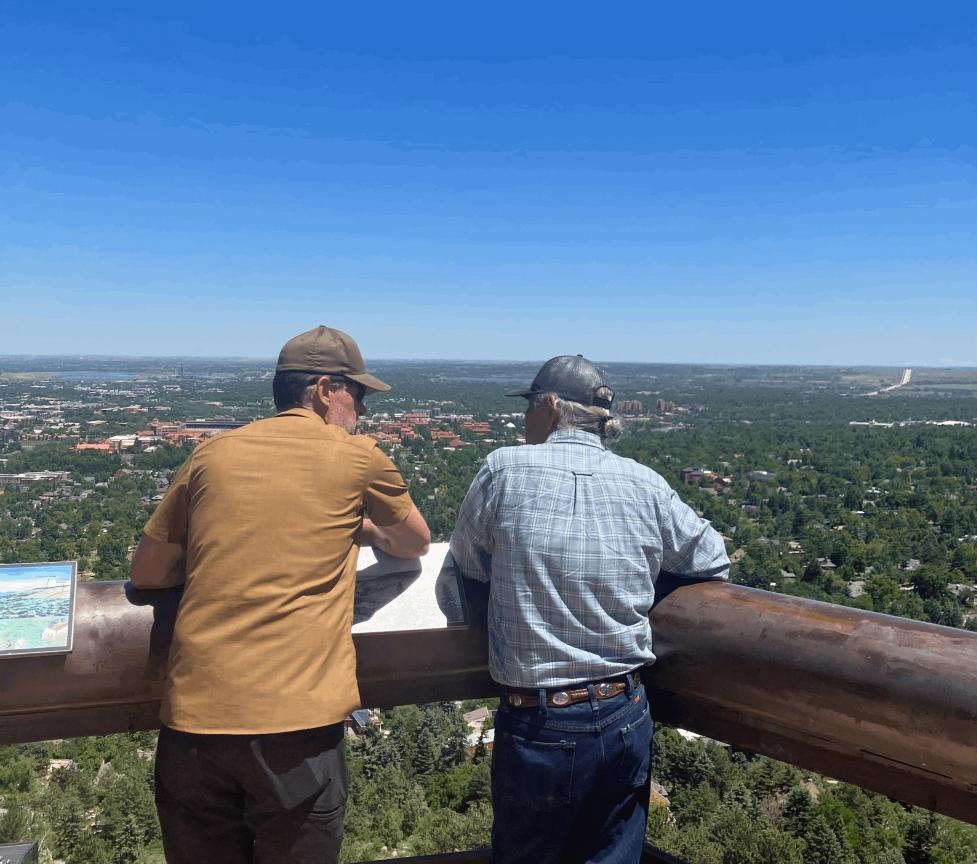
Boulder OSMP staff member Dan Burke and a Comanche Nation representative, stand with their backs to the camera, talking while overlooking the CU Boulder view
Photo by Living Heritage Anthropology

City of Boulder staff talks with a Tribal Representative

Boulder Open Space and Mountain Parks (OSMP)

The research for this report focused on the OSMP lands managed by the City of Boulder. This work was supported by the City Manager’s Office and the Office of Equity and Belonging (OEB). The OEB’s mission is to work toward the elimination of systematic and institutionalized racism from the City’s policies, programs, and practices. OEB staff participated in this work which was conducted entirely on OSMP lands. OSMP oversees more than 45,000 acres of permanently protected lands and approximately 155 miles of maintained trails, balancing the dual priorities of ecological preservation and public recreation (City of Boulder, n.d.). These lands include a variety of ecosystems—prairie grasslands, riparian corridors, forests in the foothills, and mountainous terrain—that have historically been utilized and valued by Indigenous Nations. In preserving such a diverse landscape, OSMP undertakes not only land protection and trail maintenance but also stewardship of working lands (agricultural use), habitat restoration, and public access programs (City of Boulder, n.d.).

For example, OSMP leases about 16,000 acres of working agricultural land to farmers and ranchers, which supports the continuation of historic agricultural practices and also provides habitat for native species. Meanwhile, OSMP also invests in ecological resilience: its land-management staff work on wildfire risk reduction by thinning forests, prescribed burns, invasive species removal, restoring wetlands and riparian zones, and improving fencing so wildlife movement is less hindered. On the recreation side, OSMP manages trails for multiple user groups (hikers, cyclists, horseback riders, dog walkers) and tracks visitation, receiving millions of visits annually (City of Boulder, n.d.)

From the perspective of our study, OSMP’s work matters in a few key ways. Firstly, the fact that these lands are permanently protected means that Indigenous Nations’ historic and ongoing connections to place are less likely to be disrupted by new development, making the land somewhat more stable for cultural and ecological work. Secondly, the mix of land uses (restoration, agriculture, recreation) means a more complex set of contributors and management priorities, so incorporating Indigenous perspectives in land management and public interpretation is especially important. Thirdly, because OSMP explicitly identifies “community connection, education and inclusion” as a strategic priority, including “continuing to support city-wide efforts to sustain, strengthen and honor relationships with American Indian Tribal Nations” (City of Boulder, n.d.). This aligns well with our approach of including Indigenous voices and respecting sovereignty.

In short, by working with and within the context of OSMP’s framework of land protection, ecological stewardship, recreation, and community engagement, this research aims to situate Indigenous knowledge and perspectives in a space where land, culture, ecology and public use meet, as opposed to treating these concepts in isolation.

Key Concept: Collaborative Stewardship

  • Indigenous voices inform OSMP land management decisions, balancing cultural, ecological, and recreational priorities.
  • Collaboration supports ecological restoration, habitat protection, and cultural site preservation while providing public access.
  • Engaging Tribal Nations fosters education, inclusion, and stronger community connections across Boulder’s open spaces.
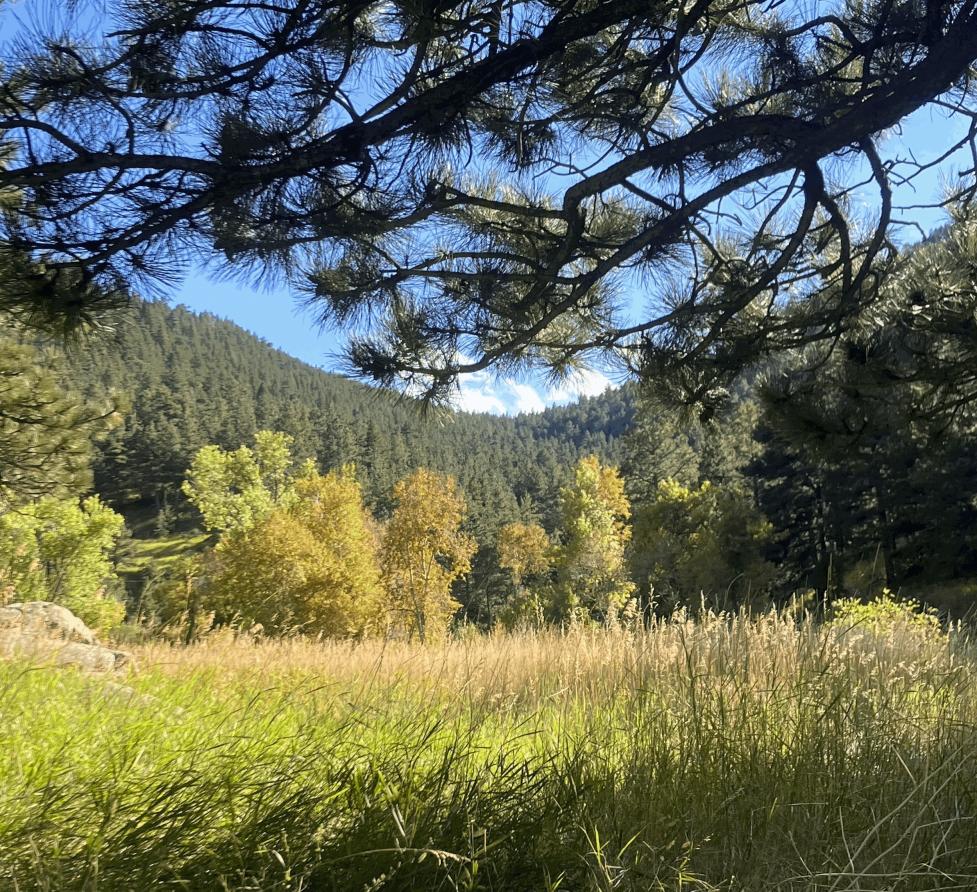
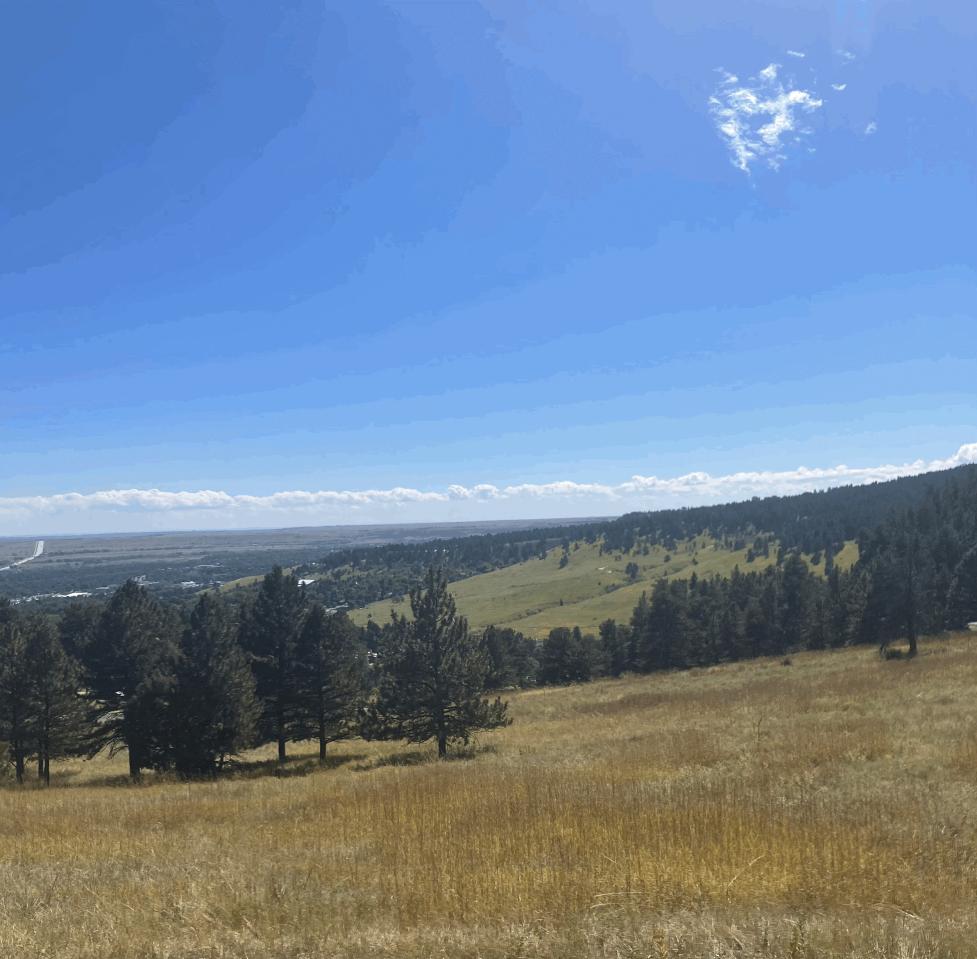
View of a Boulder OSMP valley framed by the dark underside of conifer branches, with green‑yellow grasses, a conifer‑covered hillside, and a blue sky with a few clouds.
Photo by Living Heritage Anthropology
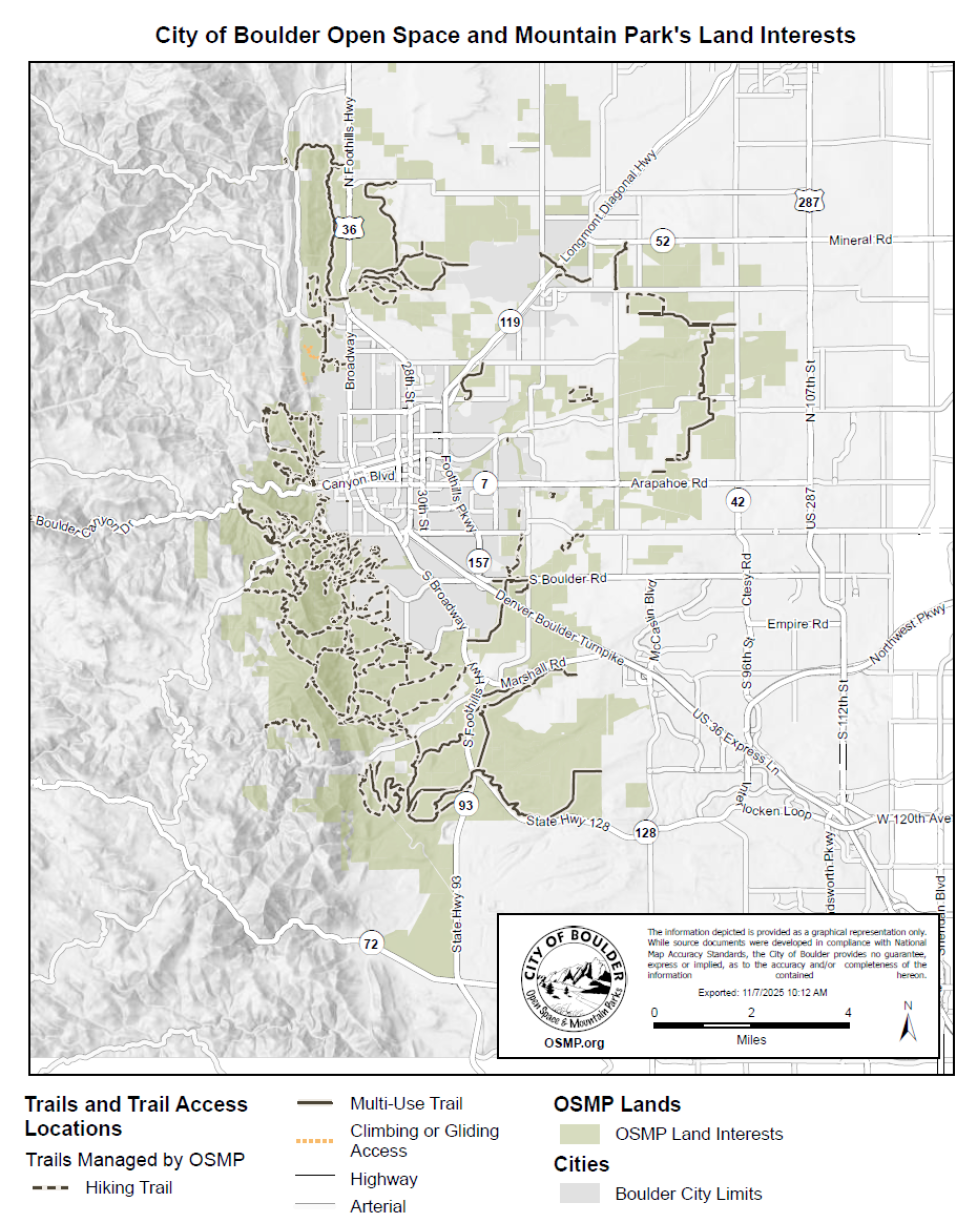
A map of the City of Boulder’s Open Space and Mountain Parks Land.

The map shows the Open Space land in green. The green areas form a ring around the outer boundaries of the city on all sides, with the heaviest concentration in the Southwest. This map is included to give the reader an idea of the breadth of OSMP land interests in and around Boulder. 

Methods

Overview of Research Design

An ethnographic report was requested by the Tribal Nation partners during an October 2021 Working Group Meeting with the City, as detailed in the above Project Approach section. The methods employed in this research were designed to document both the historical and contemporary cultural, ecological, and spiritual significance of these landscapes to culturally associated Tribal Nations.

This project infuses ethnographic fieldwork with CBPR principles, ensuring that Tribal Nations were active partners throughout all phases of the research like project planning, fieldwork site selection, data interpretation, report review, and ethical oversight. The study focused on documenting Indigenous knowledge, practices, and histories, including ceremonial and linguistic traditions, ethnobotanical knowledge, seasonal land use, and spiritual connections to landscapes. Ethical considerations, informed consent, and culturally appropriate research practices were embedded in all aspects of the project. Tribal representatives advised the research team on how to handle sensitive materials such as ceremonial knowledge, traditional stories, and restricted cultural information. They determined what could be made public and what should remain within the community, reinforcing cultural protocols and protecting sacred knowledge.

Tribal Nation Partners

Participating Tribal Nations included the Cheyenne and Arapaho Tribes of Oklahoma, Comanche Nation, Oglala Sioux Tribe, Pawnee Nation of Oklahoma, Rosebud Sioux Tribe, Ute Mountain Ute Tribe. A larger Working Group of Tribal representatives participated in quarterly Working Group meetings. This work will continue with the help of a State Historic Fund grant and more Tribal Nations will participate, expanding this report. Each Tribe selected representatives based on expertise, including cultural resource specialists, historic preservation staff, Native American Graves Protection and Repatriation (NAGPRA) personnel, elders, and designated cultural experts. Representatives served as active collaborators in the research process, guiding methods, reviewing materials, and contributing to the writing of this report. Their leadership in every stage of the project reflects the exercise of Tribal sovereignty, the inherent right of each Nation to speak for itself, determine how its cultural knowledge is represented, and shape decisions about its ancestral lands. Each Tribe’s leadership appointed official representatives to participate in the project, and in some cases, those representatives either selected additional designated participants or took part directly themselves, ensuring that the process remained grounded in Tribal authority and self-determination.

Key Concept: Active Partnership

Tribal Nations actively co-designed and directed all phases of the research, from planning and site selection to data interpretation and report review.

This approach integrates Community-Based Participatory Research (CBPR) principles, ensuring Indigenous knowledge and perspectives shape outcomes.

Collaborative research practices support Tribal Nations to guide how their cultural heritage, histories, and connections to land are documented and shared.

Each Tribal Nation conducted a separate field visit to Boulder, with the exception of the Rosebud and Oglala Sioux Tribes, who chose to visit together. Prior to the visits, Tribal staff worked with researchers to review and refine the bibliography, informed consent forms, interview guides, and field logistics. Tribal representatives provided guidance on cultural context, appropriate conduct, and social norms, including blessing practices, gift-giving protocols, and proper titles, ensuring that field visits were conducted respectfully and ethically.

Data Collection

Ethnographic data were collected through multiple complementary methods:

  1. Participant Observation – Researchers joined Tribal Representatives, and City staff on site visits across OSMP lands. Observations focused on land use patterns, ceremonial and cultural markers, ecological knowledge, and ongoing stewardship practices. Researchers recorded detailed field notes, made recordings, and captured photographs, ensuring documentation aligned with culturally appropriate protocols.
  2. Interviews and Conversations – Semi-structured interviews and informal conversations were conducted with Tribal representatives to document narratives about historical and contemporary use of the land, spiritual and ceremonial practices, and ecological knowledge. Interviews were designed collaboratively with Tribal staff to ensure relevance and cultural sensitivity.
  3. Review of Oral Histories and Archival Materials – Researchers incorporated oral histories, linguistic data, archival records, and prior ethnographic studies to contextualize field observations and interviews. Tribal representatives contributed insights to interpret these materials accurately.
  4. Ethnobotanical and Ecological Observations – Specific attention was paid to plants, landscapes, and natural resources with cultural significance, documenting species, uses, and traditional knowledge shared by Tribal representatives.
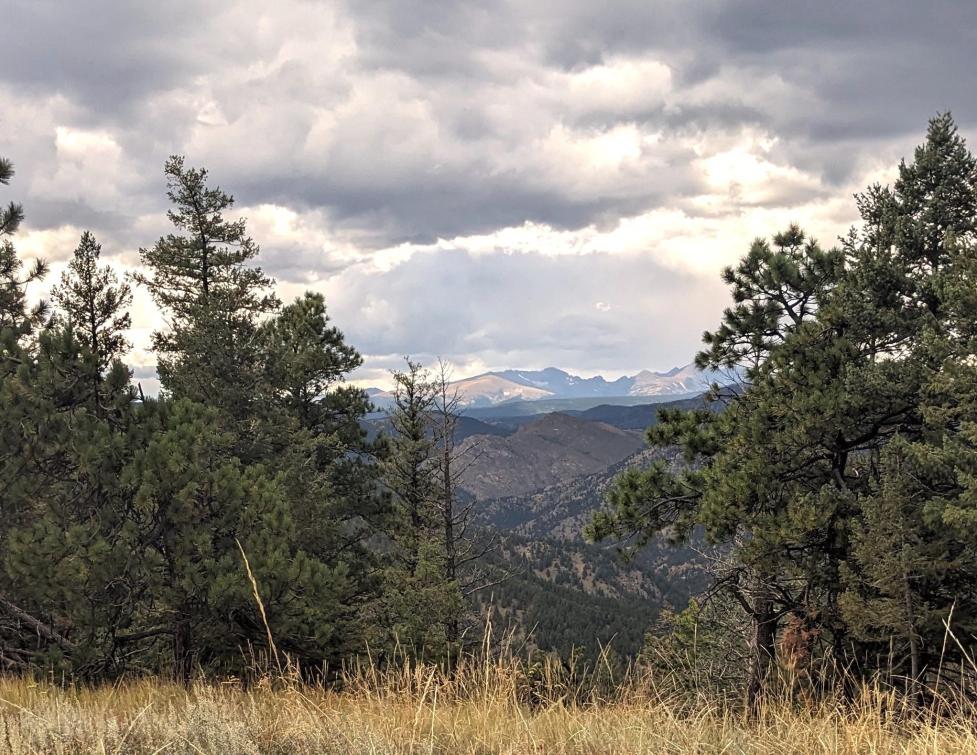
View from a small mountain in OSMP, with yellow grasses and conifers in the foreground. Between two tree groups, distant mountain ranges stretch toward the horizon under dark, cloud‑filled skies with some sunlight breaking through.
Photo by Living Heritage Anthropology

“The main thing that I think about this Arapaho life; as you go through it, you gain more knowledge, but this knowledge is just to turn around and take care of your people.” 
Mr. Fred Mosqueda, Cheyenne and Arapaho Tribes of Oklahoma 

Data Management, Analysis, and Collaboration

All the materials collected during the research, such as notes, recordings, and photographs, were carefully organized to make sure nothing was lost and everything could be reviewed clearly. Drafts of each report chapter were written together with Tribal representatives, who gave feedback several times throughout the process to make sure the information was accurate, respectful, and reflected Indigenous ways of understanding. Staff from the City of Boulder also reviewed these drafts, and any major changes were sent back to the Tribal representatives for approval. This teamwork made sure the final report was both factually correct and culturally respectful.

Ethical Considerations

Respect and honesty were at the heart of this project. Everyone who took part in the research gave their permission beforehand, and all research steps were discussed and approved together with Tribal representatives. Information that was private or sacred—such as details about ceremonies or protected cultural knowledge—was treated with care and handled only in ways approved by Tribal leaders. The research team also took time to reflect on their own backgrounds and the long history of how Indigenous communities have been treated in research. Their goal was to make sure the final work honored Tribal sovereignty and represented Tribal voices accurately and respectfully.

Community-Based Research Approach

To make the research more respectful and fair, the project also uses something called community-based participatory research (CBPR). This approach means that researchers and community members work together as partners throughout the entire process (Atalay, 2012; Tuhiwai Smith, 2012; Wilson, 2008; Gone, 2019). Instead of the researcher deciding everything alone, the community helps choose what questions to ask, how to collect information, and how to share the results. For example, Tribal members might suggest including stories from elders, reviewing the research findings before they are published, or holding meetings where everyone can discuss what the results mean. This helps make sure the research is culturally respectful, useful, and accurate. For Tribal Nations, CBPR also supports the use of Indigenous knowledge systems, or ways of knowing that come from generations of experience and spiritual connection to the land. By combining ethnography, CBPR, and government-to-government consultation, the project shows how research can honor Tribal sovereignty, build trust, and create knowledge that benefits both the community and the broader public.

Limitations and Challenges

While this project worked to include as many Tribal representatives as possible, not everyone was able to participate due to distance, scheduling, and other logistical challenges. These limits shaped the process and remind us that this report captures only part of an ongoing story. Equally important, some cultural and ceremonial knowledge shared by Tribal representatives could not be included in this public document. This is not an omission of detail, but an act of respect and cultural protection.

Certain ceremonies, stories, songs, and teachings are held privately within Tribal communities because they are deeply tied to spiritual beliefs, family responsibilities, and ancestral rights. Sharing this information outside of the community without permission can cause harm, it can separate the knowledge from its cultural context, misrepresent sacred practices, and repeat patterns of extraction and appropriation that Indigenous peoples have experienced for generations. To put this more bluntly, outsiders have attempted to take Indigenous peoples’ land, language, culture, economies, and many other things, for themselves. After this misappropriation, academics and those seeking spiritual guidance have pursued what they see as the most sacred and in need of protection from the outside. In this sense, withholding sensitive knowledge is an expression of Tribal sovereignty and cultural care, not secrecy. Safety is also a concern, as some knowledge must be understood within a full cultural context to be used safely. The research team honors these boundaries and encourages readers to understand that true respect for Indigenous knowledge means recognizing that not all knowledge is meant to be shared publicly, or even beyond specific members of a Tribal Nation. This report, therefore, should be read as a collaborative snapshot and respectful representation of the insights and perspectives Tribes chose to share rather than a complete record of all historical, cultural, or spiritual information connected to the Boulder Valley.

Suggested Further Reading

Burns, S. 2004. The Ute Relationships to the Lands of West Central Colorado: An Ethnographic/Ethnobotanical Overview. Office of Community Services, Fort Lewis College.

Cowell, Andrew.
2004. “Arapaho Placenames in Colorado: Indigenous Mapping, White Remaking.” Names 52: 21–41.
2018. Naming the World: Language and Power Among the Northern Arapaho. Tucson: University of Arizona Press.

Cowell, Andrew, with Alonzo Moss Sr.
2003. “Arapaho Place Names in Colorado: Form, Function, Language and Culture.” Anthropological Linguistics 45: 349–89.
2004. Plants and Plant Names in Arapaho Life and Language. Boulder: Center for the Study of Indigenous Languages, Department of Linguistics, University of Colorado.
2008. The Arapaho Language. Boulder: University Press of Colorado.

Cowell, Andrew, and Alonzo Moss Sr., eds.
2005. Hinóno’éínoo3ítoon: Arapaho Historical Traditions Told by Paul Moss. Winnipeg: University of Manitoba Press.

Cowell, Andrew, William C’Hair, and Alonzo Moss Sr., eds.
2014. Arapaho Stories, Songs and Prayers: A Bilingual Anthology. Norman: University of Oklahoma Press.

Deloria, Ella. Ella Deloria Archive. Dakota Indian Foundation.
http://zia.aisri.indiana.edu/deloria_archive/about.php.

Duncan, Clifford. 2003. “The Northern Utes of Utah.” In A History of Utah’s American Indians, edited by Forrest S. Cuch. Salt Lake City: Utah Division of Indian Affairs and Utah Division of State History.

Fisher, Laura R., and Robert J. Brunswig. 2007. An Archaeological and Ethnographic Overview of Rocky Mountain National Park, Colorado. National Park Service.

Gelo, Daniel J. 2010. “Comanche Land and Ever Has Been: A Native Geography of the Nineteenth-Century Comancheria.” The Southwestern Historical Quarterly 103 (3): 273–307.

Hämäläinen, Pekka.
2009. The Comanche Empire. New Haven, CT: Yale University Press.
2022. Indigenous Continent: The Epic Conquest for North America. New York: Liveright Publishing.

O’Meara, Sean. 2022. “Indigenous Connections: Native American Ethnographic Study of Golden, Colorado and the Clear Creek Valley.” Golden History Archives, item #17EF7BF6-81AC-4FE8-84AD-521451050200. Golden History Museums & Archives, Golden, CO.

Royce Blaine, Martha.
1990. Pawnee Passage: 1870–1875. Norman: University of Oklahoma Press.
1997. Some Things Are Not Forgotten: A Pawnee Family Remembers. Norman: University of Oklahoma Press.

Shield Chief Gover, C. 2024. “Becoming a Čâhiksičâhiks Archaeologist.” In Being Indigenous Archaeologists: Reckoning New Paths Between Past and Present Lives, edited by George Nicholas and Joe Watkins. New York: Routledge Press. In press.

Taylor, W., Librado, P., Running Horse Collin, Y., Shield Chief Gover, C., et al. 2023. “Early Dispersal of Domestic Horses into the Great Plains and Northern Rockies.” Science 379 (6639): 1316–1323.

Texas Department of Transportation. 2021. Tribal Histories: Comanche Nation Research Report. December 2021.

Wilkins, David E., and Heidi Kiiwetinepinesiik Stark. 2017. American Indian Politics and the American Political System. 4th ed. Lanham, MD: Rowman & Littlefield.

Bibliography

Atalay, Sonya. Community-Based Archaeology: Research with, by, and for Indigenous and Local Communities. Berkeley: University of California Press, 2012.

Atkinson, Paul. 2015. Handbook of Ethnography. 2nd ed. London: Sage.

Banks, Sarah, et al. 2013. “Everyday Ethics in Community-Based Participatory Research.” Contemporary Social Science8, no. 3: 263–277.

Bernard, H. Russell. 2011. Research Methods in Anthropology: Qualitative and Quantitative Approaches. 5th ed. Lanham, MD: AltaMira Press.

Bernard, H. Russell, and Clarence C. Gravlee. 2014. Handbook of Methods in Cultural Anthropology. 2nd ed. Lanham, MD: Rowman & Littlefield.

Burns, S. 2004. The Ute Relationships to the Lands of West Central Colorado: An Ethnographic/Ethnobotanical Overview. Office of Community Services, Fort Lewis College.

Centre for Social Justice and Community Action (Durham University). 2022. Community-Based Participatory Research: A Guide to Ethical Principles and Practice. Durham: Durham University.

City of Boulder. n.d. About Open Space and Mountain Parks. Boulder Colorado Government. Accessed October 23, 2025.

City of Boulder. n.d. Indigenous People’s Day Resolution. Boulder Colorado Government. Accessed October 23, 2025.

City of Boulder. n.d. The People’s Crossing. Boulder Colorado Government. Accessed October 23, 2025.

Fisher, Laura R., and Robert J. Brunswig. 2007. An Archaeological and Ethnographic Overview of Rocky Mountain National Park, Colorado. National Park Service.

Holkup, Patricia A., Tripp-Reimer, Toni, Elaine M. Salois, and Cynthia Weinert. 2004. “Community Based Participatory Research: An Approach to Intervention Research with a Native American Community.” ANS: Advances in Nursing Science 27, no. 3: 162–175. https://www.ncbi.nlm.nih.gov/pmc/articles/PMC2774214/pdf/nihms127083.pdf.

Jackson, Bruce. 1987. Fieldwork. Chicago: University of Chicago Press. Madison, D. Soyini. 2012. Critical Ethnography: Method, Ethics, and Performance. 2nd ed. Thousand Oaks, CA: Sage.

Madden, Raymond. 2017. Being Ethnographic: A Guide to the Theory and Practice of Ethnography. 2nd ed. Thousand Oaks, CA: Sage.

National Congress of American Indians (NCAI). 2020. Tribal Sovereignty: A Primer. Washington, D.C.: NCAI Policy Research Center. https://ncai.org.

O’Meara, Sean. 2022. “Indigenous Connections: Native American Ethnographic Study of Golden, Colorado and the Clear Creek Valley.” Golden History Archives, item #17EF7BF6- 81AC-4FE8-84AD-521451050200. Golden History Museums & Archives, Golden, CO.

Pelto, Pertti J. 2016. Applied Ethnography: Guidelines for Field Research. Lanham, MD: Rowman & Littlefield.

United States. 2000. Executive Order 13175—Consultation and Coordination with Indian Tribal Governments. Signed November 6, 2000. The White House, Washington, D.C.

Wilkins, David E., and Heidi Kiiwetinepinesiik Stark. 2017. American Indian Politics and the American Political System.4th ed. Lanham, MD: Rowman & Littlefield.

Young Atekpatzin. 2019. An Assessment of the Archeological, Geographical, and the Oral and Written Historical Findings Regarding the Presence of the Apache in Boulder, Colorado. City of Boulder Open Space Research Reports, Boulder, CO.