

The Comanche people are renowned for their masterful horsemanship and expansive influence across the Southern Plains. They maintained a dynamic relationship with the broader Central and Southern Rocky Mountain region, including the Boulder Valley. Although the core of Comanche homelands lay further south, their mobility, trade networks, and seasonal migrations brought them into contact with regions along Colorado’s Front Range. Scholars such as Gelo (2010) and Hämäläinen (2009) detail how Comanche landscapes extended across many environments, with their presence marked by hunting, trading, and intertribal relations. Previous ethnographic and ethnohistoric studies, including those by Blythe (2008b) and Campbell (2007), establish that lands in present-day Colorado were recognized by Comanche as part of a larger network of traditional use areas. Montgomery and Fowles (2020) write about a broader Indigenous presence that included Comanche people navigating the Boulder Valley landscapes over time. Comanche traditional homelands are vast, and today, the Comanche Nation is located in Lawton, Oklahoma.
Comanche Nation
Contributors
- Ms. Ruth Toathy, NAGPRA Coordinator for the Comanche Nation
- Ms. Rosemary Chibity, Comanche Nation Elder
- Mr. Leonard Chibity, Comanche Nation Elder
- Ms. Martina Minthorn, Tribal Historic Preservation Officer for the Comanche Nation
The Comanche People
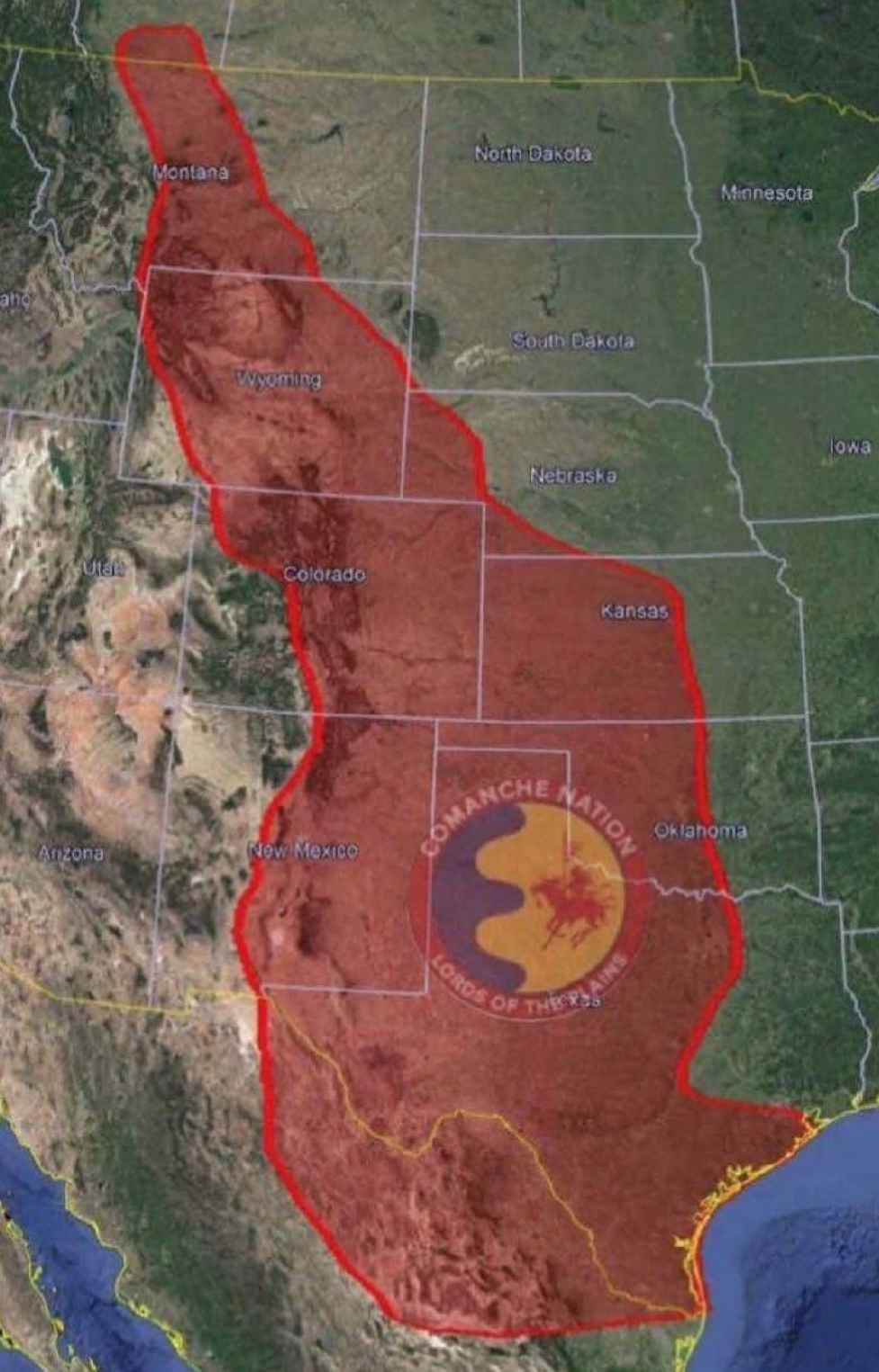
Comanche Nation traditional territories (original map created by Jimmy W. Arterberry and reproduced in TxDOT, 2021)
Precolonial Comanche Life
Traditional Comanche life was rooted in mobility, spiritual practice, and social structure. Ms. Ruth Toathy emphasizes that Comanche women were taught from a young age to be self-reliant and capable, stating, “A Comanche woman is strong physically and mentally… anything a man can do, they could do it”.
“Comanche men, how they are with their families, they put their wives above.”
-Ms. Ruth Toathy
“…we even had women fight with the men.”
-Mr. Leonard Chibity
The importance of ceremonial life is also deeply ingrained, particularly in the context of the Native American Church and peyote meetings. Ms. Ruth Toathy provides a detailed account of the peyote ceremony, comparing it to a church gathering and explaining how each role—fire man, water carrier, singer—serves an important function. These gatherings reinforce respect for elders, gendered responsibilities, and healing through prayer. As Ms. Martina Minthorn points out, the annual pilgrimage to collect peyote remains vital today, underscoring how the Comanche helped “blossom” this ceremonial tradition across Tribal Communities nationwide.
Precolonial Comanche society also revolved around warfare, equestrian skill, and trade, which were fundamental to their cultural identity and survival. Ms. Martina Minthorn describes how the acquisition of horses revolutionized their lifestyle, allowing them to hunt more effectively and conduct raids across vast regions, including against the Puebloan peoples. These raids weren't about conquest; they shaped intertribal relationships, even influencing architectural defenses in Pueblo communities. Wealth was held in horses, and raiding was an integral piece of trading. The Comanche brought horses to many other Tribes through trade, and everyone they traded with needed to learn Comanche sign language in order to trade with them. Comanche people needed to feed their families, just like us, and raiding was one way they could do that. Ms. Rosemary Chibity reinforces Comanche prowess on horseback, recalling how “they’re the only ones that could use the bow and arrow, wrap them legs around that horse and yet get under that neck and shoot”. Leadership was earned through accomplishment, symbolized in regalia such as the moons on a leader’s necklace—each moon representing a milestone or achievement. Each band had different leaders for different roles, power was not consolidated to a single person. Despite their reputation as fierce warriors, Comanche people held strong values of community, reciprocity, and respect for other Tribes’ sacred practices, as seen in their willingness to avoid intrusion during others’ spiritual ceremonies. This balance of strength, spirituality, and adaptability defined traditional Comanche life.
Plant Use
Comanche people have and continue to interact with the Boulder Valley landscape in many ways, including collecting traditional plants. This plant use reflects a deep ecological knowledge grounded in both practicality and respect for the land. As Ms. Ruth Toathy describes, plants like cedar, pine, bitterroot, and hawthorn were central to everyday life and healing practices. Cedar in particular was deeply versatile and used for smoke in ceremonies, its sap for spiritual protection and treating nightmares in infants, and its branches in food preparation such as pounding jerky. Ms. Ruth Toathy also emphasized bitterroot’s medicinal and protective properties, describing how it was powdered and applied to the body to ward off snakes and insects, as well as chewed by singers to soothe the throat during drumming. She also explained that pine cones were used as fire starters, and that each tree was recognized.
“There is a name for just about every tree there is (in Comanche)”
-Ms. Ruth Toathy
These practices speak to an enduring relationship with high-elevation landscapes, where such plants were carefully gathered and remembered by name in the Comanche language. The Boulder Valley is an important region due to its high elevation areas and their proximity to the plains. It is an ideal access point to gather high elevation plants and quickly return to more welltraveled areas. This ethnobotanical heritage aligns with broader studies that note Comanche use of mountain and plains ecologies for food, medicine, and ceremonial materials (Brett 2003; Campbell 2007).
Similarly, Ms. Rosemary Chibity’s reflections illuminate the religious ethics that accompany Comanche plant use. Ms. Ruth Toathy explains the cultural expectation to give something back to the plant when harvesting, a ritual that includes offering and expressing gratitude to the earth, reinforcing the reciprocal relationship between people and nature.
Plants were used according to their healing properties. For example, cedar tea was drunk warm to break up chest congestion and was even used postpartum in some communities to clear the womb. Mr. Leonard Chibity, too, highlighted the diversity of Comanche botanical knowledge, referencing yucca for hair washing, possum grapes for jelly, and pine sap smoked to calm restless children.
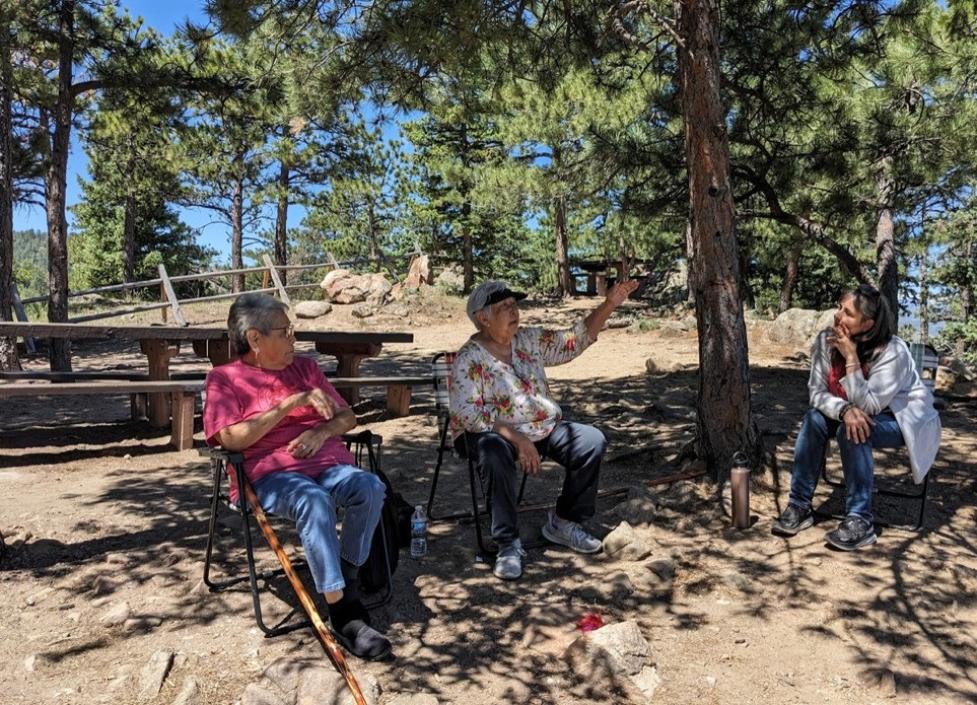
Ms. Toathy and Ms. Chibity talk with City of Boulder staff
Language
The Comanche language holds a central place in the cultural identity and memory of the Comanche people, and it has faced significant challenges due to colonization, assimilation, and language loss. Ms. Ruth Toathy vividly recounts growing up speaking only Comanche at home, saying, “I had to. I'd starve or die of thirst”, emphasizing that it was once the only means of communication with her mother and community. However, as English became essential for survival in schools and broader society, English became more commonplace. Ms. Ruth Toathy describes the tension she felt when her sister prepared her for school, teaching her English by an oil lamp and warning her not to speak Comanche, or else she’d be teased by other children. Similarly, Ms. Rosemary Chibity recalls how her mother, though fluent, deliberately withheld the language, fearing they would develop an accent and be disadvantaged.
“’I don’t want you speaking with an accent’ she said, ‘you’re gonna learn English’. So she took us to the Mennonite school.”
-Ms. Rosemary Chibity
These personal stories reflect broader patterns of linguistic suppression and loss described by scholars like Foster (1992) and Kavanagh (2008), who document how federal education policies and assimilationist pressures eroded Indigenous language transmission.
Despite this history, efforts to preserve and revitalize the Comanche language continue, though not without difficulty. As Ms. Ruth Toathy notes, “We’re losing it… But they’re trying,” referring to the Tribal-led language revitalization programs and certified instructors working to reclaim fluency. Mr. Leonard Chibity’s observations point to the presence of Comanche in placenaming traditions, “We got names for our trails, our creeks” highlighting how language encodes geographic and familial knowledge. Additionally, Mr. Chibity describes traditional Tornado songs, which have been passed down orally and are tied to specific bands and ceremonial practices. This is just one example of the role of language in ceremony and social relationships.
Comanche in the Boulder Valley
Despite the limited habitation of high elevations, mountains held important functional and symbolic roles. Ms. Rosemary Chibity emphasized that elevated points were used as lookouts, enabling Comanche sentinels to detect threats or locate resources such as water and other camps. These lookouts were crucial for community safety, giving women and children time to escape in the event of raids, and also helped guide movement through the landscape. Some of the most important Comanche spiritual activities took place at high elevations, like burials and vision quests, imbuing these areas with additional importance.
Ms. Martina Minthorn, the Tribal Historic Preservation Officer of the Comanche Nation, connected this knowledge of terrain with the Comanche's adaptive use of horses, which allowed them to travel swiftly across vast areas and conduct raids, especially during the "Comanche moon" a full moon that enabled rapid movement and safe navigation at night. Mountains thus became part of a broader mobility network and central hubs for trade and intertribal contact (Fowles et al. 2017; Hämäläinen 2009). While the peaks themselves may have remained distant, the surrounding slopes, valleys, and ridgelines were vital to Comanche life for hunting, defense, seasonal movement, and regional connectivity.
“They could cover lots of land, lots of miles; like they call it that Comanche moon. So, in New Mexico that's when we would raid, on a full moon because they could go and come back. If you're riding a horse, you don't want to fall in a prairie dog hole or something like that. That moon would be significant.”
-Ms. Martina Minthorn, THPO
The Comanche people had a dynamic but practical relationship with mountainous landscapes. Ms. Ruth Toathy explains high elevations like those around Boulder were largely inaccessible to many, especially elders and pregnant women who traveled on foot or travoises (a horse-drawn wooden sled). Mountains were used in signaling, to alert other Comanche to the presence of other Tribes. A fire was lit as a signal and then put out before going back down to lower elevations.
While the Comanche passed through the Boulder Valley, their camps would typically be in lower elevations where they could find shelter from the wind and cold, especially in winter. The base of the mountains and the valley floors provided essential wintering grounds during snowstorms or while on longer seasonal migrations. Ms. Ruth Toathy’s recollection reinforces what scholars like Gunnerson and Gunnerson (1988) and Brett (2003) have observed: while the Comanche ranged widely across the Plains and into foothill zones, their direct use of high alpine terrain was limited, largely due to the environmental and logistical constraints of winter weather and moving people up and down a mountain.
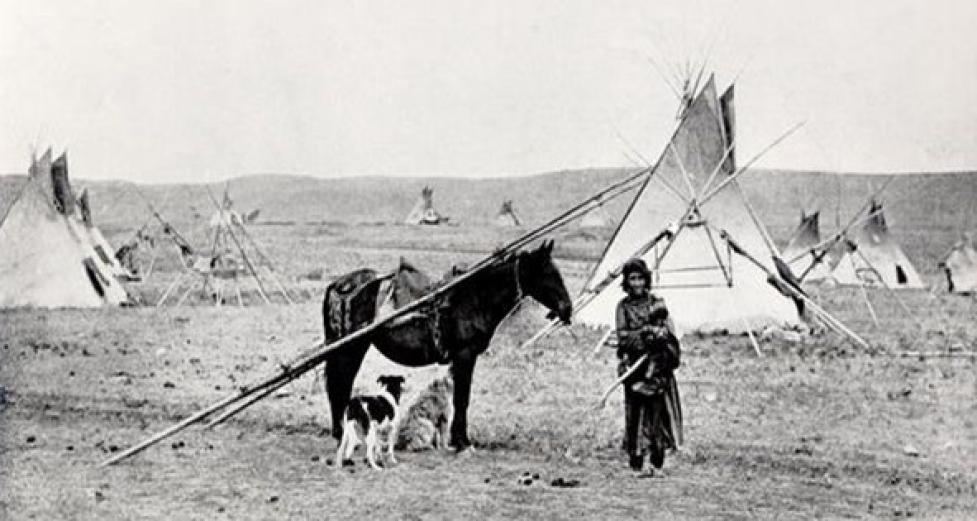
Comanche travois, courtesy of the Comanche Nation Tribal Historic Preservation Office
However, the Comanche made strategic use of the landscape’s natural features for survival, mobility, and protection. Ms. Ruth Toathy recalls a vast cave system near Tucumcari used historically by Comanche bands as a winter refuge or as a hiding place during times of conflict, complete with flowing spring water and traces of habitation. These stories align with ethnohistoric records documenting Comanche use of natural shelters and valleys during harsh weather or intertribal tensions (Foster 1992; Campbell 2007). The Boulder Valley, situated along north-south travel corridors, functioned as part of a broader network of pathways linking Comanche bands with key trade hubs such as Taos, where seasonal trading with other Tribes occurred. Low-lying mountain zones offered refuge from the weather and served as resting places when migration was stalled by snow or fatigue. Similarly, Mr. Leonard Chibity noted that while mountain regions provided game, Comanche did not use the high peaks regularly, choosing valley trails instead for ease of travel. These patterns are consistent with archaeological and ethnographic research suggesting that while Comanche territories included foothill and mountain margins, high-altitude zones were less frequently used, except for specific ceremonial purposes. (Brett 2003; Gunnerson & Gunnerson 1988).
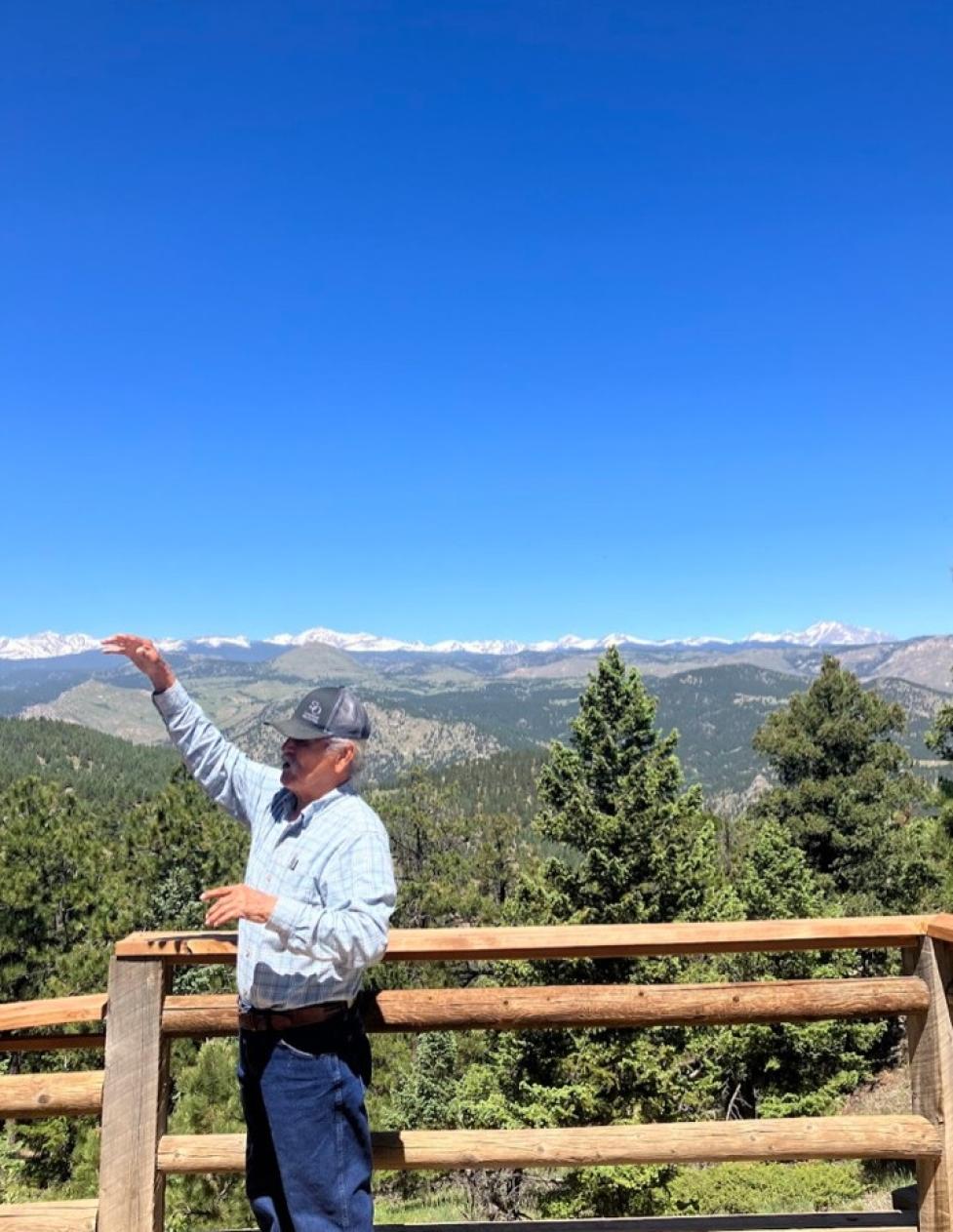
Mr. Chibity discussing elevation
Food
Traditional Comanche foods were deeply rooted in the natural resources of the Plains and closely connected to spiritual practices and survival strategies. Buffalo was the cornerstone of Comanche sustenance and culture, providing not only meat but also materials for tools and religious items. As Ms. Ruth Toathy explains, hunting buffalo was a sacred act that required fasting and sacrifice: “To hunt the buffalo, you stay on that hill. You do not eat and drink. You have to sacrifice... Then they'll tell you how you're gonna use it”. This reverence extended beyond the hunt itself; even buffalo beards were used by Comanche women to make pincushions with the beards kept as practical and symbolic household items. The intimate relationship between Comanche people and the buffalo reflects a broader worldview that valued balance, respect for animals, and the importance of spiritual reciprocity in obtaining food.
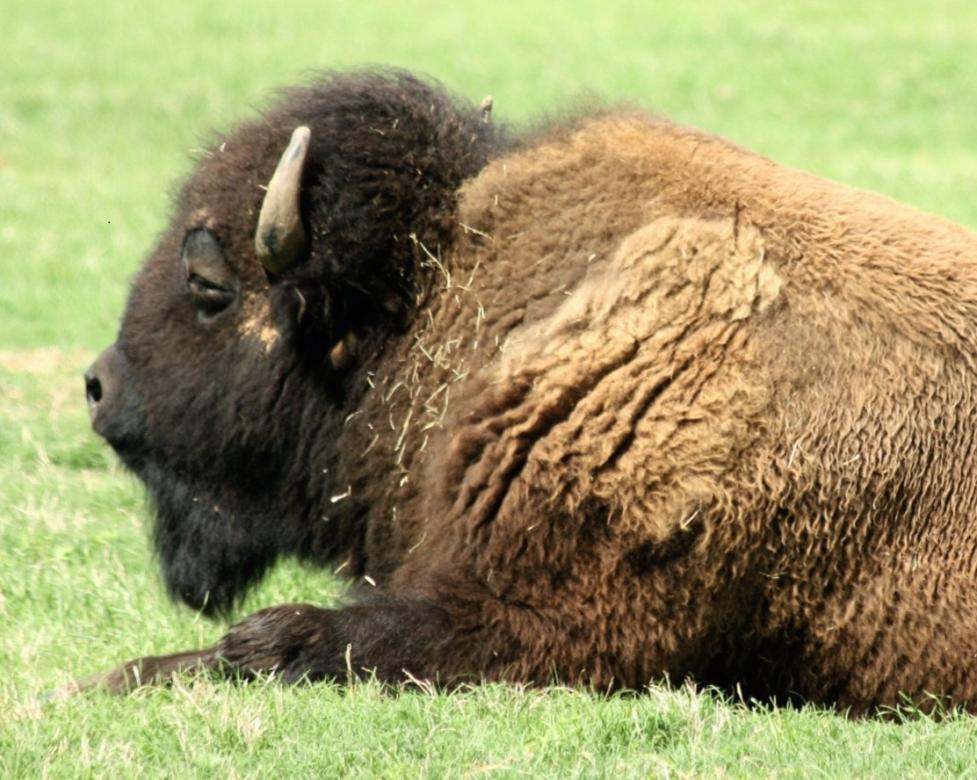
Buffalo with beard
Preservation and preparation of food were essential to the Comanche's nomadic lifestyle, and traditional methods emphasized practicality and sustainability. Mr. Leonard Chibity recalls that drying meat and salting pork were common practices in his childhood home used to store food for long periods, especially before refrigeration: “They do a lot of drying food… and they had a refrigerator and had a lot of salt, too, to keep some of their meat”. Ms. Ruth Toathy also mentions using specific animal fats, like kidney fat, in drying meat, which added flavor and preserved it longer. These foodways not only sustained Comanche communities through harsh conditions but also passed down generational knowledge about how to live in harmony with the land and its offerings.
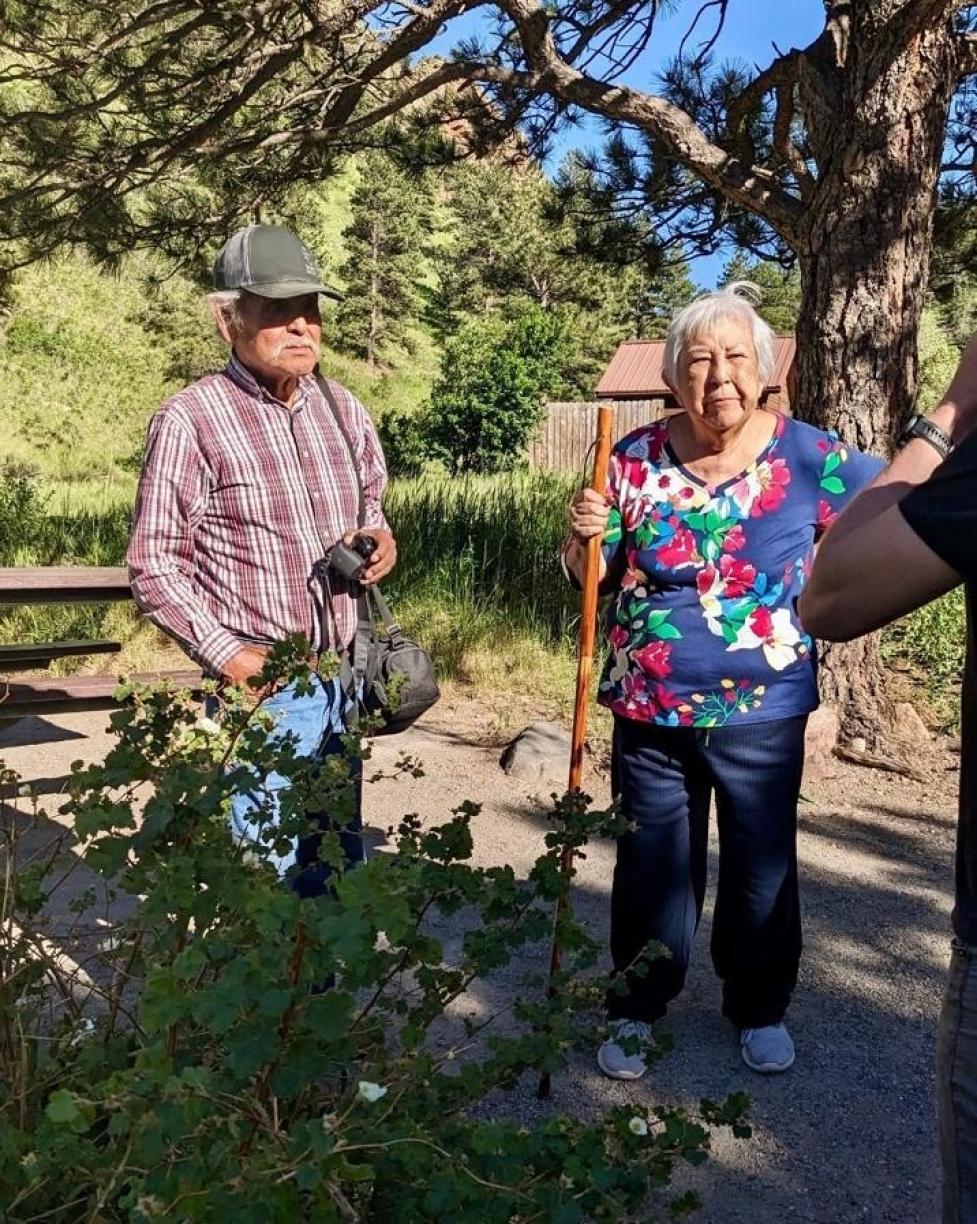
Mr. and Mrs. Chibity observe plant life
The Comanche presence in the Boulder Valley of Colorado reflects a complex and dynamic relationship with the land, shaped by movement, survival, reciprocity, and adaptation. While the high elevations of the surrounding mountains were not often traversed by families, the valley floor served as an essential corridor for travel, trade, hunting, and seasonal shelter. The Comanche used the terrain strategically, for lookouts, winter camps, and access to water and game. Comanche traditions like food preparation, healing ceremonies and raiding practices demonstrate a resilient and sophisticated way of life that continues to evolve while remaining rooted in culture. Through oral histories and lived knowledge shared by Comanche elders today, we see that the Boulder Valley was not only a landscape they passed through, but evidence of a powerful and enduring presence that still resonates in the region.
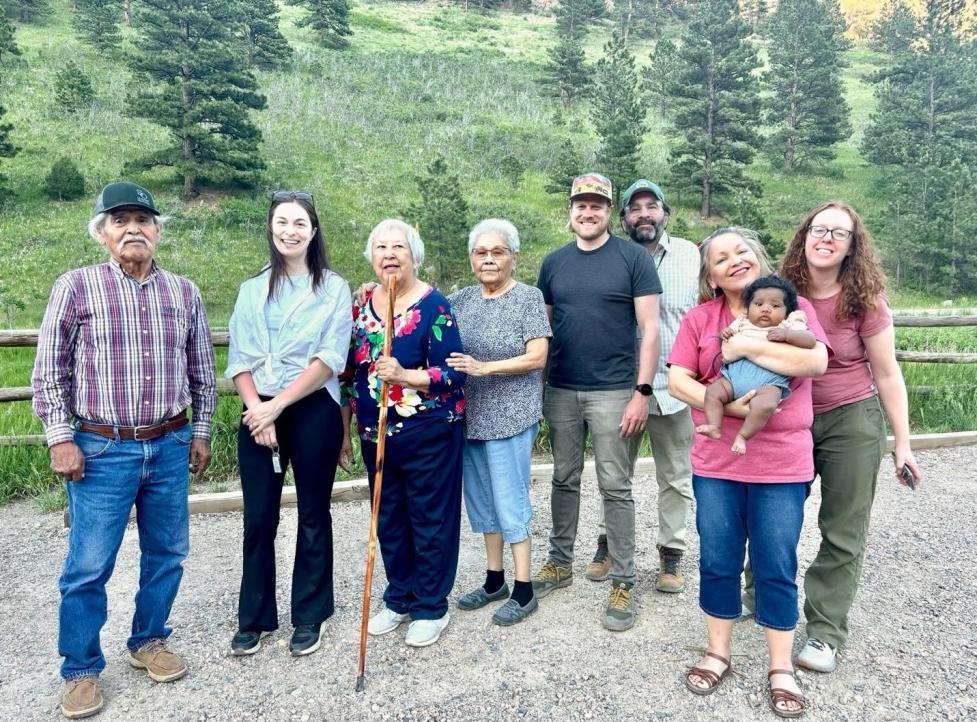
A group photo of the research team
Bibliography
Blythe, Jeffrey W.
2007 Report of Tribal Consultation October 2006 – May 2007: Traditional Cultural Properties/Sacred Sites Inventory and NAGPRA Compliance Report, Schriever AFB, Colorado. Report prepared by Blythe and Trousil, Inc. for Versar, Inc., under contract to the Air Force Center for Engineering and the Environment. 2008a Ethnohistoric Context Native American Consultation (Phase II), Cheyenne Mountain Air Force Station, Colorado. Milwaukee: TN & Associates, Inc. 2008b Our Footprints Are There: Report of Native American Consultation to Identify Traditional Cultural Properties and Sacred Sites on Lands Administered by Fort Carson, Colorado. Prepared for Fort Carson. Loveland, TX: Gene Stout and Associates. 2008c Report of Tribal Consultation August 2007 – October 2008, Schriever AFB, Colorado. Report prepared by Blythe and Trousil, Inc. for Versar, Inc., for the Air Force Center for Engineering and the Environment.
Brett, John A.
2003 Ethnographic Assessment and Documentation of Rocky Mountain National Park. Denver: Department of Anthropology, University of Colorado at Denver.
Campbell, Gregory R.
2007 An Ethnological and Ethnohistorical Assessment of Ethnobotanical and Cultural Resources at the Sand Creek National Historic Site and Bent’s Old Fort National Historic Site. Volumes 1 and 2. Missoula: University of Montana.
Foster, Morris W.
1992 Being Comanche: A Social History of an American Indian Community. Tucson, AZ: University of Arizona Press.
Fowles, Severin, Jimmy Arterberry, Lindsay Montgomery, and Heather Atherton
Comanche New Mexico: The Eighteen Century. Chapter 6. In New Mexico and the Pimería Alta: The Colonial Period in the American Southwest, edited by John G. Douglass and William M. Graves, pp. 157-186. University of Colorado Press.
Gelo, Daniel J.
2010 Comanche Land and Ever Has Been: A Native Geography of the Nineteenth-Century Comancheria. The Southwestern Historical Quarterly 103(3):273-307.
Gunnerson, James H. and Dolores A. Gunnerson
1988 Ethnohistory of the High Plains. Cultural Resource Series 26. Denver, CO: Colorado State Office, Bureau of Land Management.
Hämäläinen, Pekka
2009 The Comanche Empire. New Haven, CT: Yale University Press.
Higgins, Howard, Elia Perez, and Brian Cribbin
2013 Cultural Continuity: An Ethnographic Study Related to Potential Solar Energy Development in the San Luis Valley, Colorado. Albuquerque, NM: TRC Consulting. Manuscript on file at the San Luis Valley Field Office, Bureau of Land Management, Monte Vista, Colorado.
Houser, Steve; Linda Pelon, and Jimmy W. Arteberry
2016 Comanche Marker Trees of Texas. Waco, TX: Texas A&M University Press.
Howbert, Irving
1970 The Indians of the Pike’s Peak Region: Including an Account of the Battle of Sand Creek and of Occurrences in El Paso County, Colorado During the War with the Cheyennes and Arapahoes in 1864 and 1868. Glorieta, NM: Rio Grande Press.
Jones, Donald G., Martha Williams, Kathy Stemmler, Michael Ho. McGrath and Elizabeth C. Winstead
1998 Ethnohistoric and Ethnographic Information Related to the Fort Carson Military Reservation and Pinon Canyon Maneuver Site in Colorado. Frederick, MD: R. Christopher Goodwin & Associates, Inc.
Kavanagh, Thomas Whitney
1986 Political Power and Political Organization Comanche Politics, 1786-1875. PhD Dissertation, University of New Mexico.
Kavanagh, Thomas W.
2008 Comanche Ethnography: Field Notes of E. Adamson Hoebel, Waldo R. Wedel, Gustav G. Carlson, and Robert H. Lowie. Studies in the Anthropology of North American Indians Series. Lincoln, NE: University of Nebraska Press.
Kelley, Shawn, Sean O’Meara, Damon Hill, and Karen Koestner
2017 USAFA Ethnographic and Ethnobotanical Survey. Albuquerque, NM: Parametrix. Kelley, Shawn, Sean O’Meara, Damon Hill, and Marilyn Martorano 2019 Traditional Use Study for Great Sand Dunes National Park and Preserve. A;buquerque, NM: Parametrix.
O’Meara, Sean
2022 Indigenous Connections: Native American Ethnographic Study of Golden, Colorado and the Clear Creek Valley. Prepared for City of Golden Golden History Museum and Park. Tucson, AZ: Anthropological Research.
McBeth, Sally
2007 Native American Oral History and Cultural Interpretation in Rocky Mountain National Park. Prepared for the National Park Service Rocky Mountain National Park Intermountain Region Department of the Interior. 2010 Ethnographic Overview Draft #2: Colorado National Monument. Prepared for the National Park Service. Greeley: University of Northern Colorado.
Mitchell, Mark
2004, March 29. Rock art depicting Comanches, horses clad in leather armor discovered in Colorado by CU researcher. CU Boulder Today. Retrieved from: [https://www.colorado.edu/today/2004/03/29/rock-art-depicting-comanches-… scovered-colorado-cu-researcher]
Mitchell, Peter
2016 Going Back to Their Roots: Comanche Trade and Diet Revisited. Ethnohistory 63(2): 237-271
Montgomery, Lindsay M. and Severin Fowles
2020 An Indigenous Archive: Documenting Comanche History Through Rock Art. American Indian Quarterly 44(2):196-220.
Noyes, Stanley.
1994 Los Comanches: The Horse People, 1751-1845. Albuquerque, NM. University of New Mexico Press. Rivaya-Martínez, Joaquín 2012 Becoming Comanches: Patterns of Captive Incorporation into Comanche Kinship Networks, 1820-1875. In On the Boarders of Love and Power: Families and Kinship in the Intercultural American Southwest. David Wallace Adams and Crista DeLuzio, eds. Berkeley, CA: University of California Press.
Stoffle, Richard W., Henry F. Dobyns, Michael J. Evans, and Omer C. Stewart
1984 Toyavita Piavʉhʉrʉ Koroin: Ethnohistory and Native American Religious Concerns for in the Fort Carson – Pinon Canyon Maneuver Area. Kenosha, WI: University of Wisconsin-Parkside.
Stoffle, Richard W., Kathleen A. Van Vlack, Rebecca S. Toupal, Sean M. O’Meara, Jessica L. Medwied-Savage, Henry F. Dobyns, and Richard W. Arnold
2008 American Indians and the Old Spanish Trail. Prepared for the National Park Service. Tucson, AZ: Bureau of Applied Research in Anthropology, University of Arizona.
Watts, Linda K.
2005 Native American Cultural Resources in the Pike and San Isabel National Forests and Comanche and Cimarron National Grasslands: Site Features Present and Recommendations Concerning Protection and Preservation. Prepared for the National Park Service and U.S. Forest Service.
Texas Department of Transportation
2021 Tribal Histories: Comanche Nation Research Report. December, 2021.
White, David R.M.
2005 Seinanyédi: An Ethnographic Overview of Great Sand Dunes National Park and Preserve. Prepared for the National Park Service. Santa Fe, NM: Applied Cultural Dynamics.
Ethnographic Education Report Navigation
Explore the other reports linked below.
Cheyenne and Arapaho
The City of Boulder Ethnographic Education Report: Cheyenne and Arapaho
Lakota
The City of Boulder Ethnographic Education Report: Lakota: The Oglala Sioux Tribe and The Rosebud Sioux Tribe
Pawnee Nation
The City of Boulder Ethnographic Education Report: Pawnee Nation
Ute Mountain Ute Tribe
The City of Boulder Ethnographic Education Report: Ute Mountain Ute Tribe