Building Boulder Together

On Nov. 3, 2026, Boulder voters will weigh in on several ballot items. While City Council needs to take a final vote on the ballot language on Aug. 20, the ballot is expected to include the Building Boulder Together: Recreation and Safety Bond.

The proposed bond would pay for the city’s backlog of unfunded building maintenance needs through renovations and replacements.

  • It would allow the city to borrow up to $400 million to pay for specific infrastructure projects.
  • The measure was identified as part of the city's Long-Term Financial Strategy work as a potential new revenue source to address the city's building needs.
  • If the measure does not pass, the city anticipates it would still have to make -- and pay for -- critical repairs to existing high-priority city buildings to keep them functioning as long as possible. The city would use existing funding to do so. This may require the city to identify other funding sources, such as current services it would need to scale back or discontinue, increasing or adding fees, or both. The city does not have a plan to fund a new South Boulder Recreation Center or Public Safety Building if the bond measure fails.

The following guide provides community members with facts about the bond. The guide explains what the measure seeks to fix and what projects it would fund. It also gives property owners a way to see what the tax increase would be for them and answers frequently asked questions.
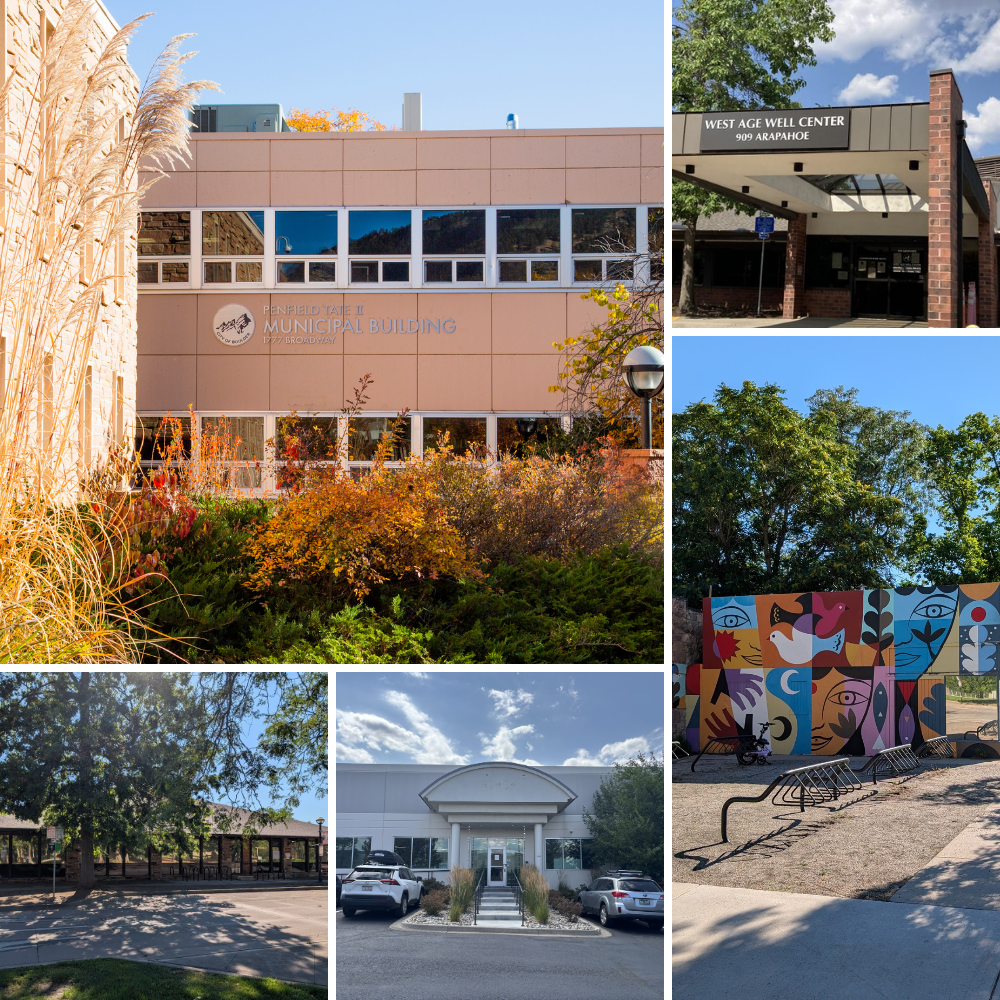
collage of city facilities

Buildings Matter to Our Community

The City of Boulder maintains more than 75 buildings and facilities throughout Boulder. Over a dozen of these are nearing the end of their useful life or require significant maintenance and improvements.

Keeping these buildings and facilities operational will help ensure the city can provide community services such as fire and safety services, recreation, and programming for older adults.

Explore the City of Boulder Facilities StoryMap linked below to learn more about the city's buildings and facilities.

This resource explains some of the challenges the city faces with its buildings and the overall Facilities Strategic Plan the city is implementing to address these challenges. It provides some additional information about a significant project the city is working on now: a new customer service and staffing hub at Alpine and Broadway that will allow the city to consolidate employees and close some aging buildings. Lastly, the StoryMap offers an interactive way to learn about the projects the city would fund through the bond, if it is approved by voters.

Here are the projects the Building Boulder Together: Recreation and Safety Bond would fund:

South Boulder Recreation Center

What’s Proposed

Replace the South Boulder Recreation Center with a modern well-being building that includes a lap pool and is accessible to community members of all ages and abilities. The new facility would remain in South Boulder.

Why it’s on the List

The building is outdated and no longer meets community needs:

  • Spaces are cramped; key areas are not easily accessible for people with disabilities.
  • Aging equipment requires frequent, costly repairs.
  • Mechanical systems are failing, and the building itself — walls, windows, doors, foundation, and insulation — is deteriorating. The building also uses more energy than it should.

Estimated Project Cost

$65,000,000

North Boulder Recreation Center

What’s Proposed

Address deferred maintenance needs and modernize the facility. The city would also expand the fitness area and add space needed to co-locate the West Age Well Senior Center at this location.

Why it’s on the List

The building needs costly repairs, including new heating and cooling units – just to keep the facility running at current service levels. The city needs to replace the exterior walls in the lap pool area and some of the windows around the gym:

  • The pool needs replastering.
  • The fitness area is too small for how heavily it is used, and several other spaces could be made more accessible if they were redesigned.
  • Shower and locker areas do not meet current expectations for recreation centers.

Estimated Project Cost

$72,000,000

West Age Well Center

What’s Proposed

Relocation to the North Boulder Recreation Center – creating a shared location like the one in East Boulder. The city anticipates continuing all the services currently available in the separate facility when this function is moved.

Why it’s on the List

The West Age Well Center needs major infrastructure repairs, which are especially costly and difficult because of how the original building was constructed. Its systems keep failing, and the cost of maintaining them is high. The building was built more than 50 years ago and was intended to be a temporary facility.

Estimated Project

Cost is included in the North Boulder Recreation Center figure.

Fire Stations No. 1 and No. 5

What’s Proposed

Repair and renovate the buildings to sustain emergency response capabilities.

Why it’s on the List

These fire stations are aging and needs significant investment to meet industry standards that have evolved since the stations were built.

  • Eachlocationneedsrenovationto supporthealth and safetypractices incontaminationcontrolto reduce long-termexposuretocarcinogens that arepicked up onfirefighterclothing and gear during emergencyoperations:
  • The living quarters, whichincludekitchensandbathroomsthatare heavily used bycrews wholivethere during theirshifts, needrenovations,andthe exteriorwallsand windows are in needorrehabilitationand replacement.
  • The windowsat the sleeping quartersare original to the building and no longer seal properly, letting in water and cold air faster than the mechanical systems can keep up.
  • The electrical system also needs to be upgraded to meet current demand and safety standards, and the boiler and roof are both at the end of their functional life.

Estimated Project Cost

These renovations will be two separate projects.

  • Fire Station No. 1: $5,000,000
  • Fire Station No. 5: $2,000,000

Public Safety Center and 911 Dispatch

What’s Proposed

Build a modernized public safety hub for police and 911 services; the new Public Safety Center would be in a different location.

Why it’s on the List

The building's layout and size no longer meet current operational needs or the way police services are delivered today. The site does not have adequate covered parking to keep expensive vehicles and equipment protected from the elements. In addition, operating systems within the building are failing:

  • The heating, electrical and plumbing systems are beyond their expected lifespan. They require frequent emergency repairs, which cost more than planned maintenance.
  • Frequent leaks are causing concerns about the potential for mold.
  • The elevator is often out of order.

Estimated Project Cost

$170,000,000 (depends on selected location; this cost includes likely site infrastructure and construction of secure parking)

Municipal Services Center

What’s Proposed

Redevelopment of municipal operational facilities in eastern Boulder, to more effectively manage operations related to fleet, Transportation and Utilities maintenance, and possibly public safety.

Why it’s on the List

Currently, this site is home to the city’s Fleet Services building and the Transportation and Utilities maintenance buildings that also house city snowplows and other large maintenance and emergency vehicles. These buildings were constructed in the 1980s and 1990s and have not received any substantial investment since that time:

  • Roofing and electrical systems are outdated and in need of repair.
  • Deficiencies in the mechanical systems result in temperatures that are either too hot or too cold, as well as a general lack of energy efficiency.
  • Service areas – for mechanics to work on city vehicles – are too small to meet current demand, resulting in the city having to contract with outside vendors to prevent a backlog that would keep critical vehicles out of service.

Estimated Project Cost

$100,000,000

Penfield Tate II Municipal Building

What’s Proposed

Renovate the building to address failing systems, like heating and cooling; improve accessibility for people with disabilities; and re-purpose vacated offices for other uses that serve the downtown core, such as community gathering spaces.

Why it’s on the List

Some staff will be moving to the new city center at Alpine-Balsam in 2027, but this building will remain the home of City Council. The building needs significant repairs to address failing systems, and the city wants to re-purpose empty parts of the building for new uses, such as community gathering spaces.

Estimated Project Cost

$30,000,000

Cost to Taxpayers

The bond measure would allow the city to borrow up to $400 million to pay for the specified capital projects and repay the low-interest loan through a property tax increase set annually by City Council. The increase in property tax would depend upon the amount of debt the city has taken out.  

Frequently Asked Questions

The city has a Community, Culture, Resilience and Safety (CCRS) Tax. This is a 0.3% dedicated sales and use tax intended for citywide capital infrastructure needs. It first passed in 2014 and has been renewed by voters twice. Last year, voters made this an ongoing tax.

  • In addition to providing capital grants to nonprofits, this revenue has allowed the city to construct a new fire station and Fire-Rescue Headquarters on 30th near Valmont. Fire Stations 2 and 4 will be replaced. Significant improvements to the East Boulder Community Center are in the works. In addition, CCRS funding in the city’s current six-year capital improvement program (CIP) is supporting projects such as renovations in the Civic Area/ Boulder Creek Park, replacement of the Central Avenue Bridge and maintenance along the Pearl Street Mall.
  • The city plans its capital projects across a six-year horizon and beyond. The costs associated with what we call the Capital Improvement Plan, or CIP, are reflected annually in a six-year budget that is separate from the city’s operating budget. Due to rising construction costs, the funding has not stretched as far as we had hoped. The full amount of a forecasted $89.5 million in sales and use tax from CCRS collected annually between now and 2031 is needed for these already planned projects.

  • The city changed its approach to building management in 2020 and brought management of all buildings under one department – Facilities and Fleet.
  • In 2021, City Council accepted the Facilities Strategic Plan, which was the first holistic and expert view of the city’s entire building portfolio of over 75 buildings. This plan includes provisions that require us to account for maintenance and operating costs when planning and constructing any new buildings and to work toward consolidating our footprint to a smaller number of buildings in the future. The city has already implemented the key strategies, but lacks funding to more fully realize this plan.
  • The city is prioritizing consolidation of facilities whenever possible. Currently, city buildings are spread across Boulder. This makes sense for buildings that provide localized service, like fire stations. It does not make as much sense for buildings that offer citywide services.
  • Consolidation has many benefits. The first is cost savings. Fewer buildings mean fewer systems that need to be maintained and repaired.
  • Our current footprint also means that community members must travel to a variety of buildings to accomplish basic tasks or receive services. Staff are also spread out, making collaboration and coordination more challenging.
  • Through consolidation and building renovations or replacements, the city has an opportunity to bring some services together. For example, there are considerable benefits to intergenerational connections by having recreation and age-well services in the same building.
  • The new city building being constructed at Alpine and Broadway on what we are calling the Western City Campus is a good example of an effort to consolidate services and staff under one roof. Community members will be able to get information and meet their needs for most of the services the city provides in this location. In addition, all city departments, except Police and Fire, will be housed there, making coordination and collaboration much easier. The city plans to vacate staff from 10 buildings and terminate one lease through this effort. Two of the closed buildings will be deconstructed because they are in the high-hazard floodplain. A third -- the Iris Building near the North Boulder Recreation Center -- will also be torn down. Most others will be sold. The Penfield Tate II Municipal building will continue to support council and public meetings, but the rest of the building could be repurposed for other community uses and benefits. The budget for the Western City Campus project is separate from this bond initiative and is already funded.
  • In other areas, the community has made clear that it is not interested in consolidation. This was a key finding, for example, from engagement the city conducted as part of its Future of Recreation Needs Assessment. Community members gave feedback that they wish to continue to have core amenities, including aquatics, at each of the three current recreation center locations. If passed, the bond measure would fund a new South Boulder Recreation that will be an accessible, efficient and modern community well-being hub, while also supporting key investments to the North Boulder Recreation Center.

  • The city takes its responsibility as a fiscal steward seriously and is committed to transparency.
  • The city is legally required to have a balanced budget. Spending operating money to build new facilities or repair aging ones, beyond what has already been planned for in the existing Capital Improvement Program, would require a reduction in, or discontinuation of, some current city services. It would also require a closer look -- and potential increases -- in fees for some services.

The city has already reduced staffing and services because of economic pressures. In response to flattening revenue from sales and use tax and property tax, the city has implemented three rounds of budget reductions since 2025.

The first was a 5 percent reduction in spending in the middle of 2025. In a second round, which occurred while planning the 2026 budget, the city addressed a $7.5 million gap, specifically in the General Fund. Right now, staff are preparing for an additional 4 percent reduction in the 2027 budget.

The following are some examples of cost-savings actions the city has taken that have had public-facing impacts:

  • Implemented a hiring freeze in 2025, impacting existing services, programs, and staffing across the city.
  • Made personnel-related decisions, including not renewing some fixed-term positions, despite the high performance of individuals in these roles, as well as eliminating several vacant ones. This has led either to reduced services levels or already stretched staff absorbing more duties.
  • Combined two core crisis response programs – the Crisis Intervention Response Team (CIRT), which pairs a clinician with an officer, and Community Assistance Response and Engagement (CARE), which pairs a clinician with a paramedic – when someone calls 911 about an individual who may be experiencing a mental health challenge.
  • Reduced investments in new OSMP land, as well as water and mineral rights acquisition. This reflected a planned strategic shift the department had already been contemplating, but the decrease was significant in 2026, from $3 million to $500,000.
  • Discontinued $100,000 in one-time post-COVID Human Services Fund grants that had been used to support low-income community members.
  • Discontinued the Neighborhood Services program, including the associated grant program.
  • Reduced custodial contracts to clean city buildings from five days a week to three days a week.
  • Streamlined the limited resources available for homelessness, with several changes and reallocations designed to support a more coordinated approach to services through a partnership with All Roads.
  • Reduced staffing in the Safe and Managed Public Spaces program, reflecting data related to demand and signaling a shift to more proactive solutions.
  • Cut some funding for the Park-to-Park Shuttle program, which offers free rides from centralized locations to the popular Chautauqua area.
  • Increased parking rates for garage and on-street parking.
  • Increased fees across nearly every category and for every service in Parks and Recreation.
  • Reduced operating hours and levels of service for lap and leisure pools in our recreation facilities.
  • Reduced and/or eliminated services across our public parks, such as removing trash cans from small parks and reduced service frequencies for services that don’t impact park safety but do affect appearance.

  • The community supported investments in our downtown park, now called Boulder Creek Park, with the renewal of the CCRS in 2021. This project addresses poor conditions across one of our oldest parks, while also investing in amenities that support the Boulder County Farmer’s Market and other community gatherings like the Boulder Creek Festival. The city has continued to prioritize this investment due to previous voter support, poor conditions in the park, and because well-maintained and activated parks are proven to contribute to economic vitality.
  • With a significant portion of city services funded by sales tax, downtown vibrancy is critical to quality of life. Studies show that investments in downtown parks have a 3 to 1 return on every dollar invested, and in some cities, the rewards are as high as seven to one.
  • Because the project was approved in 2022 and planned for through the CIP in 2024, significant funding has been spent on planning and designing the park improvements. Delaying now would result in:
    • Cost escalation for planned and needed improvements to park infrastructure.
    • Continued costly repairs to aging assets, like the irrigation system.
    • Lost opportunity to drive sales tax collections through a connection between activity on The Hill with the new convention center and hotels and the city’s main economic engine, Pearl Street and Boulder’s downtown.
    • Lost opportunity to create positive activities in our downtown park through the new children’s play area, improved Festival Street and gathering spaces in the park.

If the bond passes and the city borrowed the full amount of $400 million, the estimated total cost (the amount that is borrowed plus interest) is $650 million. The city’s financial model is based on assumptions using the 20-year term length and estimated interest rates available to municipalities with good bond ratings. City Council would annually impose a mill levy on property owners to fund the debt service of the bond and this amount could change annually. If the city were to take out a $400 million bond for a 20-year term, property owners would likely see a mill levy increase of approximately 6.352 mills.

The city has developed preliminary scopes for design and construction and is providing cost estimates for the projects, assuming they are started within the next five years. These costs total more than $400 million. The city plans to sell some buildings, which may offset the additional costs. The city reassesses its six-year list of capital projects every year and would re-scope projects if there are funding gaps after the identified buildings are sold.

Not currently. Projects of this scale require additional skilled project managers. The city anticipates the projects covered by this proposed bond include some new positions. These positions could be term limited to the time necessary to complete the projects.

Work on the city’s Public Safety Building relocation would begin first. The city has identified this building as having the greatest number of repair needs. This project would cost the most and would take the longest to complete. By starting soon, the city could limit cost increases that come with delays. If the city can add staff, it would be able to start planning other projects at the same time. The goal would be to finish all the projects within 10 years.

If the bond measure does not pass, the city would still need to address its challenges with its existing buildings.

The upcoming 2027 Recommended City Manager’s Budget will identify projects in the city’s capital improvement program to address the most essential repairs in the highest priority buildings. This funding would allow the city to perform some routine maintenance items, such as roof and boiler system replacements and electrical upgrades, that would keep the buildings functioning for a while. It is not sufficient, however, to support any new facilities or more complete rehabilitation of older building systems that require frequent repairs and replacement. The city anticipates that eventual replacements or significant unfunded renovations would still be needed, and delays are expected to increase the costs in the future.

Another way the city could prioritize the needs of these buildings would be to identify services that could be scaled back or discontinued, create or increase more fees, or both.

Without new revenue, the city would have to make trade-offs that it anticipates would affect current services.