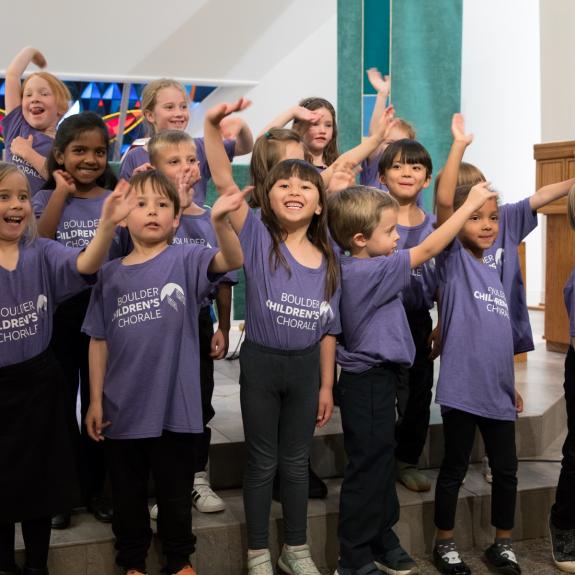
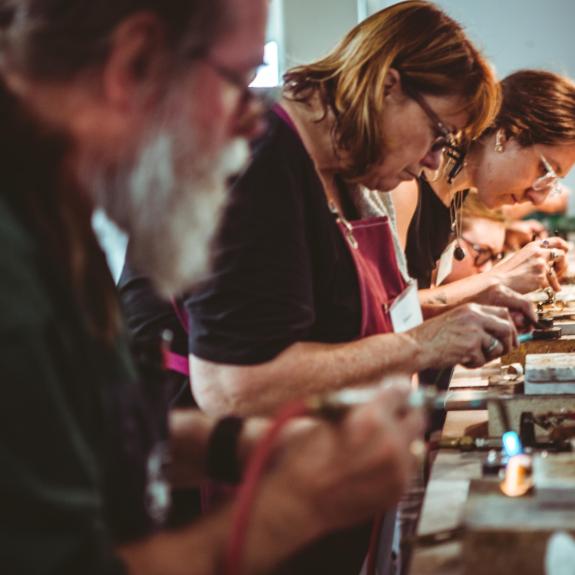
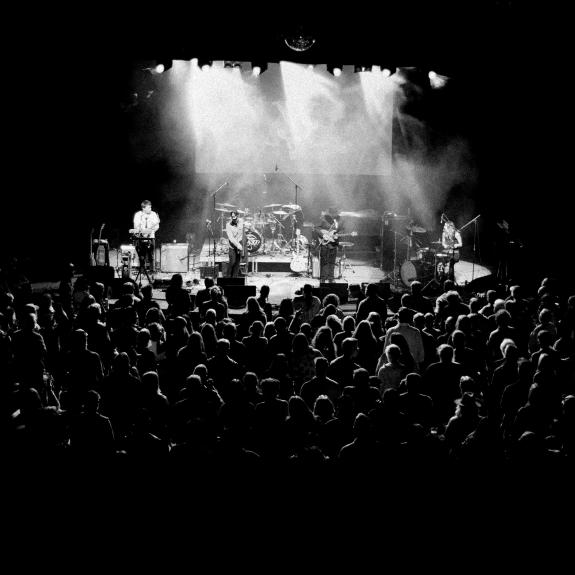
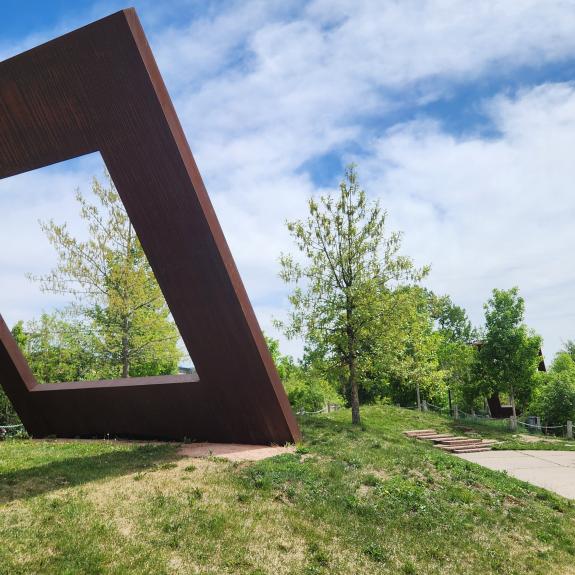
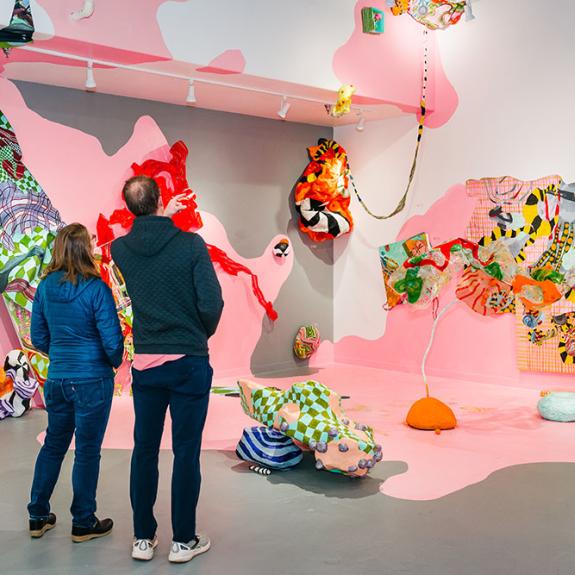
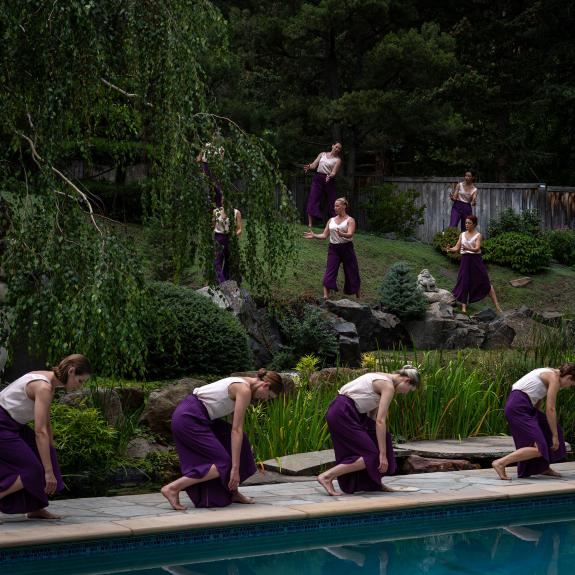
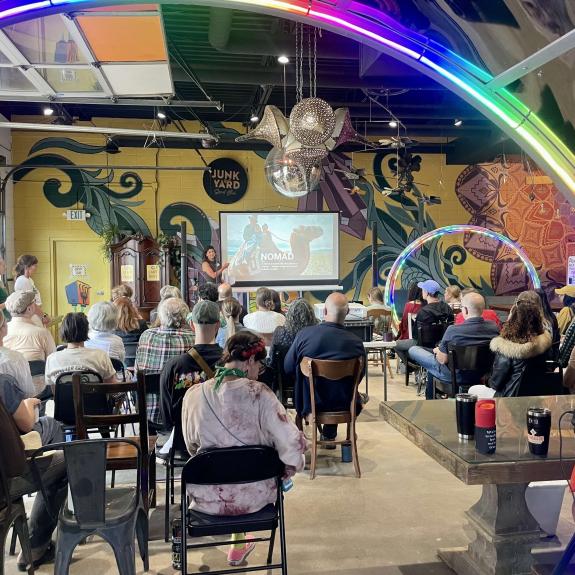
Creativity energizes and renews Boulder's spirit. It is central to the city's sense of self, to its quality of life, to its global reputation.
Here, the arts are supported and seen; here, culture threads the fabric of everyday life. Here, talent is nourished, cultural heritage honored, and risk-taking embraced.
Big Ideas
Throughout the Arts Blueprint planning process, a wide range of ideas surfaced—spanning long-term aspirations and highly targeted, near-term interventions. These varying scales of opportunity and need are reflected throughout the recommendations that follow.
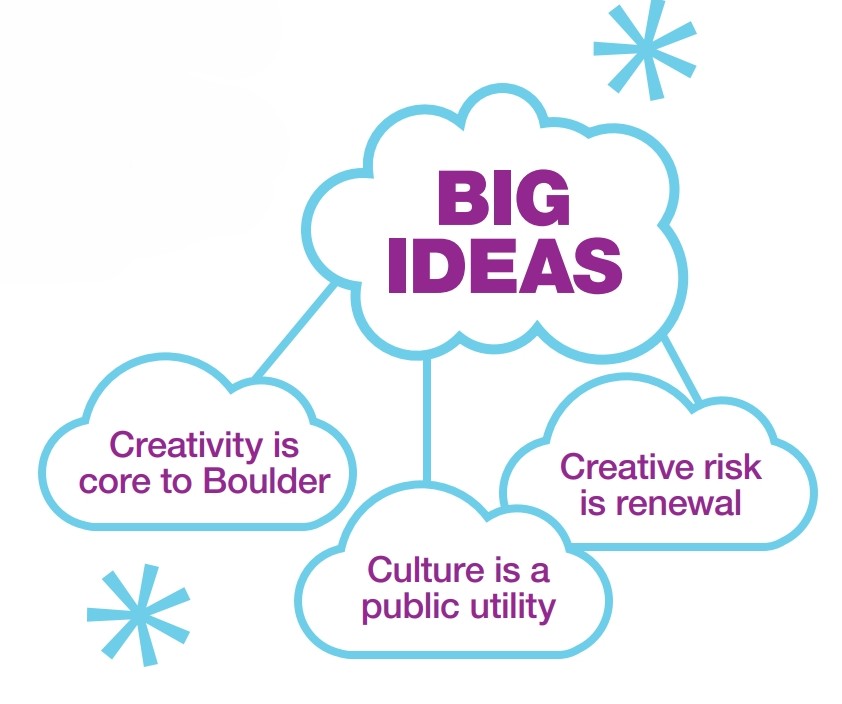
Across conversations, policies and proposed actions, three consistent themes emerged. These “big ideas ” are embedded in the Arts Blueprint’ s vision, reinforced through multiple policy strategies and woven throughout the recommendations:
Creativity is core to Boulder.
Creative risk is renewal.
Culture is a public utility.
Creativity is core to Boulder.
Boulder defines itself as a place that welcomes and encourages creativity. For Boulder to maintain this reputation, the Arts Blueprint strengthens the cultural function across municipal government and positions cultural expression as a policy and economic priority.
Arts Blueprint recommendations include:
Elevate culture within the city’s organizational structure, through the newly-established Office of Cultural and Economic Development.
Integrate culture into decisions around planning and development, housing, parks and open space, transportation and tourism.
Build cultural capacity through municipal funding, partnerships with philanthropy and the private sector and citywide advocacy.
Creative risk is renewal.
To stay relevant, Boulder’s culture must continuously renew itself. Creative risk-taking – incentivized by the public sector and prioritized by institutions – is at the forefront of policy and funding recommendations issued in the Arts Blueprint.
Arts Blueprint recommendations include:
Prioritize support for emerging artists, small creative entrepreneurs and innovative organizations to experiment.
Invest in cultural “scenes” where multidisciplinary talent is nourished and professional connections are made.
Expand partnerships with workforce development and creative skill-training.
Celebrate new, imaginative work through the city’s communications and in external media channels.
Strengthen creative market economy to ensure opportunities for artists to present and market new work.
Culture is a public utility.
Boulderites participate in cultural experiences in their daily lives – not only on special occasions. The Arts Blueprint expands the definition of culture and provides tools for advocates and policymakers to integrate culture into the fabric of Boulder communities.
Arts Blueprint recommendations include:
Invest in community-based cultural infrastructure and programming in parks, main streets and other public venues.
Utilize available tools to preserve affordable creative space.
Incentivize partners to develop accessible cultural programming.
Support creative districts through resources and additional facilities.
What Could This Mean For You?
The Arts Blueprint is not just a government-facing document – it has implications for practicing artists, the nonprofit cultural sector and Boulder communities.
What does the Arts Blueprint mean for artists?
More opportunities, funding, affordable spaces to create
Easier to navigate city systems
Stronger partnerships, networks, shared resources
Opportunities for business support
Part of a more sustainable creative ecosystem
Your voice is part of Boulder’s identity
What does the Arts Blueprint mean for non-profits and partners?
More stable resources
Stronger partnerships with the city and other sectors
Easier navigation of city processes
Stronger, more sustainable cultural venues
More visibility of your organization’s impact
What does the Arts Blueprint mean for businesses?
Stronger creative economy that supports local jobs and entrepreneurship
More partnerships between businesses, creatives and cultural organizations
Increased foot traffic and vibrancy in commercial areas through arts activity
Opportunities to activate vacant or underused spaces creatively
Clearer pathways to work with the city on sponsorships, placemaking and events
Arts and culture as a tool for talent attraction, retention and quality of life
What does the Arts Blueprint mean for community members?
More arts, culture and creativity where you live and spend time
Affordable activities
Easier access to programs, events and information
More welcoming, inclusive opportunities
More youth and family-friendly activities
A more creative, interesting city
Big Win: Office of Arts and Culture Within the Office of Cultural and Economic Development
In 2026, the Boulder City Manager’s Office structured a new division called the Office of Cultural and Economic Development. The new Office combines arts and culture, business support and economic development. The restructuring accomplishes two related outcomes: first, it elevates cultural function within the municipal hierarchy and, second, it ties culture to economic decisions and recognizes the important role our creative community plays in our local economy and vibrancy.
As noted in the Discovery section of the Boulder Arts Blueprint, the Office of Arts and Culture will increase its efficacy and build stronger capacity when elevated in the municipal hierarchy. (1)
Highlight: Arts and Culture Infrastructure
Boulder’s arts sector is a major contributor to the city’s cultural identity and economic vitality, but a lack of affordable, stable and purpose-built creative space continues to limit its growth. Findings from the Boulder Arts Blueprint, 2025 Venues Study and Cultural Asset Map show that rising costs, limited availability and redevelopment pressures are pushing artists and organizations out of traditional creative spaces, with many forced to work from home, seek opportunities outside Boulder or cancel projects entirely. At the same time, strong community support and city policy direction underscore the importance of investing in arts and cultural infrastructure as essential civic infrastructure. The draft Boulder Valley Comprehensive Plan and the Arts Blueprint together call for targeted investments in affordable creative spaces, cultural venues, adaptive reuse projects, public-private partnerships and policy tools that integrate arts and culture into broader economic development, neighborhood vitality and community well-being strategies. Through these efforts, the city aims to strengthen Boulder’s creative ecosystem, expand access to arts and cultural experiences and ensure the arts remain central to the city’s long-term resilience and economic vibrancy.
Each goal in this section is presented as a comprehensive, implementation-ready framework for action. For every goal, the Arts Blueprint articulates the background context that informed its development, the equity considerations shaping its approach, the intended outcomes and a set of clearly defined actions designed to guide execution.
Implementation considerations—including organizational leads, cross-departmental coordination and alignment with the city’s SER Framework and associated key performance indicators (KPIs)—are embedded throughout each goal to support accountability, transparency and follow-through. Collectively, the KPIs provide a shared framework for evaluating implementation progress, identifying areas for improvement and measuring the broader impact of arts and culture on Boulder communities over time. They are designed to support continuous learning as the City and its partners move from planning to action.
While there are key distinctions between the seven goals, all are intentionally complementary and structured as a comprehensive program of work. Many actions advance multiple goals simultaneously, reinforcing the interconnected nature of Boulder's cultural ecosystem. The goals emphasize the vibrancy of the cultural sector and require coordination among multiple stakeholders—from artists and nonprofits to City departments, private partners and philanthropic organizations.
Together the goals underscore what needs to be done while allowing flexibility in how actions are implemented. The Arts Blueprint provides clear direction and shared measures of success, while leaving room to adapt, iterate and respond to evolving community needs as Boulder’s cultural landscape continues to grow and change.
Recognize and nurture organic creative communities and “scenes."
Guide Navigation
You are on the Boulder Arts Blueprint Vision and Goals. Use the card menu below to jump to a different section of the Blueprint, or use the vertical menu on the left to explore the entire plan.