Guide Navigation

Use the card menu below to jump to a different section of the Blueprint, or use the vertical menu on the left to explore the entire plan.

Entrepreneurship and Workforce Goal

Provide resources, programs and training to build pathways for creative enterprises and entrepreneurship.

Solidify the creative economy as a viable career path that pays a living wage. Help creatives build business skills, connect to local and regional markets and fiscally sound enterprises. A stable creative career needs time, focus and freedom to create. However, research confirms that rising costs like rent, healthcare and transportation make this hard in Boulder. During the Arts Blueprint process, artists noted that building a creative career takes shared support, including fair pay, business help, training and access to funding.

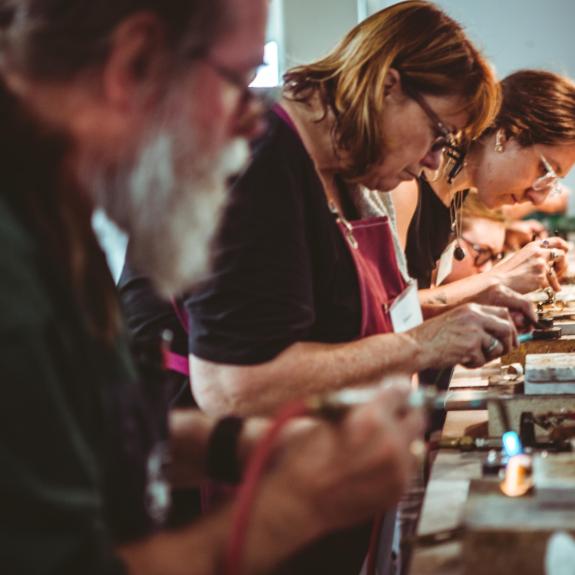
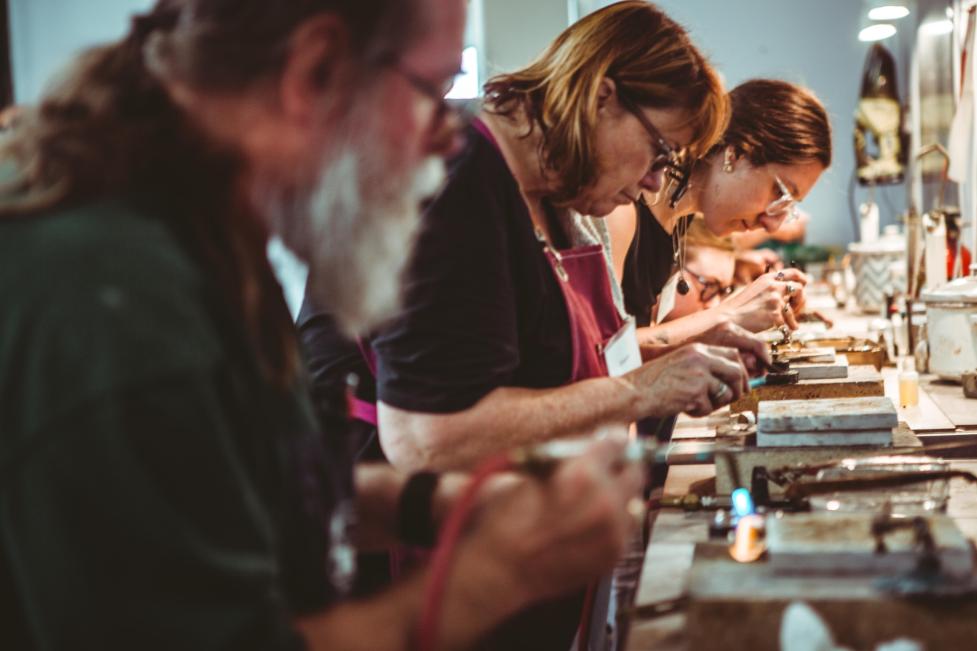
Students taking a metalworking class

Learn More About Entrepreneurship and Workforce

The Boulder Arts Blueprint envisions a community where creative work is a viable, living-wage career. Explore the dropdowns below for details on this goal, along with case studies and big ideas that illustrate how artists and creatives can build sustainable careers.

A sustainable creative livelihood requires a balance of inspiration, discipline and time to work in a creative “flow.” That balance becomes difficult to maintain when basic economic pressures—rent, healthcare, transportation and debt—dominate daily life. Despite the persistent mythology, being a “starving artist” is neither romantic nor productive. Artists and creatives possess highly marketable skills comparable to other service-based professions, yet the business of creativity is uniquely complex. Managing contracts, pricing, taxes, marketing and project-based income often competes directly with the time and flexibility required to create.

Throughout the Boulder Arts Blueprint process, artists consistently emphasized that sustaining a creative career in Boulder is a collective effort. Creatives are often solo practitioners who rely on external support—financial, technical, entrepreneurial and educational—to remain viable. A healthy creative ecosystem depends on equipping artists with the tools and knowledge needed to operate financially sustainable enterprises. The Office of Arts and Culture plays a critical role in demystifying business processes, supporting fair compensation and connecting creatives to training, partners and funding opportunities.

Beyond easing immediate burdens, the Arts Blueprint takes a systems-level approach, recognizing that cultural vitality requires economic success across multiple scales—from individual artists to organizations, venues and creative enterprises. In addition to supporting individual practitioners, the city has a broader opportunity to strengthen and stabilize Boulder’s regional arts market. Engagement revealed a strong public desire for Boulder to serve as a leading arts and culture hub in the Rocky Mountain region. The city is already a strong nucleus of such activity. The Boulder Creative Industries Report found that the concentration of creative employment in Boulder is three times the national average. (4) Other studies revealed that in 2023, cultural nonprofits generated over $62 million in related spending at local restaurants, retailers and hotels. (5) These figures demonstrate that whether serving as employment or enjoyment, arts and culture are not peripheral amenities. Instead, they are proven economic drivers that contribute directly to the city’s fiscal health.

Unlike many seasonal industries, arts and cultural activity supports year-round economic stability. While outdoor recreation remains an important regional asset, it is increasingly vulnerable to climate variability and seasonal constraints. A strong cultural ecosystem, by contrast, is not weather-dependent and contributes to social cohesion, workforce retention and long-term resilience. Despite Boulder’s cultural strengths, the Arts Blueprint process surfaced concern that the city may be losing regional artistic ground, as rising costs push creatives to relocate elsewhere. If Boulder intends to retain and grow its creative economy, it must invest with the same intentionality applied to sectors like biotechnology or aerospace—through coordinated advocacy, policy alignment and regional planning.

Implementation of this goal should recognize that not all creatives have equal access to time, capital, or large professional networks. Efforts should prioritize those who have had limited previous access to resources, including individuals with little or no start-up capital. Programs and supports should be culturally relevant and appropriate, flexible in structure and timing and accessible across languages. This includes valuing the many ways creatives earn a living, such as nonprofit work, gig and contract work, teaching and hybrid career paths, while recognizing creative training, lived experience and talent as valuable and legitimate forms of expertise.

  • Higher education institutions grow reach further beyond the student body
  • Barriers to starting and sustaining creative enterprises and small-scale manufacturing are reduced
  • Creative entrepreneurs have clearer, more accessible pathways to business development, production
  • Artists and makers earn more consistent, living-wage income
  • Boulder’s creative economy becomes more integrated into broader economic development efforts

  • Boulder Convention and Visitors Bureau / Visit Boulder
  • Boulder Public Library
  • Boulder Valley School District
  • Colorado Business Committee for the Arts
  • Colorado Small Business Development Center
  • Create Boulder
  • Downtown Boulder Partnership
  • Higher Education Institutions
  • State of Colorado Office of Economic Development and International Trade

  • Continue programs that support and develop local artists, like the Professional Development and Artist Hiring grants
  • Conduct research on the hyper-local scale to understand the needs and experiences of Boulder artists (Artist Census, Boulder Creative Industries Report)

  • Streamline permitting process and associated costs to better support small businesses, including artists and creative enterprises
  • Improve city navigation, coordination and technical assistance for artists and creative enterprises
  • Establish and promote standard working rates for artists
  • Incentivize co-location of artists, makers and creative businesses within commercial corridors and innovation hubs
  • Expand access to fabrication, prototyping and production facilities through shared-use agreements and subsidized access
  • Establish and promote standard working rates for artists
  • Provide creative upskilling and business training programs focused on finance, marketing, digital tools and entrepreneurship
  • Develop paid apprenticeships and residencies connecting creatives with fabrication labs, studios and industry partners, prioritizing intergenerational skill transfer
  • Create more ways for artists and creative businesses to sell their work through pop-ups, fairs, mobile markets and business partnerships
  • Expand financial tools such as micro-grants, loans and investment incentives to help creatives launch and scale sustainable enterprises
  • Develop a unified “Only in Boulder / Made in Boulder” creative enterprise campaign that elevates local artists, makers, cultural organizations and creative businesses through coordinated branding, promotion and citywide visibility
  • Promote creative livelihoods as viable, living-wage careers through research, storytelling and policy advocacy
For over 50 years, Canada has had a legally binding minimum rate for artists. Public institutions are required to pay said rates when exhibiting or commissioning work. They are enforceable standards under Canadian copyright law. Rates are adjusted annually to reflect cost of living increases.

Fees are also differentiated based on the type of activity (exhibition, commission, lecture, etc.), the length of project, the reach of the audience and the size of the client (an institution vs. a local center). The rate also includes compensation for unseen creative labor (research, installation, consultation), intellectual property rights and the professional expertise and reputation. Working artists, national museums and funders are consulted during the crafting of rates.

The program sets clear minimum wage standards for both the client and artist. It signals Canada is a country that invests in artists seriously. It also compensates artists for not just their direct labor hours, but the cultural capital their work creates.

Adopting a standard working rate—especially for city-funded projects—would strengthen Boulder’s creative economy and reinforce trust between the public and private sectors. For the OAC, this policy becomes a diplomatic tool: signaling Boulder’s values to artists, partners and international collaborators while ensuring ethical participation in cultural exchange.

There is a persistent sentiment that artists are being priced out of Boulder due mainly to increasing cost of housing and studio space. The data supports some of these sentiments, but tells a more nuanced and holistic story.

Boulder’s Artist Census (conducted in both 2019 and 2025) found that the number of artists residing within city limits has decreased only 1.5%. (6) Thus, the number of artists living within the city limits has remained relatively stable over the last 6 years (70.2% -68.7%). (7) Those that live in Boulder are invested in the community. About half of them have lived in the city for more than 15 years. However, this data does not capture artists who may have moved out of the city nor is able to ask why they may have done so.

The data points to signs that it is growing harder to be a working artist in the city. Boulder’s Creative Industries Report finds there has been a 7% drop in creative jobs between 2022 and 2024. (8) Financial strain is real. The median household income for artists is about $62,500, which is approximately $24,000 less than Boulder’s median income ($87,000). (9)

In Boulder, artists note that their average income from artistic pursuits is under $19,000. (10) This is under the national average for art and design occupations. This means that of an artist’s total income, only about ⅓ is from artistic pursuits. 80% of artists who responded to the survey note needing to find additional income streams to support.

This data verifies heard sentiments. Artists find it harder to make a living doing their art. While creative employment is still high in Boulder, (in fact, three times the national average per capita) jobs within the arts are decreasing and offering lower wages. Artists are invested in staying in the city, but cost is a large burden. It is difficult, especially for younger artists to set roots, creating a missing “next generation” that is necessary for a generative ecosystem.

The Wyoming Innovation Partnership (WIP) is a statewide initiative that aligns higher education, industry and government to strengthen workforce development, entrepreneurship and innovation. Its programs support advanced manufacturing, makerspaces, digital skills training, startup incubation and business formation, creating a coordinated system that helps entrepreneurs launch and scale enterprises while meeting regional workforce needs.

For Boulder, WIP offers a compelling model for how a community can integrate training, fabrication resources and industry partnerships into a unified creative-economy pipeline. Adapting elements of this approach would help Boulder build clear career pathways, expand support for creative entrepreneurs and connect artists, makers and creative businesses to the broader innovation ecosystem.

The North Bennet Street School (NBSS), in Boston is one of the nation’s premier craft and trade schools, offering rigorous, hands-on programs in instrument making, repair and preservation. In addition to its renowned Piano Technology program, which trains students in tuning, maintenance and full restoration, NBSS is also home to one of the few Violin Making and Repair programs in the county. Here, students learn precision woodworking, acoustics, historic preservation and fine craftsmanship.

The North Bennet Street School (NBSS), in Boston is one of the nation’s premier craft and trade schools, offering rigorous, hands-on programs in instrument making, repair and preservation. In addition to its renowned Piano Technology program, which trains students in tuning, maintenance and full restoration, NBSS is also home to one of the few Violin Making and Repair programs in the county. Here, students learn precision woodworking, acoustics, historic preservation and fine craftsmanship.

NBSS offers a strong model: it shows how specialized, craft-based training can lead to living-wage creative careers and viable small businesses. By supporting similar skill-building pathways-especially those tied to fabrication, repair and technical arts-Boulder can help creatives develop marketable expertise and entrepreneurial opportunities.

Goals