Guide Navigation

Use the card menu below to jump to a different section of the Blueprint, or use the vertical menu on the left to explore the entire plan.

Nonprofits and Institutions Goal

Amplify the impact of the nonprofit cultural sector to strengthen partnerships and collaboration.

Broadcast and promote the consequential work of non profits to entice greater financial investment and resource sharing. There are nearly 300 arts, culture and humanities organizations in the Boulder area, supporting jobs, income and millions of dollars in local spending and tax revenue. This goal focuses on building stronger partnerships by improving coordination, encouraging collaboration and using tools like updated grant guidelines, creative financing and philanthropy to help organizations work together and more effectively.

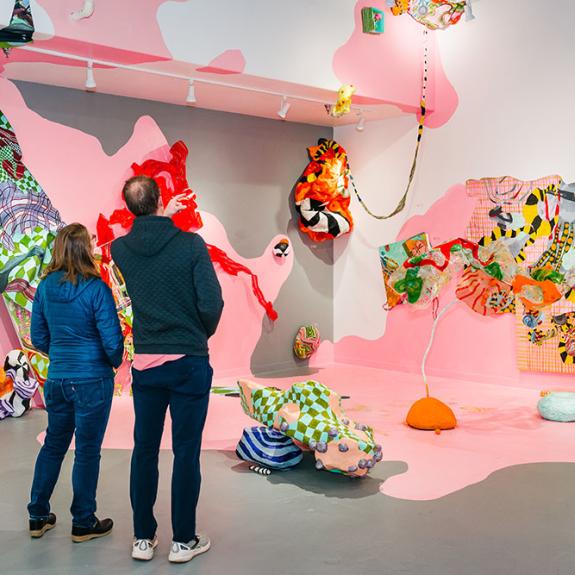
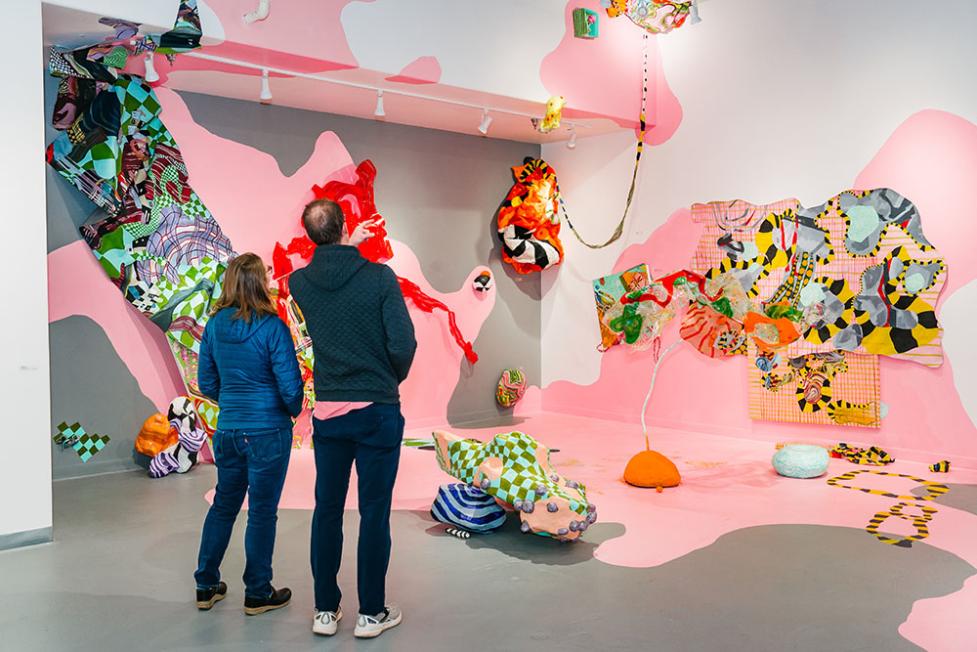
Attendees of a gallery admiring abstract work on a wall

Learn More About Nonprofits and Institutions

The Boulder Arts Blueprint supports a connected and resilient cultural sector, where nonprofits and institutions work together to expand impact and sustainability. Explore the dropdowns below for details on this goal, along with case studies and big ideas that highlight what’s possible through collaboration.

There are 296 arts, culture and humanities organizations in the greater Boulder metro area. (17) These organizations provide not only valuable events and programs, but livelihoods to many. Arts & Economic Prosperity 6 (AEP6), one of the leading national studies in the economic and social impacts of arts and cultural industries, quotes City of Boulder nonprofit organizations alone as providing more than 1,711 jobs and $51.6 million in personal income. (18) In addition to serving as employers and cultural producers, cultural organizations generated $13.3 million in local, state and federal government revenue and spent an estimated $53.5 million in 2022. (19)

Yet discovery conducted through Boulder Arts Blueprint Phase I found that while the nonprofit sector contributes to the region’s economy, there is an atmosphere of resource scarcity. This results in a lack of collaboration and a need to incentivize creative partnerships.

This goal reflects the principle that lasting impact is achieved through collective effort. Throughout community engagement, participants consistently expressed a desire for stronger, more coordinated collaboration among organizations, culture bearers, funders and institutions. Many noted that it is difficult to stay informed about ongoing initiatives and to identify where partnerships could naturally and effectively emerge. Finally, in the findings, 93% of respondents agree or strongly agree about increasing support for nonprofit arts & cultural organizations.

Part of strengthening collaboration and cooperation includes an analysis of the current municipal grant system. Phase 1 of the Boulder Arts Blueprint identified ways the existing funding structure could better suit Boulder’s cultural ecosystem and SER goals. One of these recommendations included identifying “bedrock institutions,” or groups that are anchored within the sector regardless of the size of their budget, staff or legacy. Next, the grant catalogue would expand the portfolio and emphasize impact-based funding through the larger bedrock grants, general operating support grants and innovation grants. These would underscore SER goals like climate initiatives, equity and accessibility through collaboration and strategic funds encouraging access, experimentation and audience development.

The Arts Blueprint outlines tools – such as a revision of the city’s grant guidelines and greater engagement with private philanthropy – to encourage collaboration and stability across and beyond the sector.

Learn more about grant analysis and recommendations.

Implementation of this goal should recognize that small and emerging organizations are often the most capacity-constrained, even as they deliver meaningful and high-impact work. Efforts should focus on building organizational capacity, encouraging collaboration and reducing administrative burden. This includes supporting fair pay for arts administrators and behind-the-scenes roles to promote stability and sustainability. Decision-making processes should reflect diverse perspectives and access to funding should be straightforward and inclusive, including language access and clear guidance throughout the application process.

  • Nonprofits collaborate more regularly and strategically.
  • Nonprofits and institutions are more stable and sustainable.
  • Boulder’s cultural sector speaks with a stronger collective voice.
  • Audiences and funders better understand the full scope and impact of the nonprofit cultural ecosystem.
  • A defined cohort of “Bedrock” cultural institutions provides stability, leadership and shared accountability for the sector.
  • Peer learning and shared services strengthen organizational resilience.

  • Americans for the Arts
  • Boulder Chamber
  • Boulder Conventions and Visitors Bureau / Visit Boulder
  • Boulder County Arts Alliance
  • City Departments such as: Communication & Engagement, Facilities & Fleet, Office of Cultural and Economic Development
  • Community Arts Stabilization Trust (CAST)
  • Community Foundation Boulder County
  • Create Boulder
  • Grantmakers in the Arts
  • Latino Chamber of Commerce Boulder County
  • Local nonprofits, independent venues and private businesses
  • Philanthropy Colorado
  • Private developers and commercial landlords

  • Track the health of funded organizations through time
  • Conduct an annual review of grant programs to ensure grants remain relevant, easy to access and meaningful
  • Continue and participate in sector research initiatives, such as Arts & Economic Prosperity studies
  • Consolidate current grant portfolio into four tiers: Bedrock grants, General Operating Support, Innovation grants and Strategic Funds
  • Continue and expand capacity-building and peer-learning sessions where nonprofits share expertise and receive professional development support
  • Institute a more competitive grant program for anchor cultural institutions with higher award amounts and elevated expectations for collaboration, innovation and public impact

  • Encourage development of new infrastructure for arts and cultural use and support the maintenance and sustainability of existing nonprofit cultural facilities
  • Establish an annual report articulating the state of the cultural sector. Pair annual report with a public convening highlighting shared impact and collaboration
  • Strengthen relationships with key cultural organizations, creative districts and regional arts alliances to coordinate programming, messaging and sector priorities
  • Create a shared / publicly accessible cultural data dashboard tracking participation, collaboration, equity and sector-wide outcomes
  • Support and convene philanthropic organizations and cultural partners to advocate for increased funding dedicated specifically to cross-organizational collaboration and innovation
  • Prioritize and reward collaborative grant proposals to encourage co-designed programs and shared resources across nonprofits. Underscore projects that support climate adaptation, awareness and resiliency
  • Develop shared administrative and backbone service models—such as pooled HR or bookkeeping—for small nonprofits
In the fall of 2025, the Trump administration terminated the CDFI fund in the U.S. (20) Last year, this fund provided $789 million to national CDFIs, granting $500 million in CFDI-issued bonds and allocating $5 billion in tax credits. (21) As of February 2025, Colorado received $237 million from the CDFI Fund. (22) While none of Colorado’s 19 CDFIs are based in Boulder, the city’s entrepreneurs, housing, transportation and non profit partners can access state-wide funds.

As mechanisms such as CDFIs wane, community foundations are uniquely positioned to step in and address emerging financing gaps. In addition to critical community knowledge, local community foundations are well suited to reimagine how capital is allocated and deployed. They have the ability to expand beyond traditional grantmaking to include tools such as low-interest loans, recoverable grants and other debt-based financing instruments.

The Arts Blueprint does not call for a single organization to shoulder this responsibility alone. Instead, it advances a coordinated approach in which multiple philanthropic partners in Boulder collaborate to establish a CDFI-like fund—one designed to meet the leasing, lending and business development needs that creative enterprises continue to face.

The Parlando School of Musical Arts provides vocal and instrumental lessons, performances and outreach for Boulder-based adults and youth. A community staple, they expand music access through tuition assistance, intergenerational programming, neurodiverse-inclusive classes and in-school and on-site lessons.

Parlando’s partnership with Boulder Housing Partners (BHP), the local affordable housing provider, is a fantastic example of how non-profit entities can provide clever connections to expand art participation. Parlando has placed instruments in six BHP properties, providing on-site all ages lessons directly within residents homes, removing two barriers families with limited resources face: affordability and transportation.

In addition to BHP residents having priority access to affordable lessons and classes where they live, BHP locations serve as "satellite" locations, providing non-BHP Boulder community members with access to music education closer to their own neighborhoods. This reduces traffic and commute times and allows Parlando to deepen its impact without having to lease additional space.

Goals