Guide Navigation

Use the card menu below to jump to a different section of the Blueprint, or use the vertical menu on the left to explore the entire plan.

Experimentation and Innovation Goal

Incentivize cutting-edge, innovative and experimental practices.

Boulder champions emerging practices across the changing creative landscape, including the use of technology, artificial intelligence, regenerative practices, contemplative arts and other ideas. Experimentation is a core part of art and creativity, but many people shared that Boulder’s high costs and permitting regulations can make risk-taking harder, especially for youth and new voices. Goal 6 aims for Boulder to be a living lab where artists can explore big issues like technology, climate, wellness and social change.

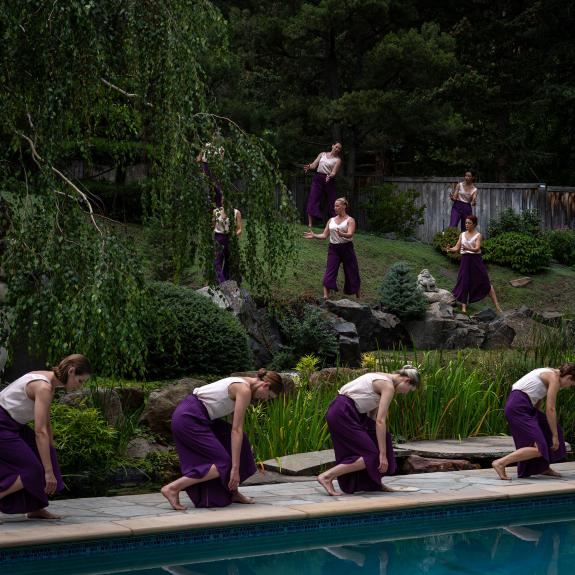
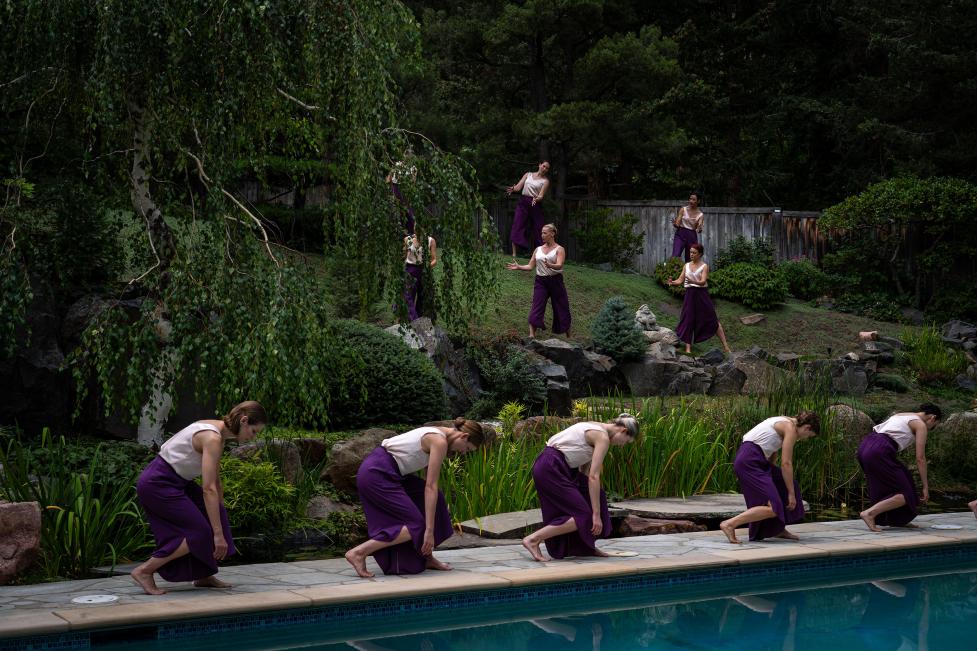
Dancers performing in an immersive nature environment

Learn More About Experimentation and Innovation

The Boulder Arts Blueprint envisions the city as a living lab for creativity, where artists explore new ideas across technology, climate, wellness and social change. Explore the dropdowns below for details on this goal, along with case studies and big ideas that show what’s possible.

Experimentation is foundational to artistic practice. It thrives on curiosity, risk-taking and learning through iteration rather than certainty. Throughout the Boulder Arts Blueprint process, participants consistently described Boulder as a place that values creativity and intellectual exploration, yet also noted a tension between that self-image and current conditions. While Boulder celebrates its “eclectic” countercultural legacy and remains a place where many feel safe expressing difference, the city is also shaped by strong regulatory frameworks, high costs and well-defined norms that can unintentionally discourage bold experimentation. This has led to a perception that while innovation is admired in theory, emerging and unconventional practices—particularly those led by youth, new voices, or cross-sector collaborators—can struggle to find sustained support.

Goal 6 positions Boulder as a “living lab” for creative experimentation, where arts and culture are empowered to engage with the defining questions of our time: technological change, artificial intelligence, climate adaptation, wellness and shifting social norms. Advancing this goal requires explicit permission for risk, including funding models that prioritize artistic process over product, partnerships that embed artists in unexpected sectors and platforms that accept disagreement as part of progress. By strengthening programs that support experimentation, fostering collaborations with higher education, industry and nontraditional city departments and creating pathways for youth and emerging practitioners, Boulder can reclaim its legacy of boldness—not by repeating the past, but by investing in what comes next.

Implementation of this goal should ensure that risk-taking and experimentation are supported through fair compensation and accessible funding, rather than relying on unpaid labor. Experimental work should be approached thoughtfully, avoiding potential harm to communities or the reinforcement of bias and should be authentic to the communities presenting it. Decision-making groups should reflect diverse perspectives. Processes for funding, permitting and participation should be clear and easy to navigate. This goal should also encourage intergenerational exchange and mentorship and include ethical considerations around the use of artificial intelligence and data, with transparency around authorship, labor and the environmental and cultural impacts of new technologies.

  • Higher education, technology and creative sectors collaborate more deeply.
  • Artists and organizations feel supported to take creative risks.
  • Funding models increasingly value process, research and experimentation.
  • Boulder gains recognition as a hub for creative innovation.
  • Youth and emerging creatives actively shape Boulder’s future creative landscape.

  • Boulder Chamber
  • Boulder Conventions and Visitors Bureau / Visit Boulder
  • Boulder County Arts Alliance
  • Boulder Valley School District
  • City Departments such as: Communication & Engagement, Office of Cultural and Economic Development, Parks & Recreation, Transportation and Mobility, Open Space & Mountain Parks
  • Create Boulder
  • Downtown Boulder Partnership
  • Higher Education Institutions
  • Latino Chamber of Commerce Boulder County
  • Local nonprofits, independent venues and private businesses
  • Private developers and commercial landlords

  • Continue and expand the Experiments in Public Art Program to support temporary, participatory and time-based creative activations in public space
  • Offer first-come, first-served micro-grants to provide flexible, low-barrier funding for experimental and emerging creative projects
  • Provide small sponsorships for Boulder Arts Week events, prioritizing new awardees and emerging organizers

  • Create a Creative Residency Program embedding artists within labs, tech firms, climate organizations, wellness centers and arts institutions
  • Support youth-led experimental labs where students explore new creative practices and share emerging cultural trends
  • Partner with an art-sector organization to develop and maintain a comprehensive, cross-disciplinary artist registry representing creators across all genres, practices and career stages in Boulder
  • Provide small grant support for artists and organizations experimenting with high-risk, innovative, or unconventional practices
  • Create matchmaking and incentive programs connecting the outdoor industries like cycling and climbing with local creatives for experimentation, prototyping and storytelling
  • Develop and implement a Citywide Artist-in-Residence program embedding artists within municipal departments to support planning, innovation and public engagement
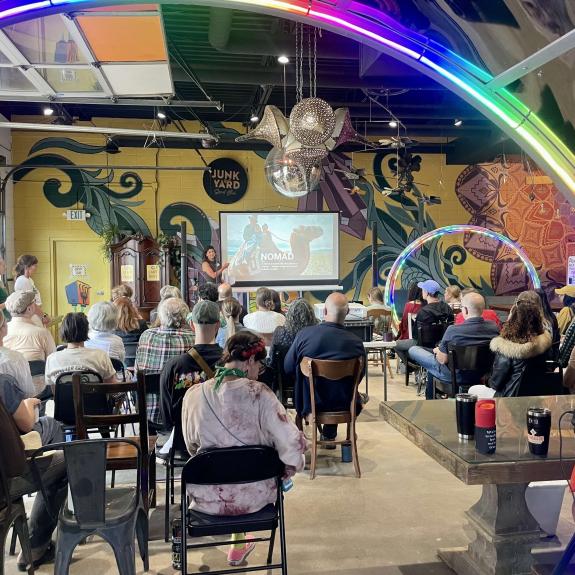
The City of Boulder’s Affordable Commercial Pilot Program was launched to address the city’s rising commercial real estate costs and support small businesses. It provides grant funding for capital improvements and rent subsidies to ensure long-term affordability in Boulder’s commercial corridors. In January 2025, the program awarded more than $840,000 across three projects. (23) These projects were chosen for their anticipated community impact and sustainability, with funding criteria including support for local small business vitality and community connection.

Among the recipients was Top Hat Supply for Journeys, an experimental art nonprofit whose mission is to connect people with their creative spirit. while serving as an artist incubator space. Top Hat Supply sells artisan products, offers affordable studio and gallery space, serves as an artist incubator space and facilitates unique events. It is a connection point for both local and visiting artists.

The grant specifically helped Top Hat Supply revitalize its East Pearl location, making it possible for them to offer their quality programming. By lowering barriers to commercial space access, Boulder’s pilot program demonstrates how municipal funding and policy can intentionally integrate the arts into economic development, neighborhood vibrancy and quality of life initiatives. It ensures that arts-focused enterprises remain central to planning and community growth.

San José, California has positioned itself as a living laboratory for creative experimentation through long-standing partnerships between its Office of Cultural Affairs, local universities and the nonprofit ZERO1. At the heart of this approach is ZERO1’s artist-in-residence model, which embeds artists within technology companies, research labs and civic institutions specifically to explore emerging technologies such as artificial intelligence, robotics, data ethics and human–machine interaction.

Rather than prioritizing finished artworks, these residencies emphasize process, inquiry and risk-taking. Artists prototype ideas, challenge assumptions and collaborate across disciplines in environments traditionally reserved for engineers and scientists.

This model has helped San José align its identity as the capital of Silicon Valley with a more human-centered narrative—one that recognizes artists as critical contributors to innovation, not just cultural producers. By explicitly accepting uncertainty as part of progress, the city has fostered deeper collaboration between higher education, the tech sector and the arts. The ethos of the “living lab” is felt as youth, emerging practitioners and unconventional voices are supported to test new ideas. The city itself has gained recognition as a hub for the intersection of technology, culture and civic life. San José’s experience demonstrates how municipal leadership, flexible funding models and cross-sector partnerships can transform a city’s arts landscape into a platform for experimentation.

Scout LLC is a young, women-led development team changing the game in Philadelphia. In 2014, as the City moved to sell nearly two dozen closed public schools to address declining enrollment and an $80 million budget deficit, Scout emerged as an unlikely but compelling steward. Following an open auction process, the Philadelphia Industrial Development Corporation (PIDC) and the School Reform Commission selected Scout to acquire the Edward W. Bok Technical High School. Scout purchased the building for $1.75 million, financing the project through a complex blend of New Markets Tax Credits, federal historic tax credits, bank capital, private investors including The Knight Foundation and partners such as PIDC and The Reinvestment Fund.

The eight-story, 340,000-square-foot Art Deco landmark—now known simply as Bok—occupies an entire city block and has since been transformed into a thriving creative hub. Drawing on the building’s vocational past, Scout preserved and adapted its original infrastructure: the wood shop remains a woodworking space, classrooms and storage areas have become studios and the gymnasium and auditorium serve new community functions. As of 2024, Bok is home to more than 200 businesses and nearly 700 daily workers. Its rooftop destination, Bok Bar, attracts over 100,000 visitors annually, while events bring in more than 50,000 people each year. Throughout the transformation, Scout has continued to honor the building’s legacy through oral history projects, exhibitions and regular “class reunions” that connect former students with the space’s present-day community.

In 2025, Scout expanded its commitment to artist-centered development by securing Hamilton Hall and Furness Hall—historic University of the Arts buildings placed on the market after the university’s sudden closure. With strong community backing, Scout proposed preserving the buildings’ fabrication, metalworking, ceramics and workshop spaces while converting former dorm rooms into micro-units and residency housing for artists. The project responds directly to Philadelphia’s growing affordability crisis for live-work creative spaces, ensuring these landmark buildings remain centers of artistic production rather than luxury redevelopment.

Goals