Guide Navigation

Use the card menu below to jump to a different section of the Blueprint, or use the vertical menu on the left to explore the entire plan.

Scenes and Affinities Goal

Recognize and nurture organic creative communities and “scenes."

Encourage dynamic, informal communities of affinity or practice such as nightlife, Burner, gallery hopping, happy hour, all-ages culture and more. Scenes grow naturally when people with shared interests find each other and build culture together, often in informal and low-cost spaces. They depend on small venues, flexible rules and affordable places to gather and they can fade when costs rise, rules are too strict, or attention turns them into tourist products. This goal calls for more flexibility in city rules and spaces so existing scenes can thrive and new ones have room to emerge.

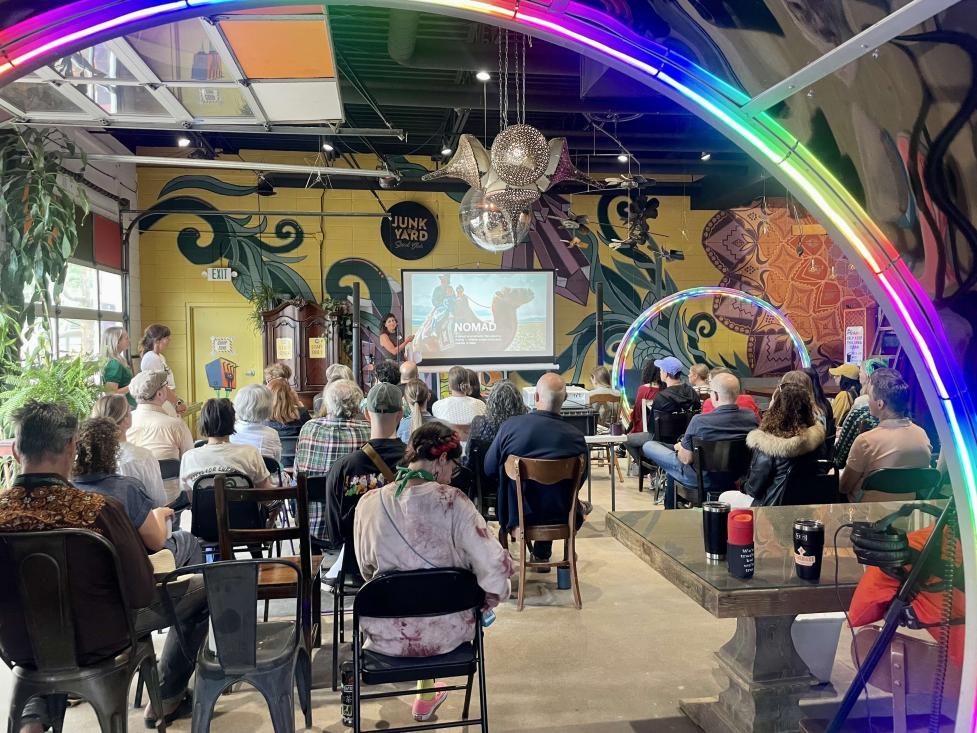
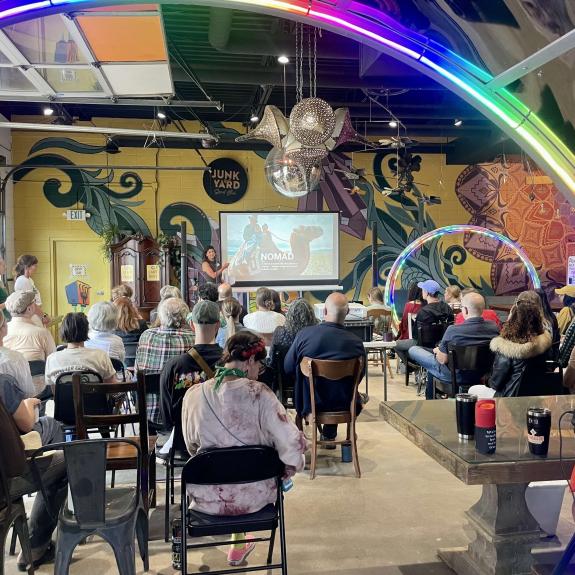
Artists gathered to listen to a speaker

Learn More About Scenes and Affinities

The Boulder Arts Blueprint recognizes that creative “scenes” grow naturally when people come together around shared interests and identities. Explore the dropdowns below for details on this goal, along with case studies and big ideas that show how these communities can thrive.

By their very nature “scenes” are often organic and spontaneous. They arise somewhat unintentionally, as people with a shared mind set find one another and build something new. They are not industries, but cultural communities united around shared affinities – be that of interest, identity, or lived experience.

Despite their flexible definition, “scenes” have shared characteristics. Firstly, scenes are cultural communities, not industries. They are year-round ecosystems, where independent venues, dedicated participants and smaller-scale events make up the whole. As noted in Robin Kuchar’s 2025 article on music scenes and cultural ecosystems, these more minute, interdependent actors are highly vulnerable to shocks like rent spikes or policing changes. Policy that only funds “flagship” spaces and programs miss the smaller critical players that keep scenes alive. (24) Next, they are also deeply rooted in place – where the where is equally as important as the what. They require low to no cost consistent third spaces where people can gather, experiment and build norms and customs. (25) Finally, as soon as “the scene” becomes too mainstream, it loses authenticity and a degree of intimacy. Once marketing and branding strategies highlight these scenes, especially to attract tourists, they become commodified, sterile and no longer “what they used to be.

How then, does a city plan for these extempore communities? And how can they be supported without crushing their vibe?

In Boulder, “scenes” range from the organic to formal. The gallery night scene is a well-loved local staple. All-age activities provide opportunities for families with children to find connection with one another. Burning Man participants pride themselves on their intimate yet decentralized communities. While it is important to foster the successful scenes already within Boulder, it is also critical to create space for new ones to emerge.

Scenes emerge in a flexible environment – where they do because they can. Policy and regulation don’t stifle experimentation and unconventional uses can be tested. Public space allows for informal gatherings. There are affordable commercial spaces and communal ownership is a possibility. Small venues must survive if scenes are to thrive, especially those that are semi-legal and informal. Ironically, such flexibility often needs to be intentionally created.

During the Arts Blueprint process, the team often heard about the inflexible aspects of creating in Boulder. In Phase 1 Alternative Arts focus group (26) artists noted how permitting is a barrier to creating art. Performance and installation artists lamented the inability to find maker spaces on a per-project basis. Not only was it hard to come by warehouse and studio space to create “large, smelly, dirty” art, but often year-long lease terms were incongruent with the natural flows of artistic practice. Community members expressed a desire for a lively night scene where restaurants, bars and venues are open late. There is a strong appetite for affordable, neighborhood family-friendly activities. This is especially pertinent for teens.

For example, Boulder’s Chronic Nuisance Ordinance and decibel sound levels (27) limit acceptable volume levels and can evict repeat sound violators in residential neighborhoods. Well intentioned to limit repeated noise violators (especially in neighborhoods with a heavy student population), these restrictions could limit dynamic night-time uses outside of the downtown.

The Arts Blueprint takes cues from successful interventions in other cities that have actively invested in scenes and affinities. For example, in Boston, Massachusetts, a “Night Mayor” position serves this need. This role often focuses attention on integrating zoning changes, liquor licensing and sound ordinances to neighborhoods. The role(s) can provide support to venues for recruiting performers and facilitating partnerships between local art organizations. The positions would also broker between nightlife entities, police and transit. Goal 7 encourages the OAC and the city itself to reevaluate some of its formal mechanisms to see if they hinder or promote the desired vivacity.

Implementation of this goal should focus on making the city more welcoming through both physical spaces and staff practices. Care should be taken to avoid over-monitoring or over-regulating spaces that are intentionally designed as places of relief, expression, or gathering. Belonging can look very different across cultures and communities and does not need to conform to outside expectations to be valid. Efforts should consider which types of spaces are currently missing, what communities have expressed a desire for and whose voices shape the spaces that exist today, with funding and decision-making aligned to reflect those insights.

  • Boulder’s creative subcultures and informal scenes are recognized, supported and able to thrive.
  • The next generation of creatives is actively fostered.
  • Boulder’s nighttime economy grows in a balanced and intentional way.
  • Regulatory barriers to cultural activity such as sound limits, service times and permitting complexity are modernized.
  • Affordable and flexible spaces for creative activity increases.

  • Boulder Chamber
  • Boulder Conventions and Visitors Bureau / Visit Boulder
  • Boulder County Arts Alliance
  • Boulder Valley School District
  • City Departments such as: Communication & Engagement, Office of Cultural and Economic Development, Parks & Recreation, Transportation and Mobility, Open Space & Mountain Parks
  • Create Boulder
  • Downtown Boulder Partnership
  • Higher Education Institutions
  • Latino Chamber of Commerce Boulder County
  • Local nonprofits, independent venues and private businesses
  • Private developers and commercial landlords

  • Advance Comprehensive Plan and land-use reforms that increase flexibility for cultural and creative uses
  • Offer first-come, first-served grants that provide accessible, low-barrier funding to support grassroots organizers, emerging scenes and informal cultural activity
  • Support Boulder Arts Week and other citywide festivals that promote art in all its forms, while creating space for informal, all-ages and scene-driven programming

  • Support DIY and alternative spaces with compliance help, safety resources and partnerships with established venues
  • Incentivize unique venues—cafés, breweries, trails, parks and open spaces—as informal cultural stages for pop-ups, screenings, performances and all-ages gatherings
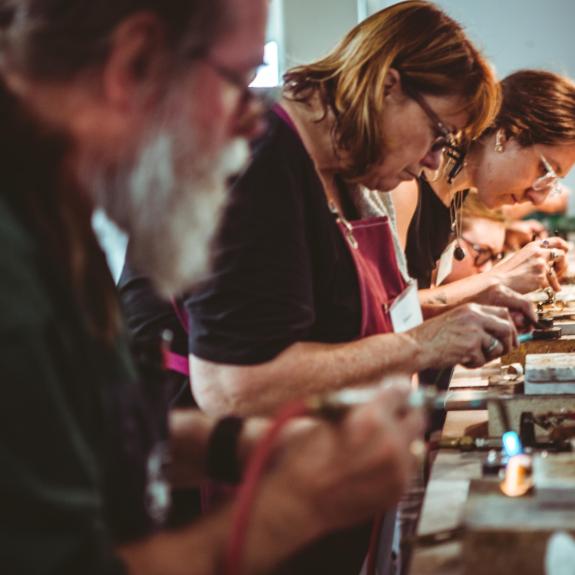
  • Create short-term creative lease programs offering temporary manufacturing, rehearsal, or studio space for emerging scenes and collectives
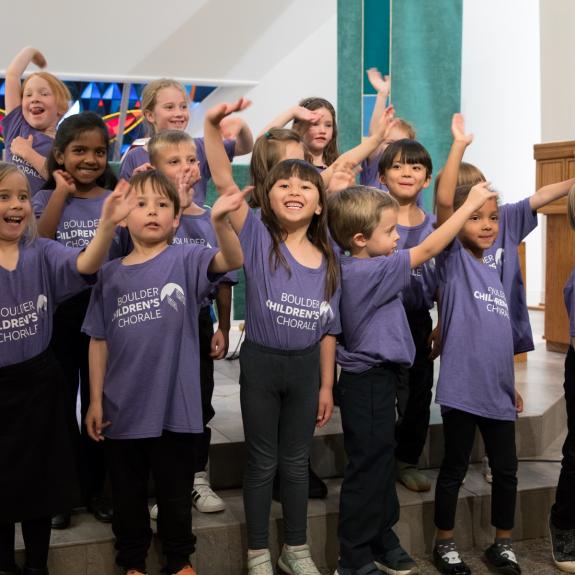
  • Support all-ages cultural participation by identifying and supporting venues that can host music, dance, open mics, fairs and youth-organized events
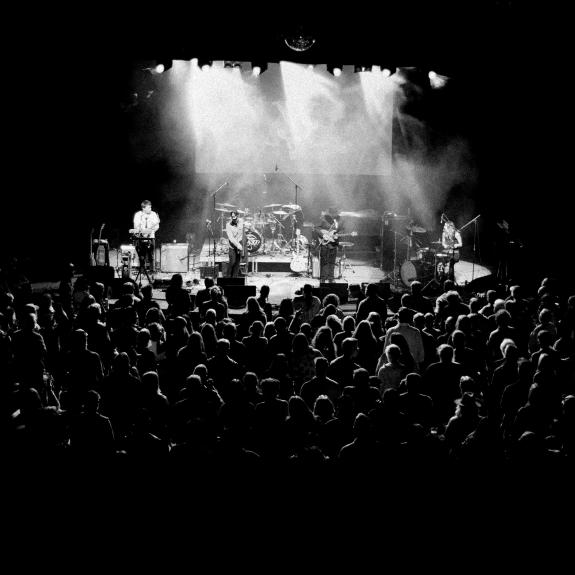
  • Encourage opportunities for after-hours entertainment such as late-night pop-ups, makers markets, silent discos and youth-exclusive events
  • Encourage creative co-operatives by offering distinct funding, licensing preference, or creative finance models for cooperative cultural spaces
  • Launch a Creative Scenes Micro-Grant Program to support grassroots organizers, DIY collectives and niche creative communities
  • Modernize sound and nightlife policies by identifying zones, adopting cultural overlays, easing certain noise restrictions and incorporating sound-mitigation in venue approvals
  • Establish coordinated nighttime program that supports nightlife entertainment, creative scene growth and cross-department coordination

Berlin, Germany. Berlin created a Soundproofing Fund (Schallschutzfonds) to bring venues up to acoustic control standards. This fund is particularly helpful to younger event spaces and those in gentrifying neighborhoods.

The city has also instituted Clubcommission, an organization which brokers between night club / music venues and city government. Clubcommission aims to protect the city’s beloved club culture, offering conflict mitigation between venues, neighbors, law enforcement and politicians. They execute their own “Awareness Academy,” and organize “workshops and roundtables for young event organisers.” The group aims to minimize punitive enforcement to collaborative conflict-resolution. They serve as a body of the scene, yet still legible to government and enforcement agencies.

San Francisco, CA. The San Francisco Entertainment Commission right sizes noise restrictions to each individual venue and unique urban fabric. Each business is provided a unique volume standard, which is written into the business license. Penalties occur if this specific number is violated.

This standard is devised by reviewing adjacent property uses, the building’s age and condition and measuring ambient noise levels. Staff then ask venue owners to play music at their typical operating volume, re-measuring how much these levels are above ambient levels.

With buildings in Nashville, Philadelphia and the Bronx, Kreate Hub is a creative co-operative space born out of a desire for both community and affordability. Artists partnered together to co-rent a versatile warehouse space, offering membership for financial sustainability.

Kreate Hub also offers flexible membership models. The Nashville location has membership commitments as short as 5 months. As members, creatives have access to marketing and branding consultants, the ability to list work on an online store and low barrier exhibition opportunities. As Kreate Hub locations include their own gallery spaces and host a plethora of events, artists can build both exhibition experience and professional networks. Locations offer a blend of private and communal work areas, providing work spaces at various budgets.

The Steel Yard is a nationally recognized production space that provides access to industrial-scale tools, materials and infrastructure. Housed in a former steel fabrication facility, The Steel Yard supports practices that are loud, smoky, heavy and materially intensive and often unable to be executed in traditional studio spaces. It specializes in blacksmithing, welding, ceramics, large-scale sculpture and metal fabrication.

The Steel Yard functions as a civic and cultural asset, ensuring that artists working in “disruptive” or sensory-intensive media remain integrated into the city rather than pushed to its margins. The facility offers courses and hosts a yearly sculpture-melting festival that is a huge local draw.

The site is also an example of how industrial uses can be protected amidst gentrification. The Steel Yard is in an area of Providence undergoing gentrification and adaptive reuse. While some of factories are being converted to housing, many nearby spaces are transitioning to modern forms of industry – a brewery, distillery and former textile machine mill during artist studios.

The land upon which The Steel Yard sits remains city-owned. It was provided to an artist collective through a public-private partnership and long-term lease structure. Thus, the partnership was initially appealing as it allowed the city to retain ownership of the parcel, while supporting creative economies and preventing vacancy of the factory.

The Steel Yard demonstrates that protecting loud, messy and materially intensive art practices in a gentrifying city requires intentional policy choices, not just good intentions. Land ownership structure, zoning compatibility and public-benefit framing all matter. Most importantly, it shows that cities can plan for creative production that is not “polite” or easily commodified—and still maintain community trust and political support.

Goals