Guide Navigation

Use the card menu below to jump to a different section of the Blueprint, or use the vertical menu on the left to explore the entire plan.

Public Art and Public Space Goal

Expand public art and creative expression across public spaces.

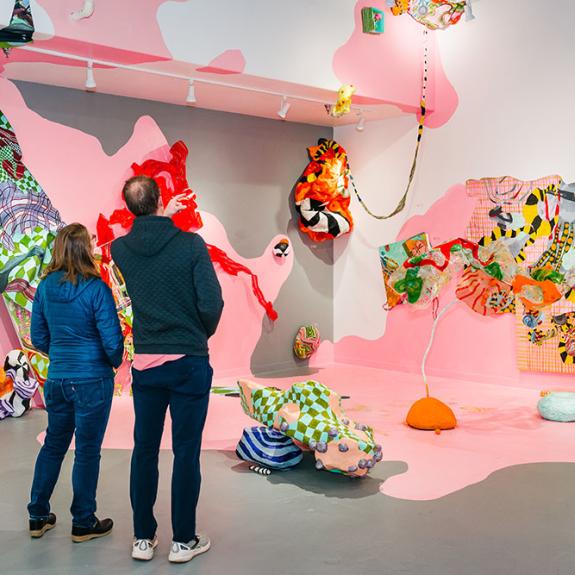
Public spaces are viewed as canvases, stages and playgrounds for artistic production and cultural events. Public art shows what a community values and brings shared spaces to life. Boulder is dedicated to public art through policies, dedicated staff and a Percent for Art program. Community input shows that community members want public art to include more than permanent pieces. They are interested in performances, events and interactive experiences in everyday public places.

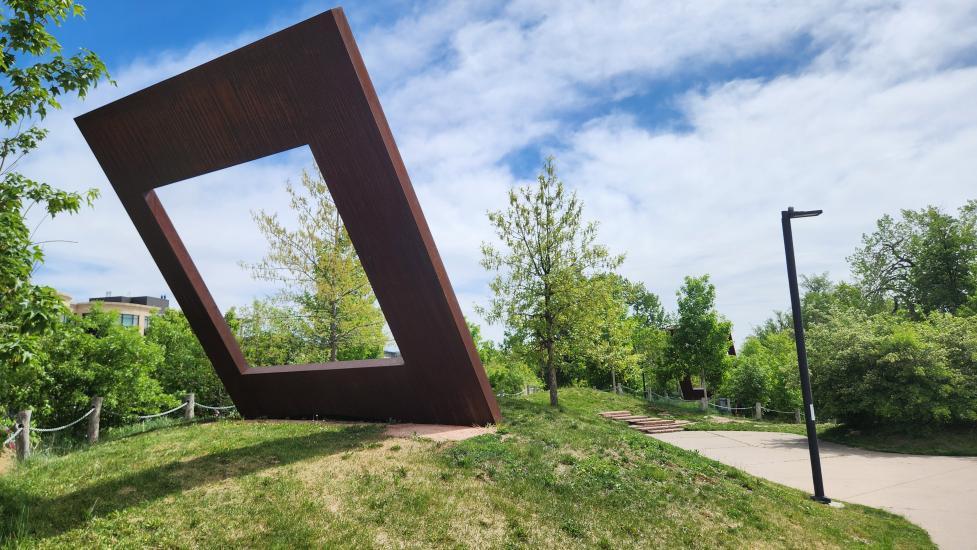
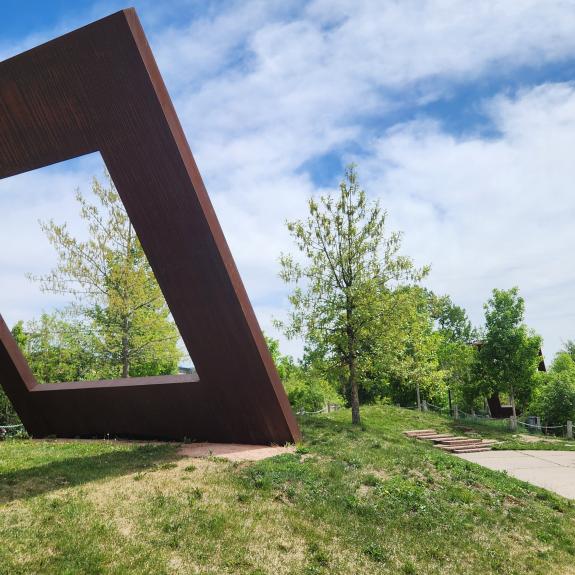
Fifty-Five Degrees Sculpture

Learn More About Public Art and Public Space

The Boulder Arts Blueprint envisions public spaces as canvases, stages and gathering places for creativity. Explore the dropdowns below for details on this goal, along with case studies and big ideas that highlight how art can activate and connect shared spaces across the community

Public art (12) expresses what a community values. It shapes identity, animates shared spaces and invites people to engage with public life in meaningful and unexpected ways.

Boulder’s commitment to public art is evident in its policies, staffing and growing collection. In 2018, the City created the Boulder Public Art Program to standardize and clarify the acquisition, definition and terms of public art purchases, loans, commissions and donations. Before this time, various city departments (such as Parks and Recreation and Transportation) acquired work through their own systems and with different handling procedures. Currently, the Office of Arts and Culture dedicates 1.75 staff positions to commissioning and stewarding public artworks and is developing a comprehensive plan to clean and repair its collection. This commitment is reinforced through binding public art policy and a 1% Percent for Art program, which ensures that 1% of City construction budgets is dedicated to the commission of artworks into new City capital projects. Today, Boulder’s public art collection includes more than 150 works across a range of scales and media, including 15 designated signature pieces

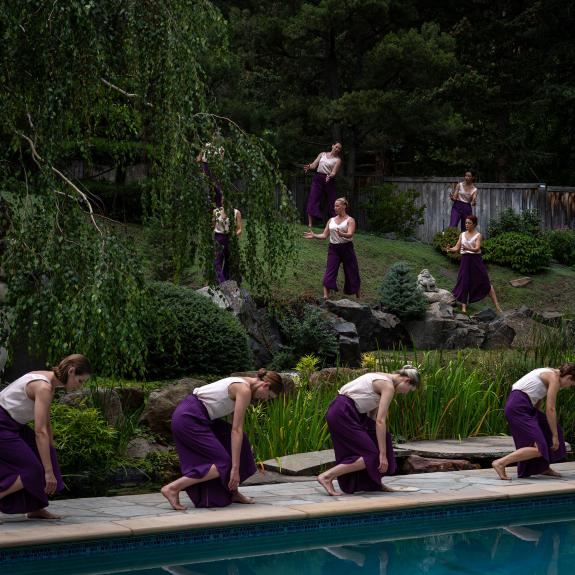
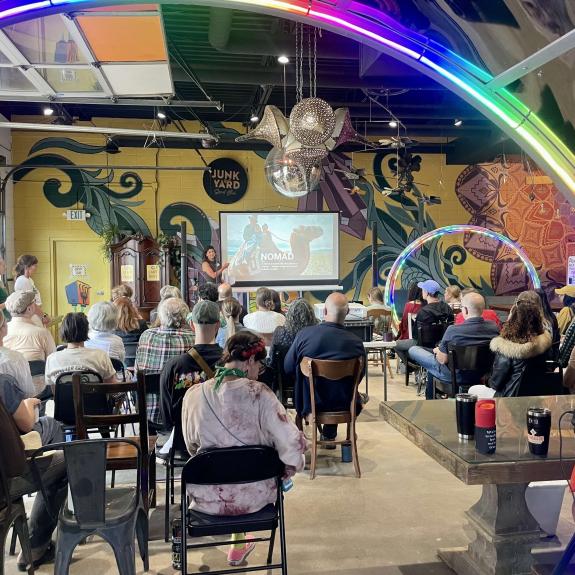
The Office of Arts and Culture also operates programs that directly respond to community interest and evolving definitions of public art. Throughout the engagement process, community members consistently expressed a desire for public art that extends beyond murals and static installations. One Town Hall participant cited comedy nights, film screenings, author talks and dance parties as examples of the types of creative experiences they hope to see supported in public spaces. Reflecting this interest, the City’s 2026 Office of Arts and Culture budget allocates $90,000 (13) to the Creative Neighborhoods and Experiments in Public Art programs, supporting non-traditional, participatory and time-based artistic projects that activate Boulder’s public realm.

Throughout the Arts Blueprint process, the Department of Parks and Recreation, Transportation and Mobility, Facilities Department, Open Space and Mountain Parks (OSMP), the Boulder Chamber and the Regional Transportation District were repeatedly identified as key partners for advancing arts and culture goals. In practice, the City already collaborates closely with many of these entities. Programs such as Chautauqua Art in the Park support three projects annually and engage more than 50 local artists, while partnerships with OSMP bring art onto trails and into Boulder’s natural landscapes. The city also supports organizations like Street Wise, a local nonprofit that delivers murals, workforce training programs and an annual mural festival.

The Office of Arts and Culture is doing many things well. However, the Arts Blueprint process surfaced recurring challenges that limit the effectiveness of several programs—particularly the Percent for Art program. Constrained budgets, permitting requirements and supporting departments with compliance occupies staff time and requires financial resources. While these systems are well-intentioned, they reflect broader citywide processes that would benefit from strategic review and targeted reform.

Finally, a consistent theme emerged around the character of public art itself. Community members and creatives expressed a desire for public art that feels spontaneous, organic and unexpected—art that is discovered rather than delivered. While formal, commissioned public art remains an essential component of Boulder’s cultural landscape, it is only one ingredient. A truly vibrant public realm also allows space for playful, experimental and slightly mischievous creative expression. The Blueprint seeks to gently recalibrate policies and processes to support a more fluid, dynamic and authentic public art ecosystem—one that invites curiosity, surprise and shared ownership.

Implementation of this goal should consider which neighborhoods have historically received less investment in public art and creative activity. Outreach, partnerships and engagement should be intentionally inclusive, with attention to who is involved in selection processes, where art is located and whose cultural expression is represented. Efforts should encourage culturally relevant art that reflects and serves the communities where it is placed, using public art as a tool to build and strengthen connection and belonging.

  • Public art is infused throughout neighborhoods.
  • Communities feel greater ownership of public space.
  • Boulder’s public realm is dynamic and continually evolving.
  • Public spaces support connection, healing and social cohesion.
  • Community members better understand how public art is created, supported and cared for.

  • Boulder County
  • City Departments such as: Communication & Engagement, Facilities & Fleet, Finance, Office of Cultural and Economic Development, Parks & Recreation, Planning & Development Services, Transportation and Mobility, Open Space & Mountain Parks
  • Creative West
  • Downtown Boulder Partnership
  • Regional Transportation District (RTD)

  • Streamline application and permitting process for temporary public art
  • Audit, organize and catalog all works of public art, as noted by the city. Continue to implement 2018’s Public Art Policy
  • Use resources like the Race Equity Tool to identify neighborhoods, populations and cultures that have been underrepresented in public art. Address these gaps through targeted outreach and public art programs
  • Execute the Public Art Implementation Plan (2024-2026)
  • Continue and expand the Experiments in Public Art Program to support temporary, participatory and time-based creative activations in public space
  • Maintain and promote a Public Art Mural Roster to streamline artist selection, increase transparency and connect artists with public and private mural opportunities
  • Continue and strengthen the Creative Neighborhoods Program to support community-led public art and cultural activation in local gathering spaces

  • Create a streamlined permitting pathway for permanent installations and/or performances and creative activations in public space
  • Establish a Public Art Stewardship Network to train volunteers and community members to care for artworks and sites
  • Align public art and public space activations with Boulder’s SER Framework goals
  • Strengthen the Percent for Art Policy to expand eligibility, increase investment and integrate public art across capital projects and civic spaces
  • Establish public art as a formal community benefit within development review by offering multiple enforceable pathways for contribution—includi ng on-site artwork, in-lieu fees, local artist commissions or publicly accessible creative space—integrated with development agreements and district-based tools (e.g., DDAs)
  • Expand the Public Art Collection Documentation and Conservation program
  • Increase funding for temporary and experimental public art programs, prioritizing interactive and barrier-free gathering spaces

The Creative Neighborhoods Program is a Boulder-based community-initiated project where members of the community choose a local artist to create an artwork in their residential neighborhood. This work is meant to celebrate the community and nearby areas. The OAC used the Racial Equity Tool after realizing some subcommunities were not being reached by the program. Adjustments to the program were guided by the tool and included expanding the program to support a wider range of creative projects (instead of just murals) and allowed for renters to use the funds. This change made it easier for more community members to participate.

Of seven recent applications, six came from subcommunities that had not recently participated in the program and who advocated for a wider array of project types.

In 2014, Höweler + Yoon Architecture created a Swing Time for Boston’s Lawn on D park. A series of 20 interactive swings that illuminated in the evening, the project meant to encourage play for people of all ages.

While the installation was meant to last for 18 months, it became a decade-long fixture finally retiring in 2024. Over the decade, events and programming increased around the space, refreshing and reinvigorating interest. Part of what made Swing Time so singular was its appeal to an often forgotten demographic, teenage girls. (14)

In 2021, Alexandra Lange wrote a piece in CityLab investigating further. She notes that while skate parks, sport courts and playgrounds exist, these places are often less appealing to teenage girls. Teenage girls noted wanting cozy hangout spots away from competition. Swing Time is such an example.

Codified in the Rockville City Code, the Art in Public Places from Development (AIPD) program requires development projects above a defined threshold to contribute to the city’s public art ecosystem in one or more ways. Qualifying projects must either:

  1. Include on-site, publicly accessible art;
  2. Make a monetary contribution to the City’s Art in Public Places fund;
  3. Provide dedicated arts space or arts-supportive infrastructure; or
  4. Implement a combination of these options through an agreed-upon approach.

Requirements are directly tied to land-use approvals and scaled according to project type and size, making the program both enforceable and impactful. Unlike voluntary or aspirational community benefit agreements, the AIPD program embeds cultural investment into the development process itself, ensuring consistent contributions as the city grows.

By leveraging private development investment, the policy supports murals, sculptures, performance areas, art-integrated infrastructure and enhanced streetscapes. It activates plazas, façades and public-facing spaces with site-specific artworks while fostering collaboration among developers, artists and the city. (15)

Since 2005, the City of St. Paul has hosted a City Artist, a partnership between the city and Public Art St. Paul, a local non-profit. It is one of the longest-standing programs of its kind in the U.S, where artists operate as translators between city government and community members, using art to make civic ideas tangible, accessible and engaging.

Through the program, City Artists work on issues touching many civic disciplines such as “early conceptualization of the City’s urban future through planning studies, capital project design to on-going street construction and sidewalk replacement and the programming of public places.” (16) Artists advise the city on major initiatives while working on their own projects. They have a dedicated workspace within the Department of Planning and Economic Development to ensure collaboration across agencies is fluid and easy.

During artist Amanda Lovelee’s term, she devised the project Pop Up Meeting. Here, Lovelee and city staff creatively retrofitted a popsicle truck and drove it into the city’s neighborhoods. Participants received locally made ice pops in exchange for sharing their ideas, answering a survey, or writing a love letter to the city. By bringing planning discussions into neighborhoods in an inviting, participatory way, Lovelee has increased public involvement in planning processes and demonstrated how art can make civic engagement fun,easy and joyful. She expands the notion of “community engagement” from one-off touchpoints to consistent and ever flowing moments of dialogue.

By embedding creative thinking “upstream” in city decision making—well before plans are finalized- artists not only enrich how community members imagine their city, but also how officials approach policy design and implementation. When the arts are positioned as essential tools in urban governance, they can foster deeper community connection, broaden participation in civic life and contribute meaningfully to equitable, people-centered policy outcomes.

Goals