Boulder Valley Comprehensive Plan | The Future of Housing
The Future of Housing
Housing Types
Local example of townhomes.
1 of 3
Local example of multi-unit homes
2 of 3
Local example of a single-unit detached home.
3 of 3
Local example of townhomes.
1 of 3
Local example of multi-unit homes
2 of 3
Local example of a single-unit detached home.
3 of 3
Community members described many interests related to housing throughout the comprehensive planning process. Many expressed a desire for more housing choices generally, more affordable housing and more types of homes that could meet the differing needs of families, local workforce and older adults. Others voiced concerns about population growth and its potential impact on resources, traffic and existing character.
Today, the Boulder Valley includes approximately 58,000 homes. This includes a mix of single-unit detached homes, duplexes and townhomes, apartments and condominiums, manufactured homes and backyard cottages or accessory dwelling units (ADUs).
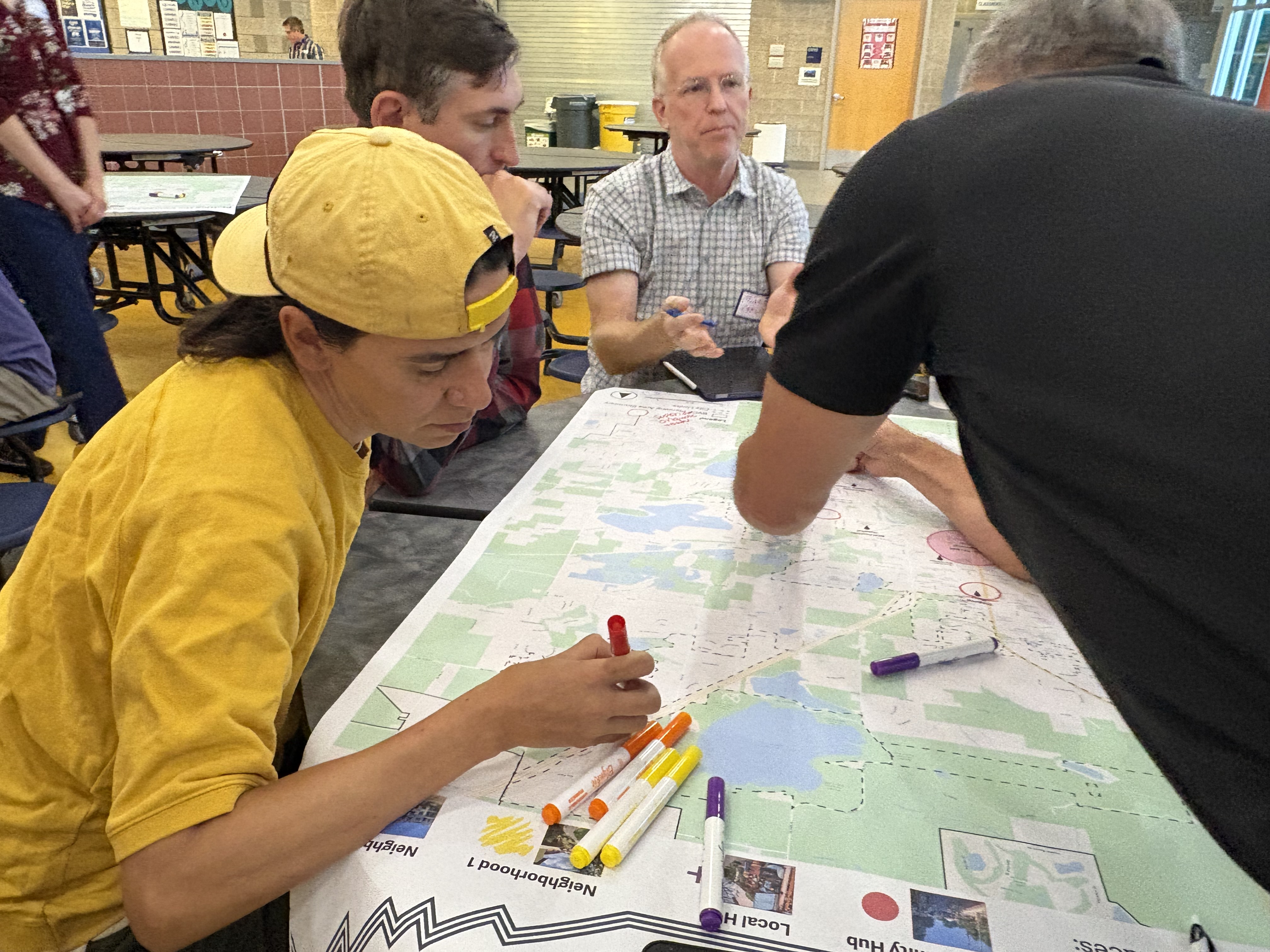
Community members working on land use strategy.
Looking Ahead
Looking ahead, regional demand anticipates an increased need for housing. The social, economic and environmental well-being of the community is enhanced when individuals and families are retained, housing for those who work in Boulder is available and community members with changing or special housing needs are served.
The high cost of local housing results in many households paying a disproportionate amount of their income for housing or finding it necessary to move farther from their work (and sometimes out of Boulder County) to find a home that meets their needs and price point. Households that find housing costs burdensome have less money available for other necessities or may find it difficult to actively participate in the community.
The comprehensive plan provides key policies that can help to support community housing needs and influence the type, number and affordability of new and existing homes while supporting programs and assistance to those who have limited resources or special needs.
The plan also incorporates the following land use strategies to support the above policies:
Context-specific infill and change in neighborhoods can sensitively introduce opportunities for various housing forms, such as duplexes, triplexes, rowhomes, cottage courts, backyard cottages (ADUs) and multi-unit buildings in areas like Neighborhood 1. This strategy can add homes over time without significantly impacting existing character.
Compact, mixed-use development in Hubs can add residential units to areas that were previously dominated by commercial uses and associated parking. This approach can allow more people to live within walking distance of amenities and services. This could reduce some reliance on cars and help manage traffic impacts as more people find housing that can meet their needs in Boulder.