Boulder Valley Comprehensive Plan | The Future of Transportation
The Future of Transportation
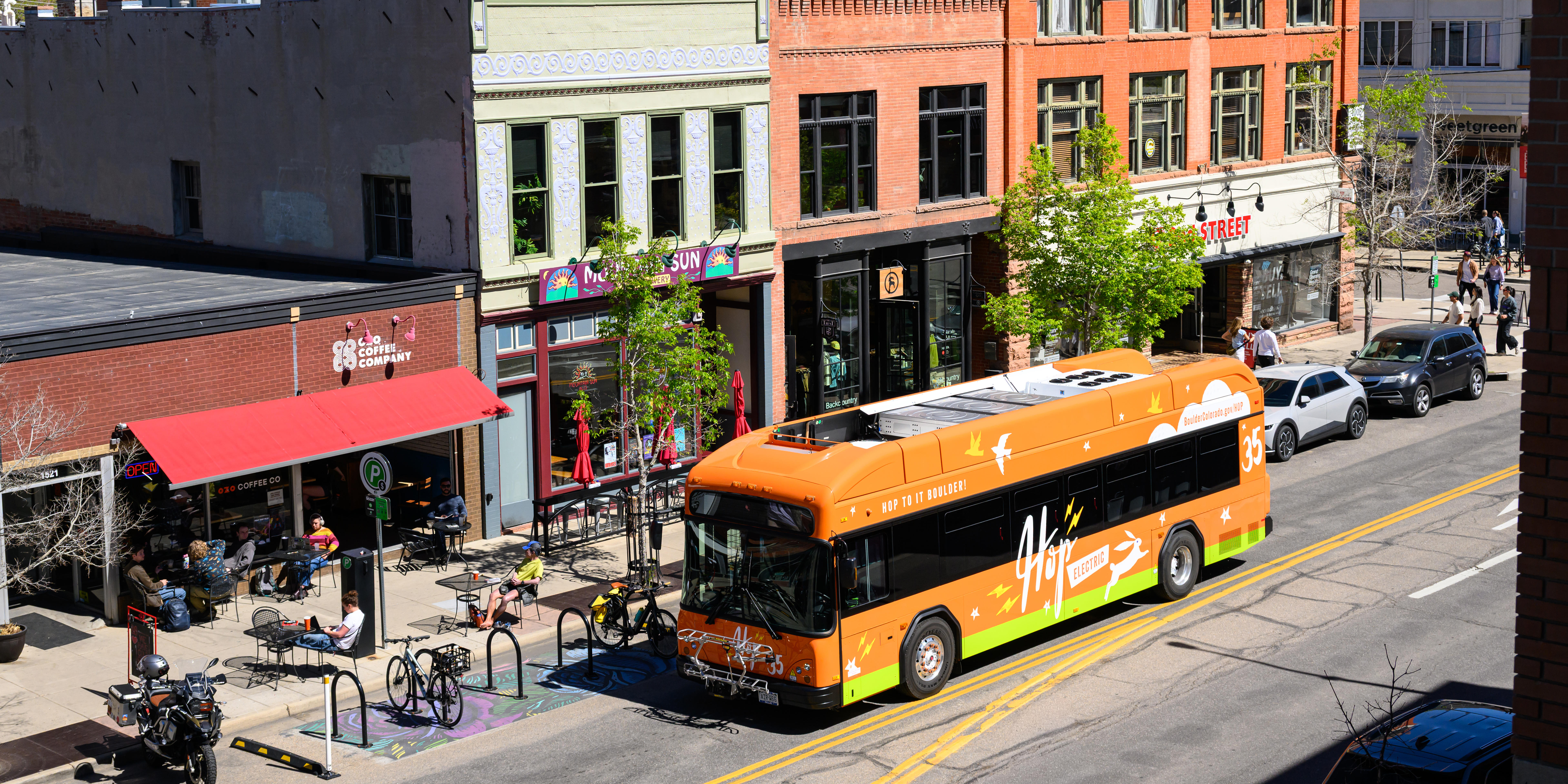
Community members and visitors have many choices for how to move around the Boulder Valley.
Connecting People, Places and Opportunity in Boulder
Transportation shapes daily life. It determines whether people can easily access jobs, schools, healthcare, parks and community spaces. Boulder’s strong base of walking, biking and transit use reflects decades of strategic planning and intentional investment to improve the local climate, air quality and travel options. The city is dedicated to building a people-first transportation system where everyone of all mobility levels can get where they need to go safely and reliably.
The community has the following major goals for transportation:
Be SAFE
BeEQUITABLE
Be RELIABLE
Provide travel CHOICES
Support clean air and our CLIMATE COMMITMENT
Today, Boulder’s mobility system faces some challenges and opportunities:
Since the COVID-19 pandemic travel patterns have changed. Many more workers are teleworking and transit service restoration efforts continue.
Employees working in Boulder are now traveling farther to reach jobs in Boulder than in the past.
Arterial streets have not historically prioritized multimodal safety and now account for 67% of traffic crashes resulting in serious injury or fatality.
Our community requires transportation that works for people who cannot or choose not to drive a car alone.
The city’s vision for 15-minute neighborhoods depends on strong multimodal connections.
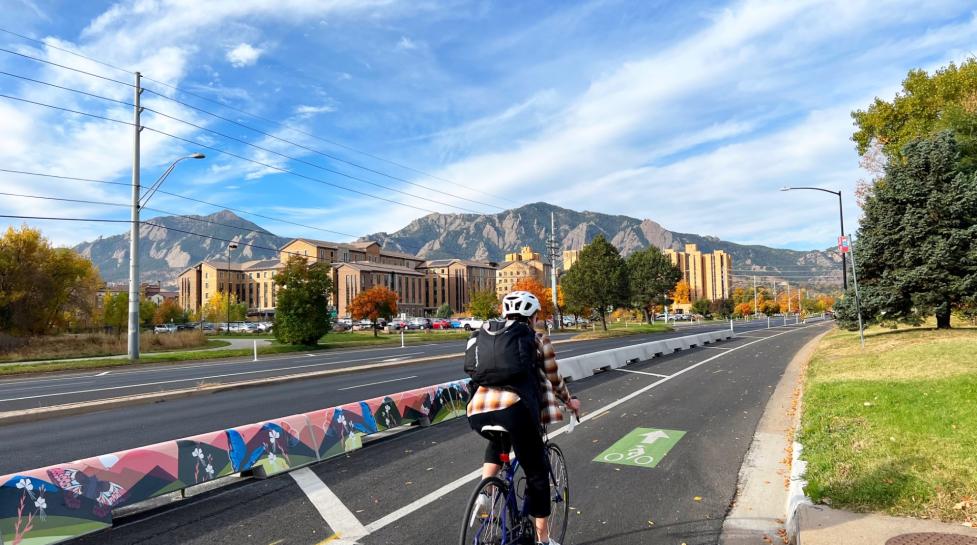
Separated and protected bicycle lanes are an important component of the community’s multi-modal mobility system and Vision Zero goals.
What’s Next
There is a lot of opportunity for transportation as the community looks to the horizon. Many regional transportation connections, developed through inter-agency partnerships, are coming to fruition. The planned Colorado Connector passenger train, several regional Bus Rapid Transit (BRT) corridors and key regional trails are approaching implementation in the near future. Safety-focused improvements in corridors on the Core Arterial Network (CAN) and multimodal operational improvements across the system will ensure Boulder can accomplish its Vision Zero safety goal. Strong transportation demand management (TDM) policies and mobility technology will continue to make headway on improving travel experiences and reducing GHG emissions. Innovative pilots can blossom into programs that advance Boulder’s reputation as a multimodal transportation leader. A growing number of community members express interest in trying new ways to access destinations outside of a car.
The city's streets, transit service and stops, paths, sidewalks, bike lanes, shared micromobility options (like scooters and e-bikes), traffic signals and the airport are the backbone of the city's transportation system - and will continue to be managed to ensure moving in and around Boulder is safe, equitable and reliable.
As the comprehensive plan considers these current challenges and future opportunities, there are multiple policies that will help inform future decisions about mobility across the Boulder Valley.
The city’s Transportation Master Plan dives into more specific policies, metrics and actions to lead transportation planning and investment into the future and addresses a range of topics, such as: