Boulder Valley Comprehensive Plan | Implementation
Implementation
The Boulder Valley Comprehensive Plan sets the long-term direction for the Boulder Valley through its community-driven vision. The plan represents the community’s collective investment of time, expertise and trust. That investment is honored through faithful and timely implementation.
Turning this vision into real outcomes depends on daily decisions – how programs are designed, which projects move forward, how funding is spent and how policies are implemented. This work requires ongoing, coordinated efforts among elected and appointed officials, city and county staff, partner organizations and community members. The comprehensive plan does not prioritize one policy over another. Implementation requires leadership, careful evaluation, weighing of tradeoffs and intentional choices.
Putting the Plan into Action
City and county departments are responsible for much of the day-to-day and long-term work needed to put the comprehensive plan policies and land use strategies into action. Finding clear ways to track, demonstrate and evaluate progress can help keep the plan responsive, relevant and focused on what matters most to the community.
This section is intended to help policymakers and city and county staff work through the implementation process from development and decision-making to tracking progress.
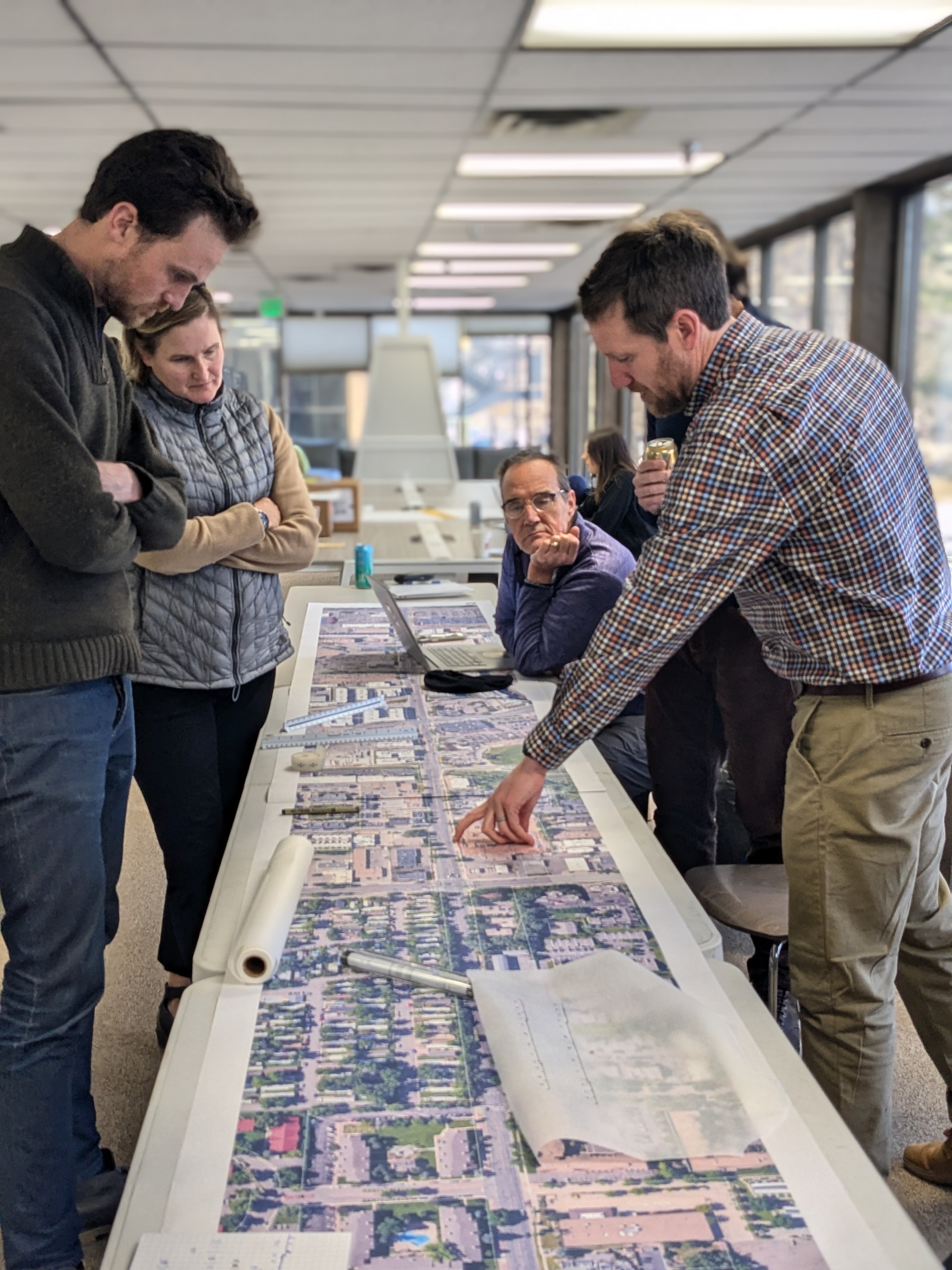
Community members discuss plans for improvements along 30th Street as part of a capital improvement project.
Guide Development and Decision-making
When developing plans, projects, programs, initiatives, regulations or budgets, consider how actions align with the comprehensive plan. Decisions may move one specific aspect forward or may broadly support the aspirations of the plan.
Support Equitable Implementation
Consider who benefits, who might be burdened and how actions can reduce disparities and build long-term trust. Use equity considerations to guide both process and outcomes.
Coordinate across Departments and Partners
Collaborate between departments when developing work plans, projects, programs and capital investments to ensure consistency with the comprehensive plan. Identify and pursue opportunities where efforts can advance multiple policy areas among several departments.
Track and Communicate Progress
Use data, community feedback and lived experience to determine whether actions are making progress toward the vision over time. Develop indicators, an evaluation approach and process to check-in with community members to monitor the effectiveness of actions.
How Implementation Works
City and county departments will work together to translate the plan into more detailed work programs and projects through the Citywide Strategic Plan, department plans, annual budgeting processes and more. These efforts can identify priority actions, assign responsibilities and determine timing based on available resources and community needs. They will serve as the primary mechanism for identifying and advancing priority implementation actions following adoption of the comprehensive plan.
This approach allows the city and county to remain flexible and responsive while making steady progress toward the long-term vision.
Regional, state and other partners also play important roles in implementation and their work can help advance comprehensive plan goals. Achieving the community’s vision depends on continued coordination among departments, policymakers and community partners.
Implementation of the comprehensive plan over time will define:
Which projects, programs and initiatives are prioritized;
How projects and programs are designed, delivered and evaluated;
How benefits and impacts are distributed across the community;
How regulations implement the vision of the community by defining where different land uses are supported, the form and scale of buildings and how each site plays into the larger character of its neighborhood;
How the community learns from experience and adjusts strategies over time.
Artwork by Cal Brackin
Implementation Strategies
The city and county will implement the plan through a range of strategies that vary in scale, timing and complexity. The strategies identified here are not exhaustive or prescriptive. They illustrate potential paths to advance the plan over time. The city will consider these strategies and others through regular updates to the Citywide Strategic Plan, City Council priority setting, annual work plans and other efforts to incrementally implement the plan over time.
Perform detailed planning Additional planning for specific locations or topics may be needed to provide more detailed guidance for future decisions where more information is needed.
Update codes and regulations Regulations, such as the Boulder Revised Code, may be amended for alignment with comprehensive plan policies and future land use strategy.
Expand or adapt city programs Many policies in the plan are dependent on city programs and partnerships to realize. These programs may be adjusted to make them responsive to updated policies and the community’s long-term vision.
Align city investments As the city considers future budgets, spending should consider the advancement of plan policies. The city should consider how investments in infrastructure can support the realization of the future land use strategy, including the delivery of urban services.
Prioritizing Implementation Actions
As part of the Citywide Strategic Plan, strategies will be prioritized. Some considerations may include:
Alignment with the comprehensive plan vision
Advancement of comprehensive plan policies
Potential to advance multiple policies
Potential to support the future land use strategy
Urgency, risk or time-sensitive opportunities
Availability of funding and staffing resources
Opportunities to leverage partnerships or coordinate with other efforts
Potential to address disparities and advance equity outcomes
These considerations help guide decision-making while maintaining flexibility over time.
Focusing on Equity
As the city and county begin implementation, it is crucial to look at who benefits and who is likely to be negatively impacted. The comprehensive plan establishes a guide for outcomes that are committed to improving access to opportunity, quality of life, housing, health and civic participation for all community members.
Putting equity into practice means moving beyond inclusive processes alone. It means focusing on measurable, data-based improvements in safety, well-being and opportunity, especially for people and communities who have been historically excluded or have faced a greater share of negative impacts and barriers. City equity analysis tools and policy evaluation processes should help guide planning, project and program design, implementation and evaluation.
When implementing the plan, city and county departments, policymakers and community partners should work directly with community members to consider questions like:
Are projects and programs reaching people and communities with the greatest needs?
Are investments helping reduce gaps in access to housing, nature, transportation, services and economic opportunity?
Is trust being built through accountability and ongoing relationships with historically excluded and underrepresented communities?
Are we identifying and addressing unintended burdens or risks?
Strength from Within by Melanie Yazzie
Measuring Progress
For some goals, progress can be measured with quantitative data, like reductions in greenhouse gas emissions, improvements in transportation safety or increases in housing options. Other goals require a broader set of qualitative data, including community feedback and lived experience, cross department learning and qualitative assessments of change. Not everything that matters can be captured by a single number or set of statistics. It takes a combination of data, qualitative feedback and accountability to make true progress.